Documenting The Sound of 007

Like many James Bond fans, filmmaker Mat Whitecross’s trip to see No Time To Die at the cinema was memorable. “I saw it on the day it came out, and was blown away by its amazing ending. I knew I needed to see it again, so I went the next day with my family.”

Yet while his family was enthralled by the action and adventure, losing themselves in the drama and the tragedy, Whitecross was concentrating on his ears as much as his eyes. “I needed to go back to really appreciate the music of the film,” he says.

At that point Whitecross was hard at work on his latest documentary, The Sound of 007. He had been crafting his film for some time, sifting through hours of archive material, shooting new interviews with key contributors from across the years, while figuring out the best way to capture the story within the constraints of a 90-minute running time.

“You’d need a 10-part television series to go into every song and every score in detail,” says Whitecross, “but when we were watching No Time To Die, which worked as such a beautiful final curtain, we realised we could use that as the spine of our film. We had such wonderful access to Hans Zimmer, Johnny Marr and Daniel Craig, as well as Billie Eilish and Finneas O’Connell. From here we could jump into the past.”

It was when watching No Time To Die for the second time that Whitecross was struck by one of Hans Zimmer’s innovations. “You could hear this unique siren voice; Hans had incorporated the title song into the soundtrack, and had specifically incorporated the singer into the soundtrack. No one had done anything like that with the song before. I thought that was a wonderful use of the song.”

The James Bond theme songs form a huge part of Bond’s musical make up, and Whitecross explores the most iconic of them in The Sound of 007. “007 composer David Arnold says that the Bond songs are like a genre in themselves,” he says, “It’s a genre wide enough to encompass everything from lounge and swing, all the way to New Wave and even a punk aesthetic with Jack White.”

“The Bond films have a who’s who of so many of the best pop musicians in music history, from Shirley Bassey and Matt Monro in the early days, through to Billie Eilish now. No film series will ever be able to emulate that.”

Whitecross’s film collects a intriguing set of interviews from James Bond singers and songwriters and it’s through their stories that some of The Sound of 007’s most memorable anecdotes appear. There are amusing moments, such as as when Duran Duran and John Barry share secrets of their sometimes rocky relationship on A View To A Kill; moments of candour, with Nancy Sinatra recalling how stepping into the studio to record ‘You Only Live Twice’ was one of the most intimidating moments of her life; and also moments of poignancy, most notably with Barbara Broccoli sharing her memory of a meeting with Amy Winehouse about a potential collaboration.

Perhaps the most thrilling anecdote, however, comes from Michael Caine who recalls how he had moved out of his digs with Terence Stamp to escape the perennial partying. He wound up sleeping on John Barry’s couch and one night he was awoken by his host singing at the piano. The composer had just written the title song to Goldfinger and Caine was the first person to hear it. “It is wonderful to hear Michael talk about being the first person to hear that song,” smiles Whitecross. “It allows you to really step into the Swinging Sixties. John Barry was one of the most iconic figures in the Swinging Sixties. He was right there; he was married to Jane Birkin, and was mates with everyone, from The Beatles to Michael Caine and Terence Stamp, and there is something lovely about the snapshot of the ecosystem of the time of the first Bond films. It’s no coincidence that they emerged then; it was such a creatively fertile moment.”

Whitecross says that talking about James Bond songs is like talking about the National Anthem or a folk song. “It feels like it could never have been written; it’s just always been there. Like a nursery rhyme, it has always been in our minds – that’s how I think of the Bond songs,” he explains.

“Each song is of its time but also must reflect Bond. There is this fusion of different elements that make it timeless. The songs and the scores are a snapshot of a moment in time and that is not true of any other film series in history.”

For all the focus on the songs, Whitecross is even more fascinated by the majestic scores, which form the backbone of his film. “I love all the songs but what really appeals to me is the classical side of things and the soundtracks, the history of John Barry going all the way to Hans Zimmer,” he says. “That seemed an area that hadn’t been covered that well on film. And, in a nerdy way, I’m obsessed with what that process is like, so to have Tom Newman, Hans Zimmer or David Arnold break down and anatomise what they do was amazing.

“If we had a longer running time I’d have liked to have done a whole section on David Arnold and Casino Royale in particular. I love the music for Casino Royale and David was such an excellent contributor to our film. It was very hard not to make the film a documentary entirely about John Barry,” laughs Whitecross. “He was such a genius and I am such a fan. I love On Her Majesty’s Secret Service with ‘We Have All the Time In The World’. That score is almost like a test case of why the music is so important to Bond.

“If you’re changing the face of Bond, as they did after Sean Connery left, it’s the music that helps give the film so much of its identity,” he says. “Connery might have gone but the music told the audience they’re still in safe hands; this is still the same man. Barry had to fight doubly hard on that film and that’s why many people say it’s the greatest Bond score.  

Monty Norman’s ‘James Bond Theme’ is, of course, another vital component of The Sound of 007, and it features early in the film. “Again, it would have been so easy to focus so much time on that story,” Whitecross says. It is, after all, the ‘James Bond Theme’ that provides the audience with such an important anchor, launching them immediately into the hero’s world.

“We dug into the archives and tapped up Monty and his wife, Rina, and it was great to show some of the programmes from his early musicals. Sadly, Monty passed very recently but we were able to talk to him and to conduct the last interview he ever did. That was such a rewarding part of such a brilliant project. Being able to make a film about my favourite film music has been a truly wonderful experience.”

Mat Whitecross has directed films and music videos for artists including Coldplay, The Rolling Stones, Take That and Jay-Z. He won widespread acclaim for his Ian Dury biopic Sex & Drugs & Rock & Roll, as well as the music documentaries Oasis: Supersonic and Coldplay: A Head Full of Dreams. He also directed the four-part drama Fleming about the life of the James Bond author

Watch The Sound of 007 here.

In conversation with Director John Glen, Part 2

In part two of our interview with filmmaker John Glen, we hear more on how he directed a record five 007 films, with four different James Bonds, across three decades including two jumps from the Eiffel Tower and how he even ‘burned down’ City Hall. 

How did you prepare to direct 007?

It was a surprise to everyone in the business when I was appointed director. Lewis Gilbert said, “Well Johnny, if you arrive on the floor on a Monday morning and you don’t know what you’re doing, get the actors on and before they ask you a question just shout out “Action!” and actors being actors will always do something”! 

How was it working with Roger?

We gave Roger’s 007 a harder edge but we kept the humour and the light touch that Roger was famous for and used his assets to our advantage. When we did the second film Octopussy, we went further. I remember his famous eyebrows rising after telling him what we were going to do. ‘We are going to dress you up in a gorilla outfit’. His eyebrows really went up. Then when I said ‘you have to put on a clown’s outfit’. Higher again. He really couldn’t believe what I was doing.  However, it worked really well and the circus was a great background to act against. We had such fun shooting it.

There are other great moments in Octopussy. The TukTuk chase is a very different chase.

Yes, it’s the converse humour. On Octopussy, we were fortunate that Vijay Amritraj, a world tennis star, knew Cubby. Michael and I incorporated him into the script. When we came to shoot the scenes with Vijay it became part of the chase sequence and he batted the villains off with his tennis racquet. If you look closely even the chap who was controlling the traffic was in an umpire’s chair, looking left and right.  

Next you worked on Roger’s last outing as 007

With A View To A Kill we had a wonderful location in San Francisco. The mayor, Mayor Feinstein, gave us wonderful cooperation. We told her the outline that we wanted to set alight to City Hall and she didn’t raise an eyelid. She asked how much money we were going to spend and when we said about $5 million she explained ‘you can do what you like, you can burn down City Hall if you want’. Fortunately she had great faith in their fire chief whom we worked closely with. 

There is also an iconic start to A View To A Kill as well at the Eiffel Tower.

Yes, the jump from the Eiffel Tower. BJ Worth did a great job with that stunt. There was lots of planning behind a stunt like that. I remember I went on the stage of Pinewood one day and there was this diving board that BJ Worth erected on this stage. I went on and I asked ‘What’s that diving board for?’ BJ said ‘Oh, I’m going to put that on top of the Eiffel Tower.’ I said, no you’re not. He explained then that he’d have to be able to jump far enough to clear the Tower. The shape of the tower means that you have to clear about 20 feet of superstructure before you can go into freefall. We were very careful and we had a lot of trouble getting permission to do it. So I said, ‘Well, you can’t have the diving board that long. It’s gonna have to be shortened’ His safety is paramount but at the same time you don’t want to disfigure the Eiffel Tower, with a big diving board sitting out the side which might’ve been seen on camera. The scene looked great on camera though and everyone was safe. 

You then had to search again for a new Bond?

We all loved Roger but it was pretty obvious to all concerned, including Roger, that we were going to have to replace him. We knew A View To A Kill would be his last movie. There’s no secret about it as there’s a limit and we knew more casting was round the corner. 

You went from Roger to Pierce only to then find Timothy…

I tested Pierce Brosnan for the role. Pierce had been involved in a series in America, which was very successful, called Remington Steele.  He’s a lovely man, we’d met him before when we were filming For Your Eyes Only in Corfu because he was married to one of the actresses, Cassie Harris. Pierce was a very popular choice for us and we loved the tests he did. Then suddenly, the TV company heard that he was going to be James Bond but they had a clause in the contract which prevented him from doing both. That’s when we chose Timothy Dalton. We had talked about Timothy previously as he’d been a fantastic, successful Shakespearean actor. His big hit was Lion in Winter which was huge. I think that he had been approached shortly after that to play Bond but turned it down, however when we went back to him he was more amenable and we set to work quickly. 

So when it came to The Living Daylights I believe you came up with the Cello case and asked Cubby to sit in the case and test it. Is that true?

While we were writing the script in Hollywood, we were in the MGM Studios in Culver City, and we came up with this idea. I pitched the idea to Cubby, who said ‘Oh, it’s not possible’. So I rang the music stage at MGM and sure enough, there was an orchestra there and they had several cellos there. So we all trooped over to the music stage. They stopped what they were doing while we sat in the case. I sat in one side of the cello case, and Cubby sat in the other side. I proved that it was possible to do and Cubby bought into the idea and it worked very well.

There are obviously some iconic cars in your time on the Bond films – from the Citroen 2CV through to the Aston Martin V8 – and some iconic moments. What prompted Aston Martin to return in The Living Daylights?

Well, we always had a hankering to bring Aston Martin back as it is James Bond’s car. We did the opposite for a while with Roger. We got a Citroen 2CV for humour and that worked very well. You can go across ploughed fields and all sorts in it and it’s got very good suspension. We varied it after that and went to Lotus. For Timothy’s time as James Bond, we felt that Aston Martin was appropriate. We used it in a more modern way than Goldfinger as the car had gadgets, bulletproof glass and number plates revolving.

You used a lot of animals in your films. What was the inspiration behind that?

Well, I’m an animal lover. When I was working on the TV series Danger Man every time there was an animal involved the director knew it would take time, so it was always left to the second unit director, in that case it was me. I found very early on that you have to be quite ingenious and take time and care and you have to have a plan about what you need on film. I remember on Danger Man there was a scene where a parcel is delivered. This guy starts to unwrap a parcel bomb. The string on the parcel is dangling down and suddenly a cat plays with it and pulls the parcel bomb off the table. It was all filmed and producer Sidney Cohen said to me, ‘That’s all well and good but we can’t have a cat looking like it is being blown up! You’ve got to show the cat escaping.’ So I went back the next day and we brought the cat back in. The cat jumped through the window where its handler was waiting outside to catch it.  Perfect, I thought. Then when I came to look at the rushes, I saw the cat had come out the window the wrong way around and had turned in mid-flight. So that taught me a lesson in how to deal with animals.  Do it quickly and check it over. They only do one take. They’re not going to do take two, three, four and so on. You have to be ready and have everything in place. In On Her Majesty’s Secret Service we had a dog and George Lazenby had to interact with it and get his lines in. The sunlight was fading. George did it perfectly and it worked well.  Alfred Hitchcock always used to do a personal appearance on his films. I always used to use my little signature which was a pigeon. When someone asks me why I used a pigeon I always said ‘well they are available anywhere in the world and they’re cheap. They all look alike!’ 

Do you have a favourite location from your years filming 007?

There are so many great locations, Chantilly in France was one of my favourites. The horse racing scenes we captured in France. We had some good times filming there and in the forests. That was nice. San Francisco is another great location. We had wonderful cooperation and we filmed on the wonderful Golden Gate Bridge. I mean, not many people realise it but there is an elevator that goes up on the main supports and the bridge on one end. That’s where the painters go up. You know, it just takes two people and a can of paint. It’s not much wider. It never occurred to me then of course the painters have to get up there somehow. So then we took a couple of stuntmen up and then we did a bit of a sequence for real on the bridge. I mean, the tube looks about six inches wide when you see it in the ground, but in fact it’s six feet in diameter. We did some very daring work and then we did the rest in the studio. It was a very clever sequence as to how we pieced it together between all the different teams – miniatures, sets, stunts and so on. It is great as the climax of Roger’s time as 007. 

For Licence to Kill you filmed the majority away from Pinewood. How was that?

Pinewood is the ancestral home of the James Bond series. We had a lot of pressure from the studio to reduce costs. We were still pretty competitive, especially when you compare what they spend today, the budget was big, around $32 million which was a huge amount of money. So the only way we could make the same quality film was to go to Mexico. We went to Churubusco Studios in Mexico City. The studio was in complete disrepair when we got there. In fact, when the first explosions went off for a scene, we saw half the roof panels came down like autumn leaves. Peter Lamont did a fantastic job on patching up the place and it turned out a successful shoot. The Mexican film industry have very good crews as well as great construction people who work very hard. On top of that, they have great locations and we found great local actors too.

Obviously, the tanker chase in Licence To Kill stands out as being unique – even for 007 – So how was that to piece together?

It’s all action, largely second unit and lasts for about 20 minutes.  We filmed with the actors, the close shots and so forth, and with Arthur Wooster, my second unit director.  They shot amazingly dangerous stuff with about 12 tankers. Fortunately the company that made the tankers had a factory just inside the Mexican border from the US and they did a wonderful job for us patching all these tankers up from Kenworth Trucks. At the end of filming, I think there was only one that was still running! The rest had all been wrecked in one way or another. I used stunt drivers like Remy Julienne, he and his team did incredible stunts with the trucks. They had to engineer them for certain shots, sometimes put weights on them to prepare them. The best stunt I think I’ve ever done was the one where they brought a guy in from Paris who specialised in doing a 10-wheel wheelie with a tanker. It takes a bit of doing and we didn’t really think it would be possible but this guy arrived and performed the stunt on take one. Unbelievable. Not only did he do the wheelie but he landed it perfectly and crashed the truck on top of one of the other vehicles. It was just the perfect stunt. 

Timothy’s films are closer to the source material in the books. Is that what you were aiming for?

Absolutely. I mean, that was a conscious decision from the producers and myself. We would make use of Timothy’s abilities as a very good actor.  We made License To Kill  a very hard edged film dealing with the drug trade. It’s a very hard business and to soften it to make it more acceptable in order to get the right certificate would have been quite wrong. We took a chance and we paid a little bit at the box office but I think subsequently people feel it’s one of the better Bond films. I honestly feel it is my best film. 

James Bond’s London

If you’re visiting London and want to take in a spot of 007 sightseeing, listed below you’ll find an overview of James Bond’s London, featuring some of the unique and iconic 007 locations.

While GoldenEye in Jamaica is author Ian Fleming’s most famous home, his flat at 22B Ebury Street in Belgravia played a prominent role in his younger years. The building had formerly served as the Pimlico Literary Institution. The front is now adorned with a blue plaque commemorating his time there.

Another of Fleming’s residences was 16 Victoria Square, his London home from 1953. Nestled between Buckingham Palace and Victoria Station, the property was designed by early-Victorian architect Sir Matthew Wyatt.

DUKES bar in Mayfair was one of Fleming’s favourite spots and is sometimes linked with 007’s famous martini. Another of his haunts, Boodle’s Club in St James’s Street, is said to have been part of the inspiration for Blades Club, which appears prominently in the 1955 novel Moonraker.

One of the many nods to Bond history in Die Another Day (2002) is the appropriation of the name Blades for the fencing club where Bond duels with Gustav Graves. Sited at The Reform Club, a private members club in Pall Mall, it is here that Madonna makes her cameo appearance. The Reform Club was also used in Quantum Of Solace (2008), doubling as the Foreign Office for the scene where M meets the Foreign Secretary.

Die Another Day also showcases the exterior of Buckingham Palace, and its surroundings, as Gustav Graves parachutes in to receive his knighthood from the Queen.

Parts of London doubled as St. Petersburg in 1995’s GoldenEye, with The Langham in Portland Place featuring as Bond’s luxury Russian hotel and Drapers Hall on Throgmorton Ave as the Russian Council Chamber.

GoldenEye also used London’s much-loved St. Pancras Station, re-casting it as St. Petersburg Station for the scene where Natalya arrives by train and bids to elude authorities. The wonderful interior of the St. Sophia Cathedral, Moscow Road, meanwhile, doubled for the St. Petersburg church where Natalya meets Boris Grishenko.

Somerset House on the Strand also featured as St. Petersburg in GoldenEye with the production importing 40 Russian cars to drive around the courtyard for the scene where Bond and CIA operative Jack Wade break down in their rusty, blue car. Somerset House also enjoyed a role in 1997’s Tomorrow Never Dies as Bond pulls up for a meeting with M in his iconic Aston Martin DB5.

The National Gallery in Trafalgar Square featured in 2012’s Skyfall, hosting the first meeting between Bond and his new Q. They meet in Room 34 where a melancholy Bond is gazing at The Fighting Temeraire by J.M.W. Turner. Turner’s famous oil painting depicts one of the final great warships from 1805’s Battle of Trafalgar being towed away for scrap, mirroring Bond’s potential future following the closure of the double-O programme.

Skyfall (2012) also filmed at the Old Royal Naval College in Greenwich, which was used for the scene where M attends the funerals of the MI6 agents killed in the terrorist attack.

Also featuring in 2012’s Skyfall was the Department of Energy and Climate Change in Whitehall, where the production shot on the rooftop, capturing the scene in which Moneypenny gives Bond the ceramic bulldog that M bequeathed to him in her will.

The River Thames played a prominent role in 1999’s The World Is Not Enough, which saw the centre of London debut as a major action location for 007, with Bond pursing Cigar Girl along the river, zipping past the Houses of Parliament, through Tower Bridge to Docklands and the O2 Arena (or the Millennium Dome as it was known at the time). Bond’s mid-air barrel roll in the Q Jet Boat, meanwhile, was filmed at Millwall Docks.

Formerly the home of the Greater London Assembly and the Mayor of London, City Hall in Southwark appeared in 2015’s Spectre as the home of the Centre for National Security. Also featuring in the film was Freemasons’ Hall on Great Queen Street, where the production shot the scene at the Foreign Office where C is anointed as the Head of Nine Eyes.

Further up the Thames from City Hall at Vauxhall is the SIS (Secret Intelligence Service) building, Vauxhall Cross, which has played the home of Bond’s MI6 in a number of films since debuting in 1995’s GoldenEye. On screen it has come under attack in The World Is Not Enough, Skyfall, and Spectre. Vauxhall Cross also appeared as an establishing shot in Die Another Day, the writers going on to acknowledge the building’s real-life name with scenes set below MI6 in the fictional Vauxhall Cross tube station.

The moment in Die Another Day when Bond enters Vauxhall Cross underground station ahead of his meeting M was filmed at the end of Westminster Bridge. The famous bridge also featured in the climax to Spectre as Bond battles Blofeld.

The real-life London Underground enjoyed a starring role in Skyfall when the villain Silva escapes MI6. While much of the action was shot at Pinewood Studios, filmmakers captured vital scenes on a disused Jubilee Line platform at Charing Cross Station, although on screen the chase sequence unfolds between Temple and Embankment stations. 

The Ministry of Defence Main Building in Whitehall took on the role of the MI6 offices for 2021’s No Time To Die. The building had previously played itself in 1981’s For Your Eyes Only.

Also in Whitehall is the Old War Office Building, which featured as MI6 in 1983’s Octopussy, and Carlton House Terrace, which was the exterior for Madeleine Swann’s office in No Time To Die (2021).

Malaysia House, just off Trafalgar Square on Cockspur Street, appeared in 1987’s The Living Daylights as Universal Exports, the front for MI6.

Almost opposite is 35 Spring Gardens, which acted as the exterior of the safe house where M, Q and Moneypenny meet in Spectre (2015).

Said to be one of the oldest restaurants in London, Rules in Covent Garden also featured in Spectre, hosting M, Q and Moneypenny. Diners making a reservation can request ‘M’s table’ for their sitting.


The Montegrappa 007 Spymaster Duo Pens

They may not explode… but they do conceal secrets. Luxury writing instrument maker Montegrappa creates a pair of collectors’ pens in honour of 007. The 007 Spymaster Duo is a fitting companion for any assignment. A fountain pen and roller ball with hidden design elements, handmade from precious materials in a numbered edition of just 380 pieces.

Montegrappa has been making the world’s finest writing instruments since 1912. Known for combining luxurious materials, high craftsmanship and individual flair, the company has been working in the same artisanal factory in Bassano del Grappa, Italy for more than a century.

At the start of the project, Montegrappa’s designers spent time reviewing props and design motifs from 007’s six decades on screen. The result is a pair of pens drawing on the best traditions of James Bond gadgetry and style. Each pen is fitted with a secret mechanism concealing a pair of polished metal 007 cufflinks. The Spymaster fountain pen carries its ink inside brass bullets engraved with 007, and comes with two pots of 007 ink and Montegrappa’s Swift-Shot ink filling system. This Q-style innovative reloading device uses hydraulic action to refill the cartridges swiftly and cleanly.

Rifling on the high-strength machined steel cap and upper barrel echoes the iconic gun-barrel, while the lower barrel is made of blackened alloy with a knurled, pistol-grip finish. The fountain pen features a 18K gold 8mm nib with custom-engraving. Each pen is numbered and housed in a custom-made travel case with secret compartments, accessories and a Bond family crest embossed journal. Discover the 007 Spymaster Duo to pre-order now at 007Store.com.

Michael Reed (1929 – 2022)

Michael Reed, Director of Photography for On Her Majesty’s Secret Service has sadly passed away.

On Her Majesty’s Secret Service has become one of the most loved of the series with fans and critics alike and in large part due to the way Michael Reed captured its unique moments. Michael’s work included The Adventures of Robin Hood, The Saint, The New Avengers, Philip Marlowe – Private Eye and The Press Gang. Our thoughts are with his family at this time.

Bowers & Wilkins 007 Headphones

Bowers & Wilkins have announced a new 007 edition of their Px8 headphones to celebrate sixty years of James Bond music.

The British audio brand today (October 19) revealed a bespoke version of its Px8 wireless headphones featuring a Midnight Blue finish, inspired by the dinner jacket worn by James Bond in his debut appearance in 1962’s Dr. No.

While the new headphones mark the first official endeavour between the two brands, they continue an enduring relationship between both.

Bowers & Wilkins’ connection with the franchise is intertwined with its 40-year history with Abbey Road Studios. Bowers & Wilkins’ flagship 800 Series loudspeakers have been used to monitor the recordings of 007 film scores for Skyfall (2012) and Spectre (2015), while their loudspeakers were used to help create Bond 25, the Royal Philharmonic Orchestra’s latest album featuring brand new arrangements of all 25 iconic Bond themes.

The Px8 E007 Edition headphones are available to pre-order now exclusively on 007Store.com.

Duesenberg 007 David Arnold Edition Guitar Announced

German guitar maker Duesenberg joins forces with Bond, and long-term collaborator and five-time 007 composer David Arnold, to release the James Bond 007 Guitar – Signed & Numbered David Arnold Edition.

Strictly limited to 75, each individually numbered instrument is handmade and personally signed by David Arnold to celebrate 60 years of James Bond on screen.

The guitar is inspired by a custom Duesenberg model co-created with David Arnold for the Sound of 007 in Concert in October 2022. Played by David Arnold and Hans Zimmer at the anniversary event, the guitar was then signed by the artists and auctioned for charity at Christie’s.

Based on Duesenberg’s Paloma, the new guitar features a black and white gun barrel design, 007 engraved tone and volume knobs, and a graphic layout of all 25 Bond film title treatments on its back.

“Ever since Chris Cornell introduced me to Duesenberg Guitars whilst we were working on Casino Royale, I‘ve been a huge fan of their instruments.” said David Arnold. “They‘re brilliantly engineered, have a fantastic design aesthetic and an idiosyncratic sound.”

“The Paloma is the guitar I‘d wanted since I started playing. It has a beautiful shape, finish and sound which seems to cover all the best sounds of every other guitar I‘ve played – but in the one instrument. To be asked to design this special limited edition instrument with the guys at Duesenberg was very much a first for me. I hope whoever gets their hands on one plays something from the Bond back catalogue when they take it out of the case.”

Duesenberg Guitars have a long-standing association with 007 artists, being played on the scores for Casino Royale and Quantum of Solace, on Chris Cornell’s Casino Royale theme ‘You Know My Name’, and by Adele’s band on ‘Skyfall’.

The Duesenberg 007 David Arnold Edition Guitar is available to pre-order now exclusively at 007Store.com.

Creating Characters Through Costume

From stylish to utilitarian, the costumes created by Suttirat Anne Larlarb for No Time To Die are key to our understanding of each character. Besides Bond 25, the award-winning designer has worked on productions including Slumdog Millionaire, 127 Hours and the London 2012 Olympics Opening Ceremony: Isle of Wonder. Here she discusses how she and her team helped bring the characters of No Time To Die to life through costume.

Ready For Action: 007 x Castore

British premium sportswear brand Castore has released the first of a new 007 activewear collection.

Allowing wearers to draw on their inner Bond, the 12-piece set features technical fabrics and intelligent details. Highlights include the 007 Hybrid Hoodie made from Castore’s innovative water-resistant fabric, the 007 Hybrid Jacket with stretch and quilted construction, and the gym-to-street 007 Stretch Chinos with a temperature regulating design.

Castore is built upon the philosophy of BETTER NEVER STOPS. Created to bring a new level of performance to sportswear, the company’s mission is to build the lightest, most durable, highest performing apparel available. The brand utilise advanced engineering and smart fabrics to create the highest quality sportswear with specialist features to help to optimise athletic performance in all conditions.

Drop One of the collection is available now at 007Store.com.

OMEGA Announce 60th Anniversary Seamaster Watches

Two new OMEGA Seamaster watches have been announced to celebrate Bond’s 60th anniversary.

The commemorative Seamaster Diver 300M timepieces are available in two versions; a stainless steel variant influenced by the first-ever OMEGA watch 007 wore in GoldenEye, and a Canopus Gold model with green and yellow diamonds which takes inspiration from Ian Fleming’s Jamaican home and Bond’s inaugural adventure Dr. No.

The stainless steel watch features a blue oxalic anodised dial and bezel, laser-engraved wave pattern and LumiNova finish. The caseback replicates the movies’ iconic opening sequences, with Bond in silhouette and a gunbarrel design.

The 18K Canopus Gold piece is made from natural grey silicon, with each watch featuring a completely unique crystallite dial. The bezel is embellished with green and yellow diamonds in tribute to the Jamaican flag, and the watch comes in a mango tree wooden box, referencing the song ‘Underneath the Mango Tree’ from Dr. No.

OMEGA’s Seamaster Diver 300M 60 Years of James Bond Watches launch January 2023.


60th Anniversary Christmas Gift Guide

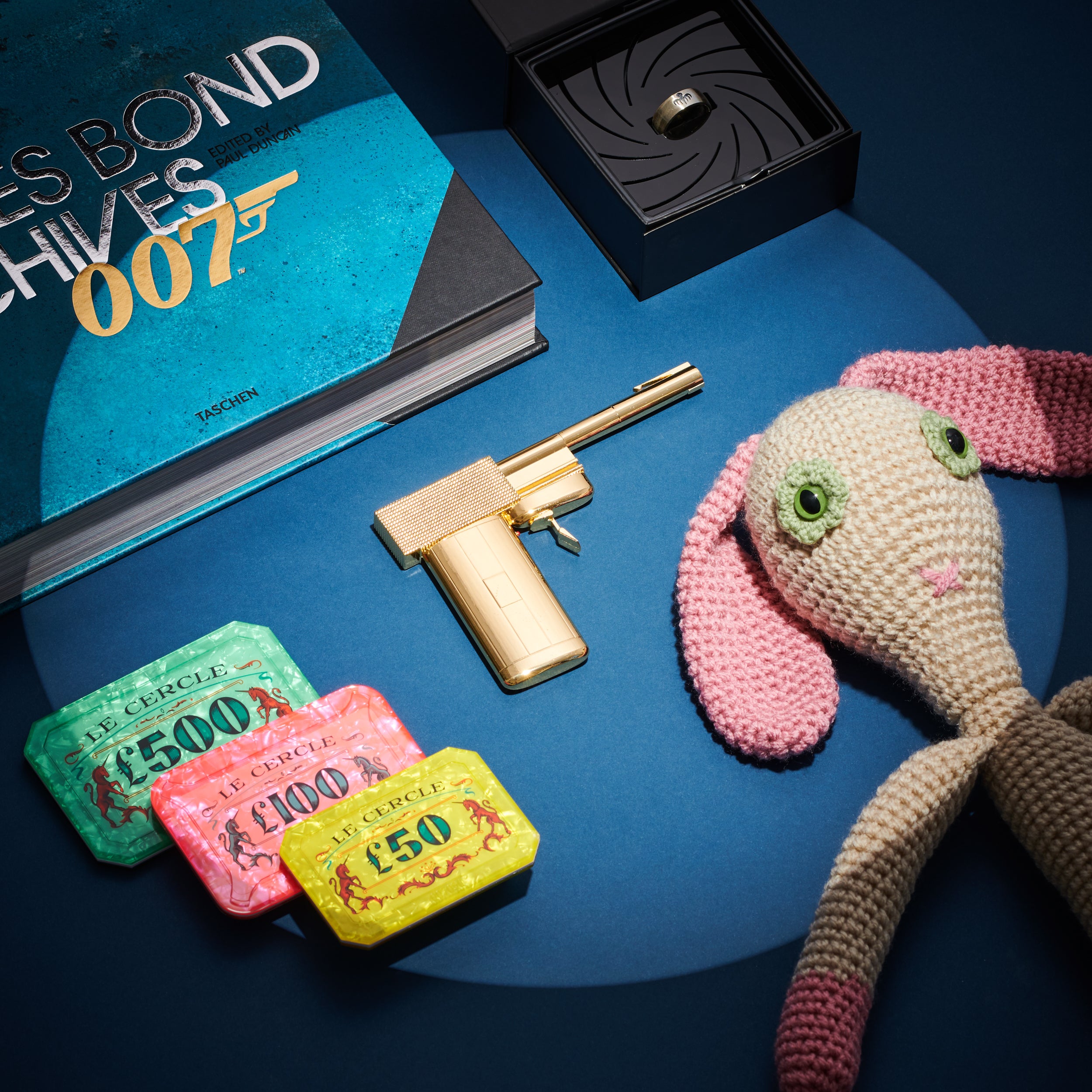
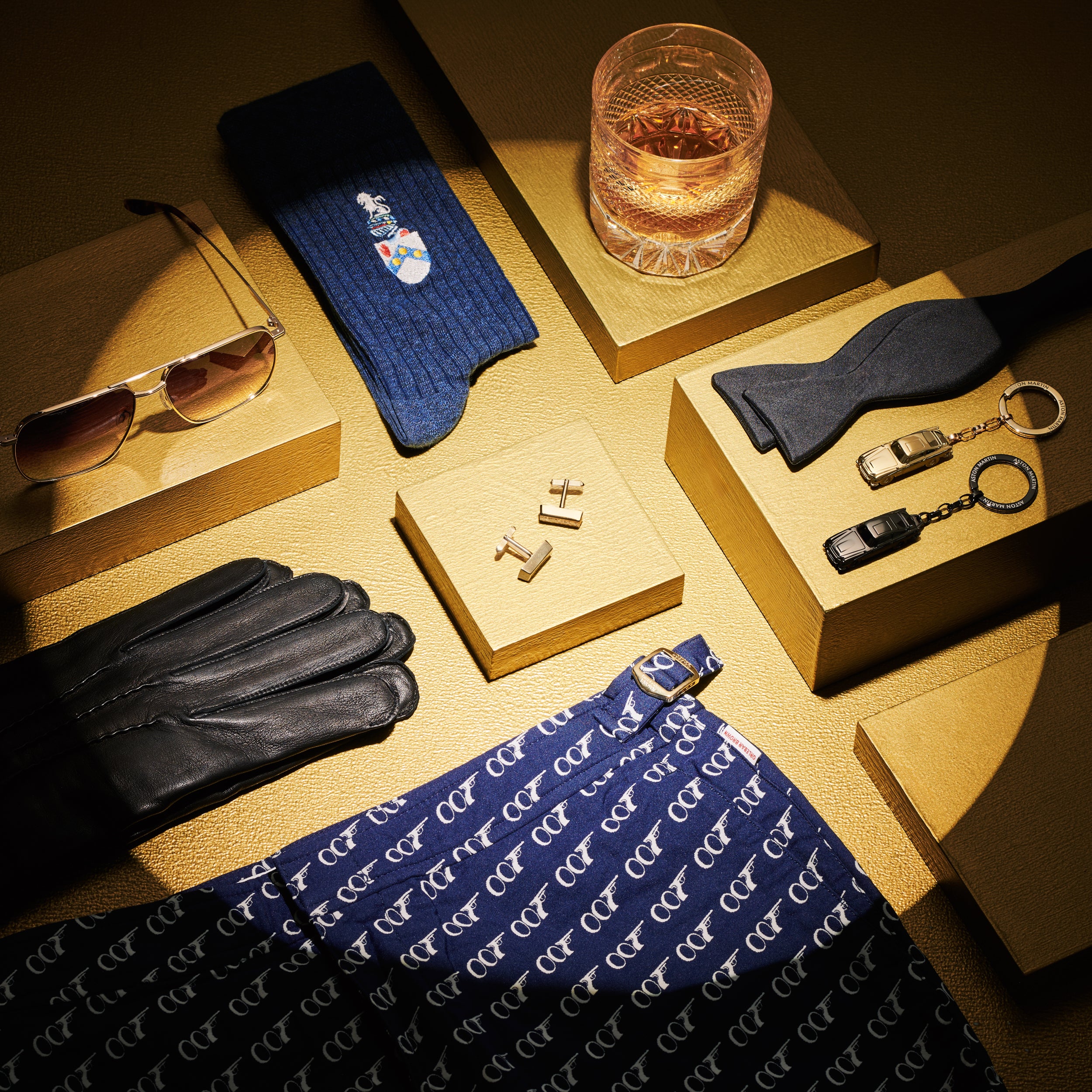
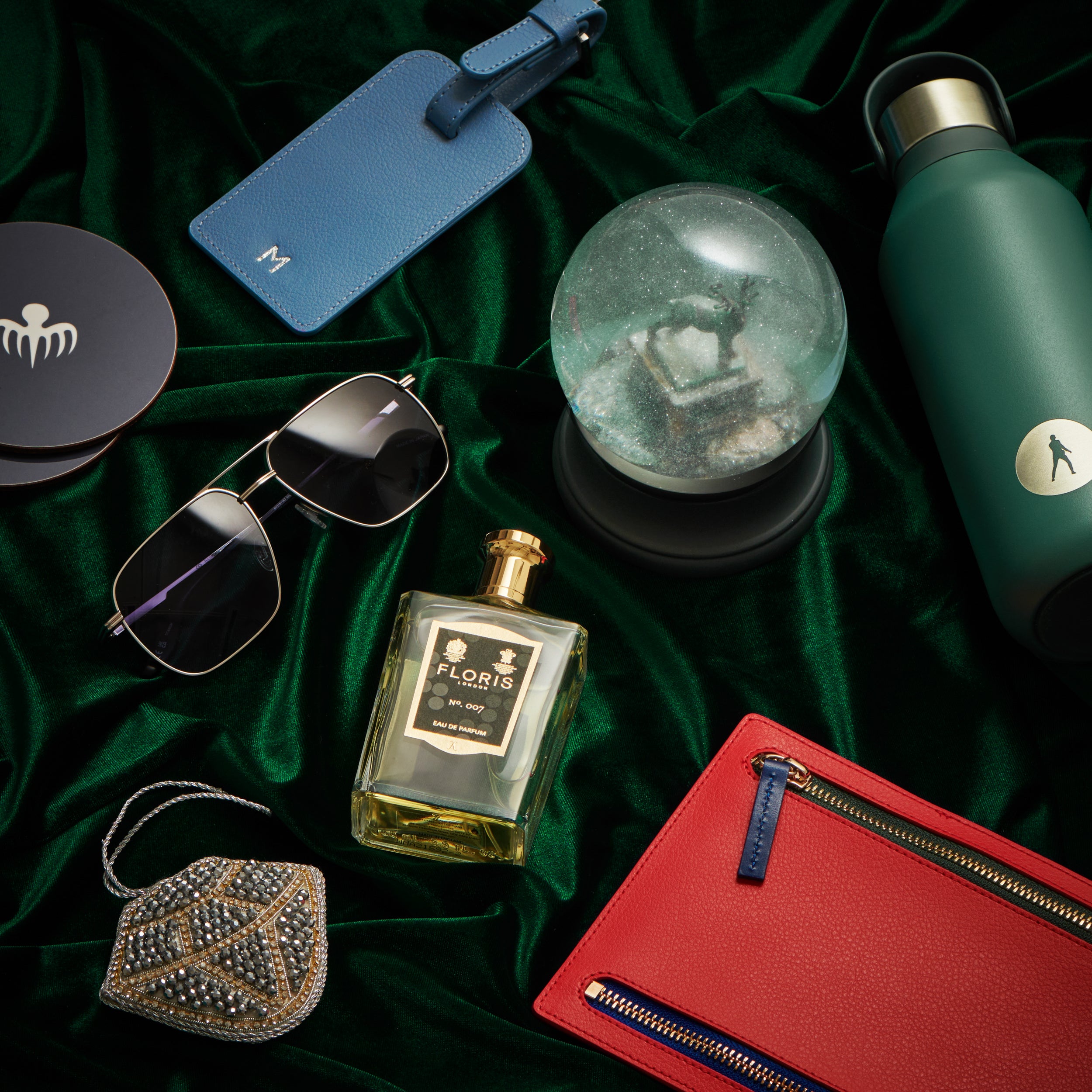
Prepare for the festivities with the James Bond 2022 Christmas Gift Guide. From a 007 snow globe, to tree decorations and a cashmere range from N.Peal, the Aston Martin DB5 LEGO Speed Champions set, 60th anniversary socks, golf accessories and the perfect martini shaker – you’ll find gift ideas for all the family here. 

For him

Style lovers will love the N.Peal Goldfinger Cashmere Sweater or the London Sock Exchange 007 60th Anniversary Gift Box featuring six limited edition designs. Try a set of silver-plated Family Crest Cufflinks or the new Bowers & Wilkins 007 Headphones in Dr. No midnight blue leather. Floris No.007 captures the essence of Bond in a unisex scent, while Orlebar Brown’s Gun Barrel Swim Shorts add a little pool time elegance. An engraved “Licensed troubleshooter” hip flask, Lock & Co’s James Trilby and a silk pocket square, finish things off nicely.

For her

Indulgent gifts include Orlebar Brown’s Dr. No Robe – a recreation of the towelling gown worn by Honey and Bond; the Octopussy Art Plate, a limited edition collector’s plate by British ceramicist Tom Rooth, or a pair of 007 AVTAK Sports Sunglasses. What about adding a 007 Cocktail Shaker to the bar, along with the new SPECTRE Symbol Wine Stopper and a bottle of Blackwell 007 Rum?

For kids

Keep them busy on Christmas Day with the new 007 LEGO Speedmaster DB5 or a James Bond Playmobil set. The 60th Anniversary T-shirt is available in kids sizes and 007 chocolate bars from Charbonnel et Walker will be a hit at any time of year.   

For car lovers

A fleet of new model vehicles are fresh from the Q Branch garage and ready for gifting. From Dr. No’s Chevy Bel Air to the Tomorrow Never Dies BMW Cruiser, Aston Martin fridge magnets, books and a new DB5 tree decoration.

For the family

Take a leap of faith with The Spy Who Loved Me Snow Globe, made in a limited edition, or keep everyone busy with The World of James Bond Jigsaw Puzzle. 007 Scalextric, Cluedo and Bond Bingo are ideal for a games night, while SPECTRE The Board Game is perfect for strategy lovers.

Stocking fillers

Little treats include the new James Bond tea towels and handmade 007 Christmas tree decorations.  Pop in a beanie hat embroidered with the 007 logo or SPECTRE symbol, or a box of 007 Martini Truffles. Golfers can tee off with Penfold’s golf balls and accessories.

Find the full gift guide at 007Store.com now.


Sean Connery Foundation Launches

The Sean Connery Foundation has been established in memory of Sir Sean Connery. The foundation will honour Sir Sean’s legacy by honouring organisations in Scotland and the Bahamas – the two countries he called home – through strategic grantmaking. Focus areas for the foundation will be to accelerate ocean welfare and educational initiatives. 

Stephane Connery, Sean’s son and the foundation’s Chairman said: “We have chosen to focus on the communities that Sean loved and on issues that reflect his beliefs, passions, and legacy. Above all, Sean believed that education was a force-multiplier and was most concerned that children from disadvantaged backgrounds, like his own, be given opportunities to succeed. Thanks to Sean’s gift, we dearly hope that our family’s grantmaking will help young Scots and Bahamians, along with our oceans, to thrive.”

The foundation is set to commit £6 million in grants by the end of 2022 to institutions such as St. Andrews University, the Scottish Youth Film Foundation, the Scottish International Education Trust, Dyslexia Scotland, The Lyford Cay Foundations, the Bahamas Reef Environmental Educational Foundation, The Cape Eleuthera Foundation, Girl Rising and Swift Swimming.

Two of the charities close to Sir Sean’s heart – the Scottish Youth Film Foundation and the Scottish International Education Trust – were recipients of funds from the 60 Years of James Bond charity auction in October, with over £60,000 raised from the two respective lots.

Find out more about the foundation here.