Diamonds Are Forever: 55th Anniversary Edition 2-CD Release

Introducing the remastered and expanded 2-CD re-issue of composer John Barry’s original motion picture score to Diamonds Are Forever. Part of a limited edition of just 5,000, this edition showcases the film’s music with improved sound and never-before-released material. Included within this 2-CD set is the iconic title song “Diamonds Are Forever” by Barry and lyricist Don Black performed by Shirley Bassey in English and Italian. 

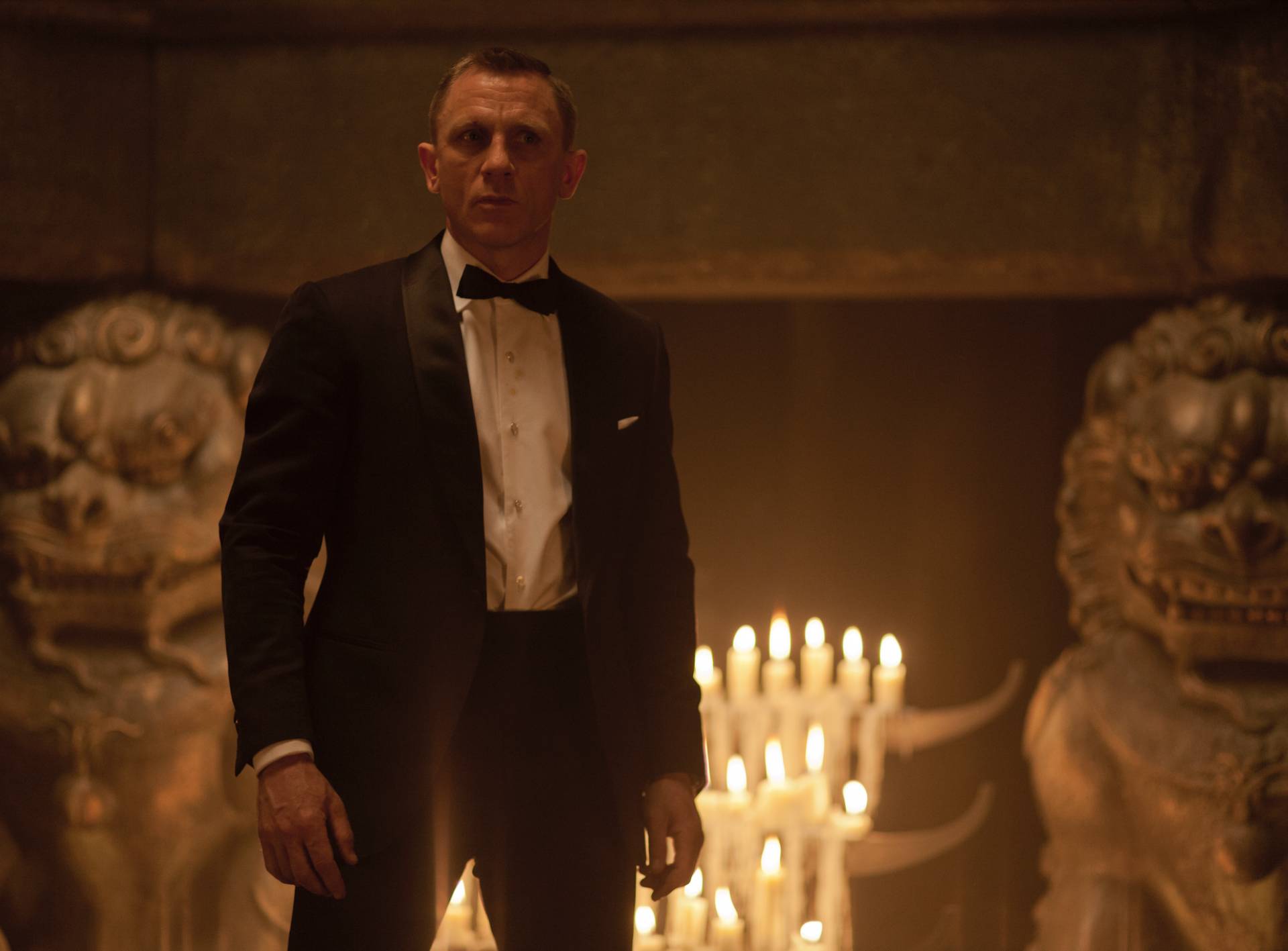
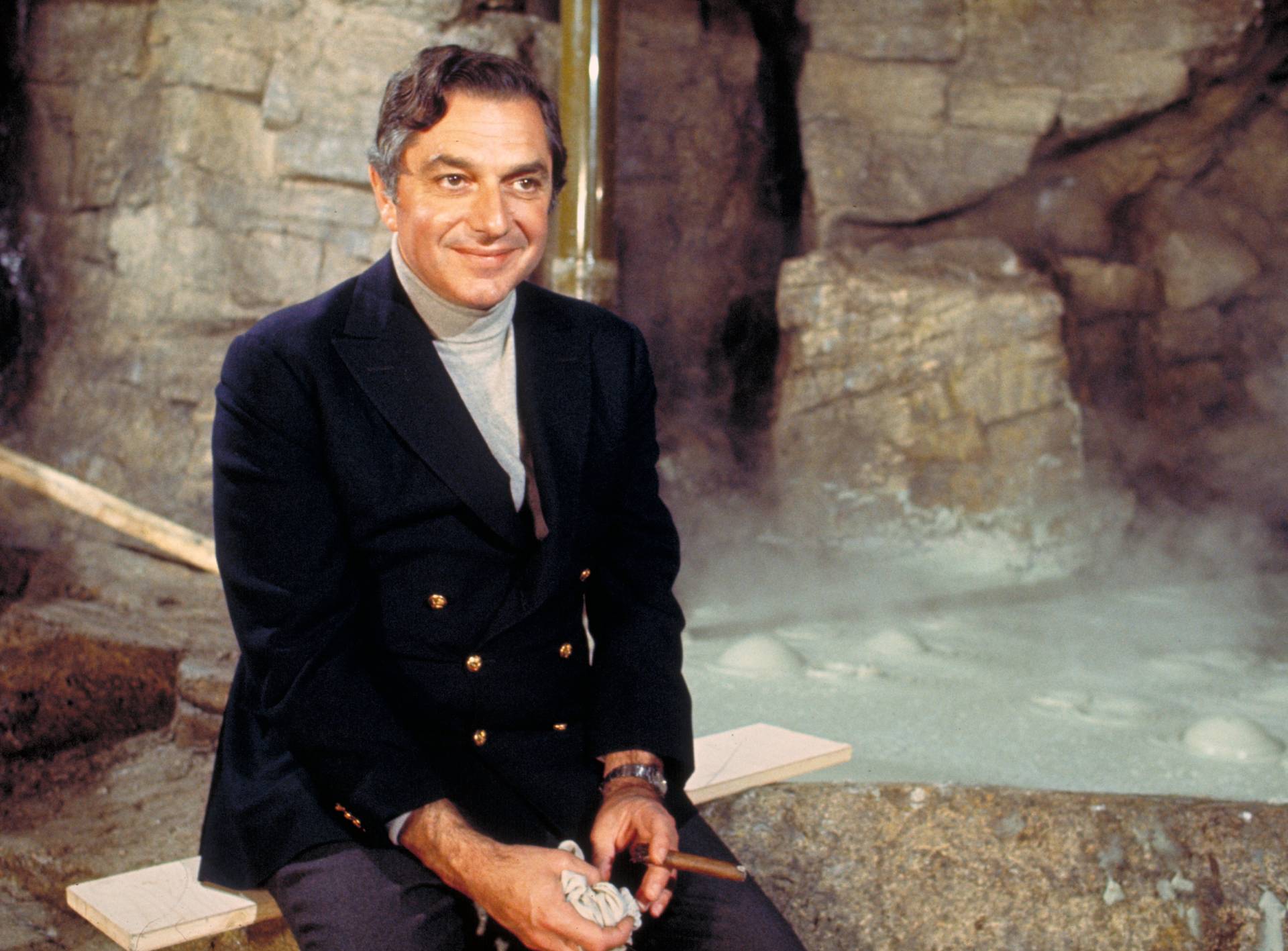
Diamonds Are Forever is the seventh James Bond film, released in 1971, and produced by Albert R. Broccoli and Harry Saltzman. The film stars Sean Connery, after a one picture absence, as 007, and is directed by Guy Hamilton, returning for his second film in the series.

Available to pre-order on 007Store.com, shipping mid-late April 2026.

Inside Quantum Of Solace’s Unforgettable Fire

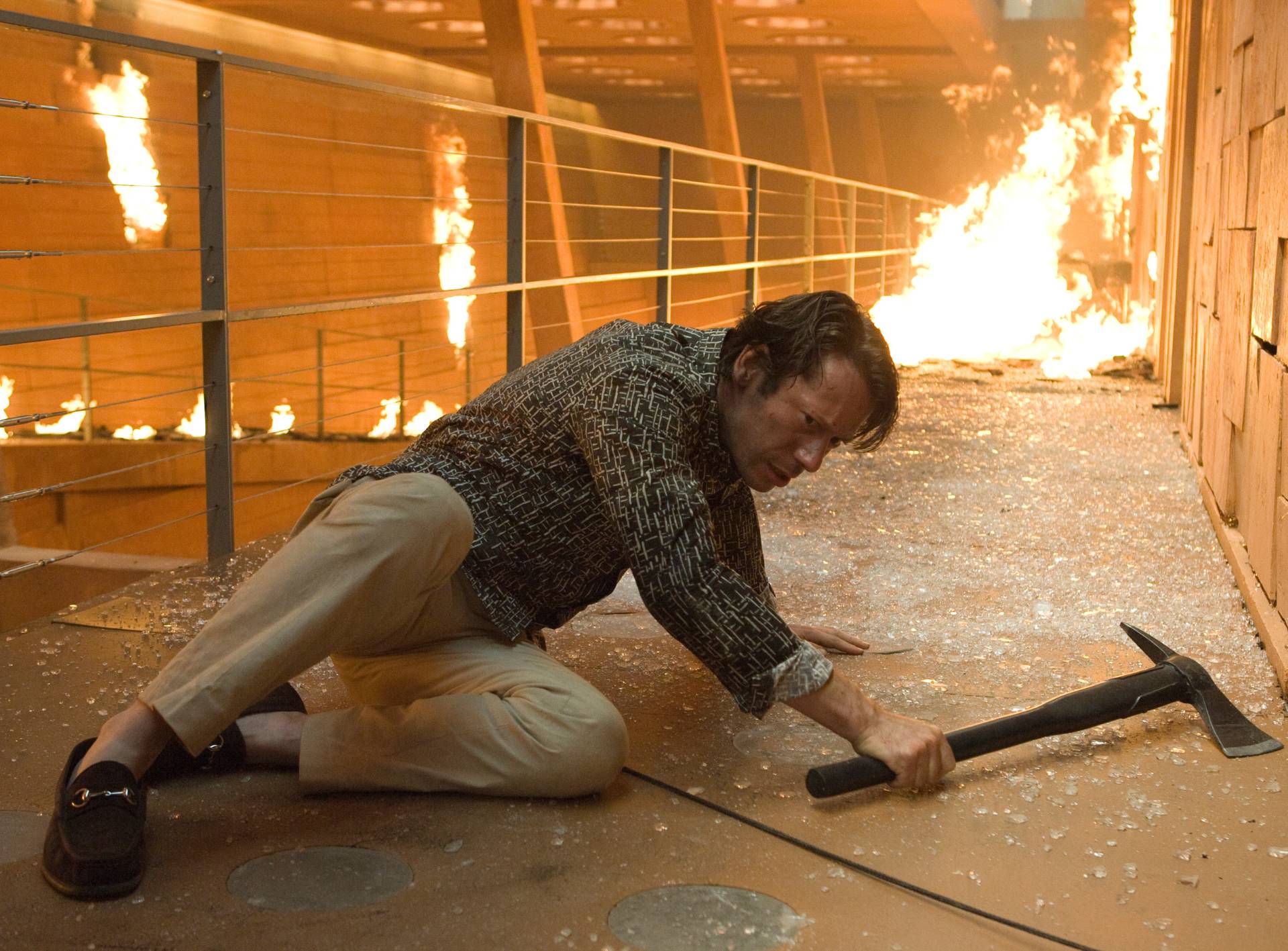
Quantum Of Solace ends in a fiery showdown at an eco-hotel in the Bolivian desert, where eco-industrialist Dominic Greene (Mathieu Amalric) and the former Bolivian dictator General Medrano (Joaquin Cosio) are meeting to discuss the overthrow of the current Bolivian government. 007 has long dealt in flame-filled sequences — the destruction of the Liparus super tanker in The Spy Who Loved Me, the fireball in the bunker in The World Is Not Enough — but the inferno at the climax of Quantum upped the ante on complicated, extensive, and explosive set-pieces.

Doubling for the hotel is the spectacular European Southern Observatory and hotel complex in northern Chile’s Atacama Desert, roughly three hours from the nearest town and situated at an altitude of 6000 feet. The location was the idea of set decorator Anna Pinnock, who had visited the Observatory and suggested it to Dennis Gassner. The production designer Google-searched the location and, by the third image, was bowled over, so immediately sent the images to director Marc Forster.

“When Dennis showed me that location, I was in awe,” Forster told Mark Salisbury. “I had never really seen anything like it. It’s such a fascinating building, and even now, looking back to it, you felt like you’re on a different planet.”

Gassner took the idea to executive producer Callum McDougall, who approached the German management company behind the complex. The owners stipulated that the production could shoot in the daylight but couldn’t use lights after dark, as it would interfere with the observatory’s monitoring of the night sky. “I said, ‘The bigger thing is, in the script, we blow this place up,’ and they went, ‘Ah,’” said McDougall. “I said, ‘It’s fine. We’ll build our own version of it’.”

Shipping a crew of 200 to the remote location, the production recreated portions of the hotel in the exterior, which was subsequently set on fire. For the interiors, the production returned to Pinewood Studios, building six interior sets, the largest filling Pinewood’s mammoth 59,000ft 007 stage from floor to ceiling with three levels of walkways and staircases. Bond shooting through the skylight was captured on March 28, then the unit shot the firestorm for four weeks in May, setting the garage and stairwell set, the lobby and restaurant, the walkways, and Medrano’s bedroom ablaze.

“We did many explosions, fire and collapsing-ceiling tests prior to filming,” said special effects supervisor Chris Corbould. “We built a full-size replica of the bedroom at Longcross Studios in Surrey to test for the dramatic end sequence where the walls are blown out to enable Bond and Camille to escape.”

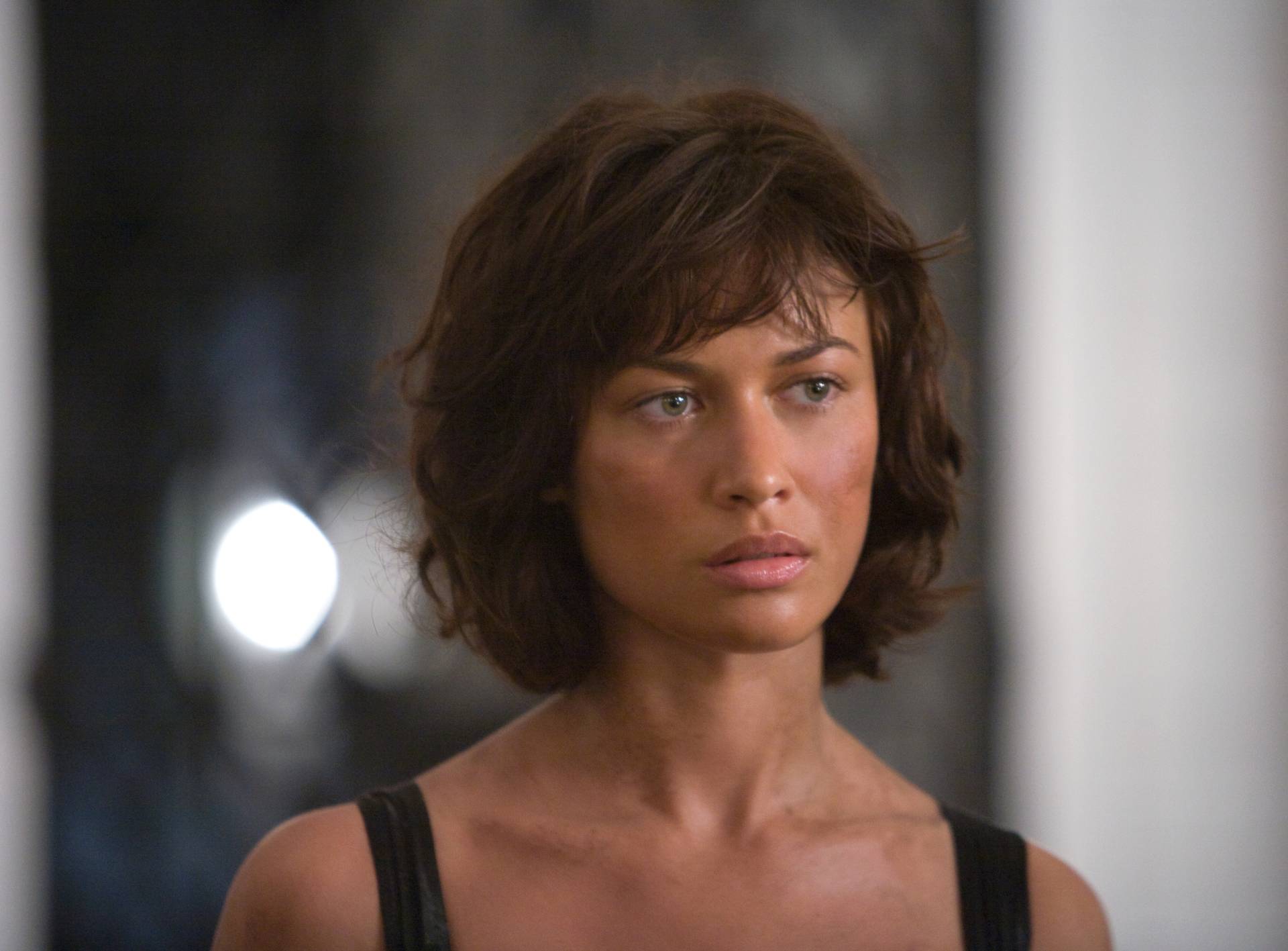
As such, the cast and crew underwent multiple rehearsals with fire, Daniel Craig and Olga Kurylenko visiting Corbould’s workshop to get a sneak preview of the pyrotechnics, helping them feel confident so they could focus on the emotion of the scene. For the showdown between Bond and Greene, stunt coordinator Gary Powell rehearsed Daniel Craig and Mathieu Amalric separately with stunt doubles and then brought them together. 

“People assume that as soon as you see fire you can’t get within 20 feet of it, but you can actually get quite close if the heat is going in the right direction,” said stunt coordinator Gary Powell. 

When it came to shooting, the actors sported Nomex fire-resistant material soaked in retardant gel under their costumes to protect them from burns.

“The hotel was eco-friendly, so we thought it would have biofuel cells for the heating. Dennis wanted to reflect that with an unusual look to the flames,” said Corbould. “We filmed the sequence using directional steel pyrotechnic pots with mixtures of petrol, isopropanol and green/blue flame fluid imported from the US. This concoction gave an orange core explosion with green and blue tinges around the outside.”

With complex choreography and huge spectacle, the filmmakers didn’t risk anything. “We had six cameras carefully placed to cover the fire and explosions, because there would be no second chances,” said cinematographer Roberto Schaefer. No second chances. Sounds like a motto Bond might live by. 

The Vehicles Of Timothy Dalton’s 007

Timothy Dalton’s 007 adventures traversed the gamut of exciting vehicles. From gadget-laden cars to high-tech ships to heavy-duty aircraft (not to mention one unforgettable cello case), Bond’s many modes of transport have added different textures and colour to the drama. Here are seven of the Dalton era’s most dynamic rides.

LAND ROVER 88 SERIES III

AS SEEN IN: The Living Daylights

THE VEHICLE: The Land Rover 88 Series III is a munitions truck, part of a series designed by the Rover group. The series I was designed as a response to the American jeep during World War 2.

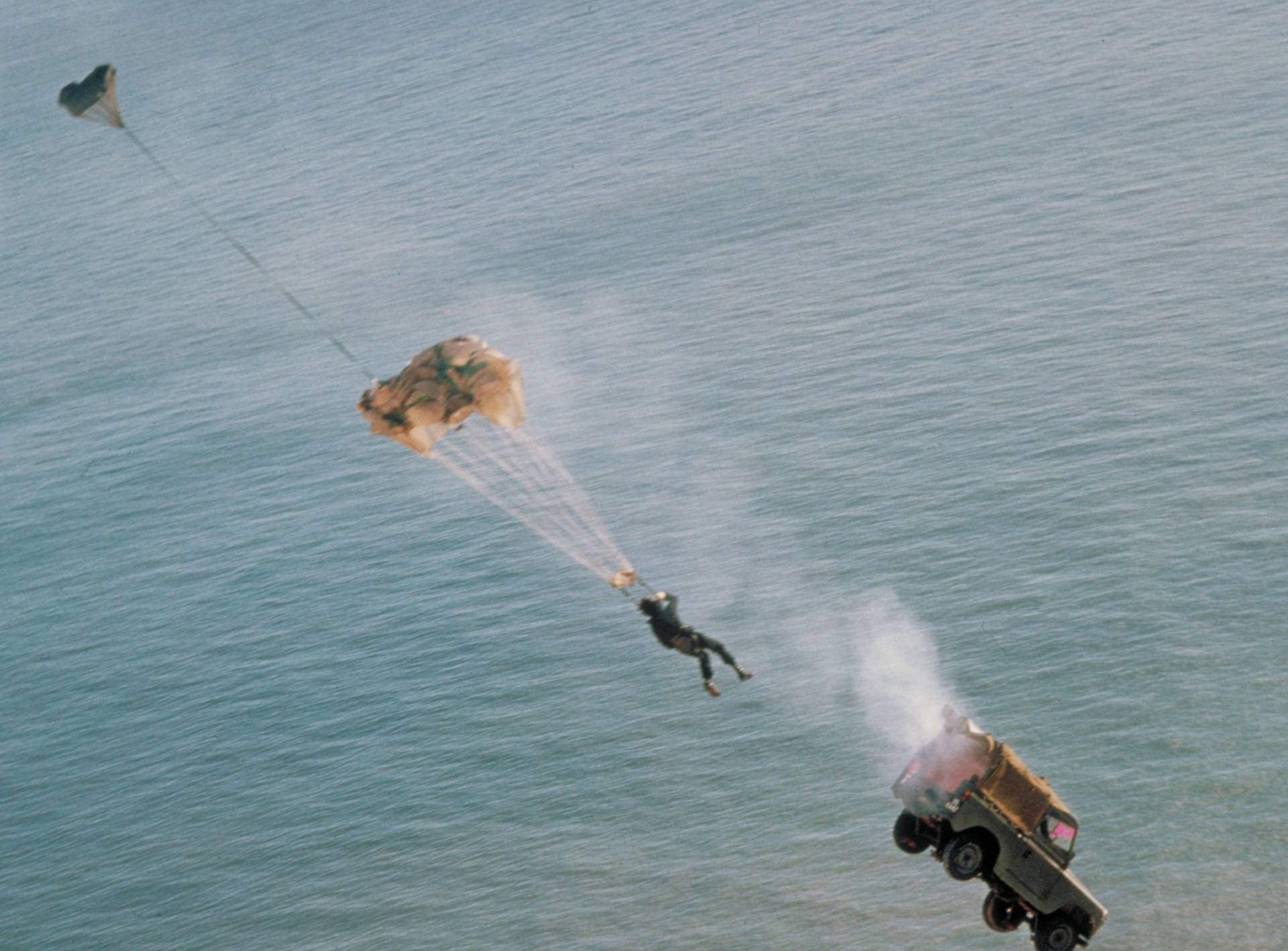
THE ACTION: Bond is participating in a training exercise penetrating radar installations in Gibraltar with fellow MI6 agents 004 and 002. During manoeuvres, 004 is killed by an assassin who steals a Land Rover and speeds off. 007 gives chase and leaps onto the roof. When the Land Rover crashes through a checkpoint, a soldier fires at the vehicle, igniting crates filled with explosives stacked in the back. With the burning vehicle careering around the cliffs, Bond cuts through the canvas roof with a combat knife and begins tussling with the driver. 

The increasingly out of control Land Rover crashes through newsstands, alfresco restaurants, and a Volkswagen Beetle before flying off the cliff edge towards the sea. Bond escapes by engaging his parachute and flying out of the rear compartment as the jeep spectacularly blows up in a mid-air explosion. 

ASTON MARTIN V8 VANTAGE VOLANTE

AS SEEN IN: The Living Daylights

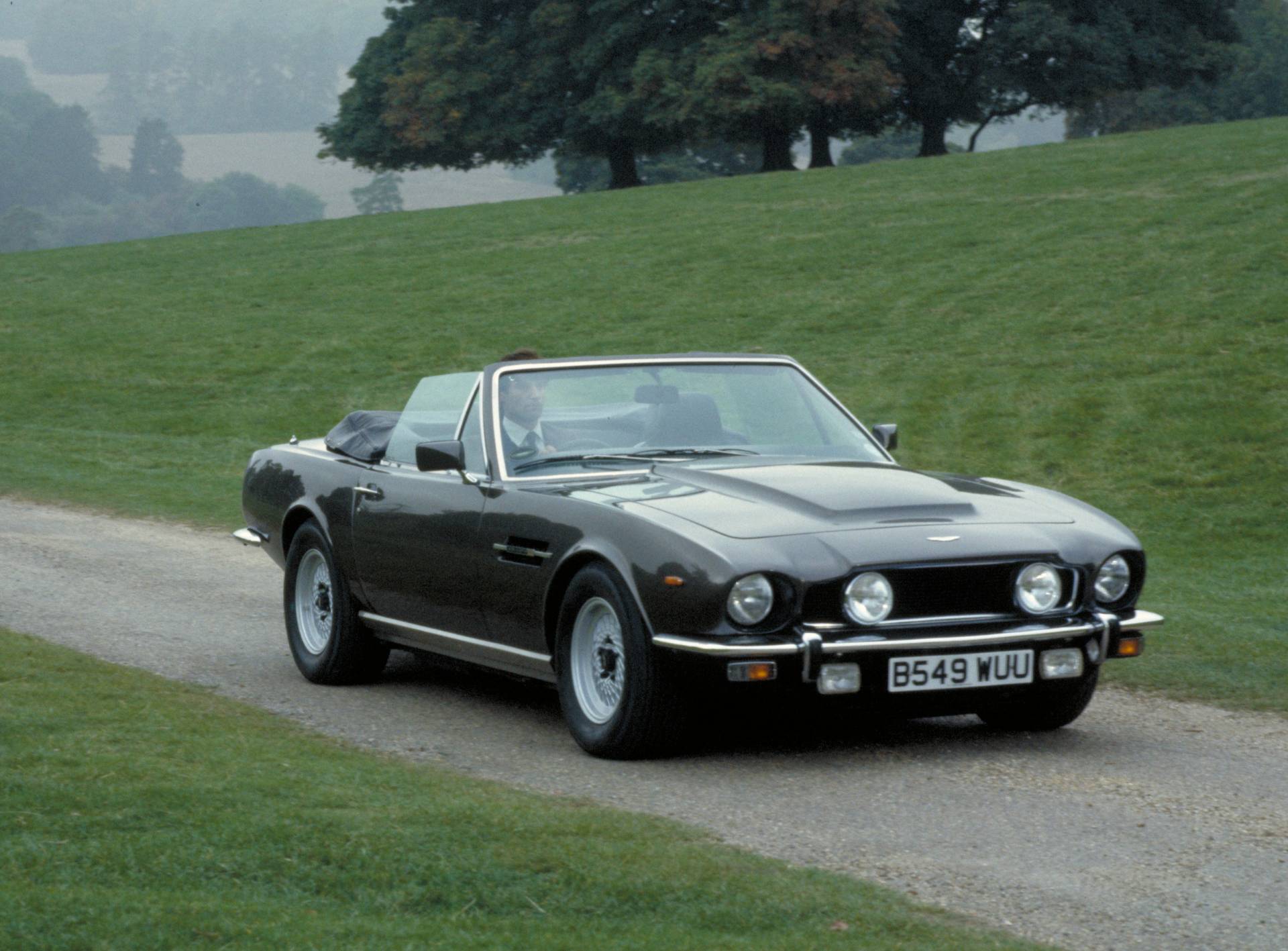
THE VEHICLE: Aston Martin returned for the series for the first time since On Her Majesty’s Secret Service with the V8 Vantage, the production sourced three Vantages for use in the filming. 

THE ACTION: Pursued by the KGB and Slovak police, Bond (Timothy Dalton) and cellist Kara Milovy (Maryam d’Abo) speed to the border between Bratislava and Austria. During the chase, Bond unleashes a plethora of Q Dept’s hidden gadgets; a laser beam installed in the hubcap (which removes a police car from its axel), retractable skis and spiked tyres to help movement across the ice; bulletproof windows, front mounted rockets (hidden behind the fog lights) and a rocket booster to give the car an extra lift. The car also has a self-destruct mechanism that Bond activates when the Slovak police approach.

CELLO CASE

AS SEEN IN: The Living Daylights

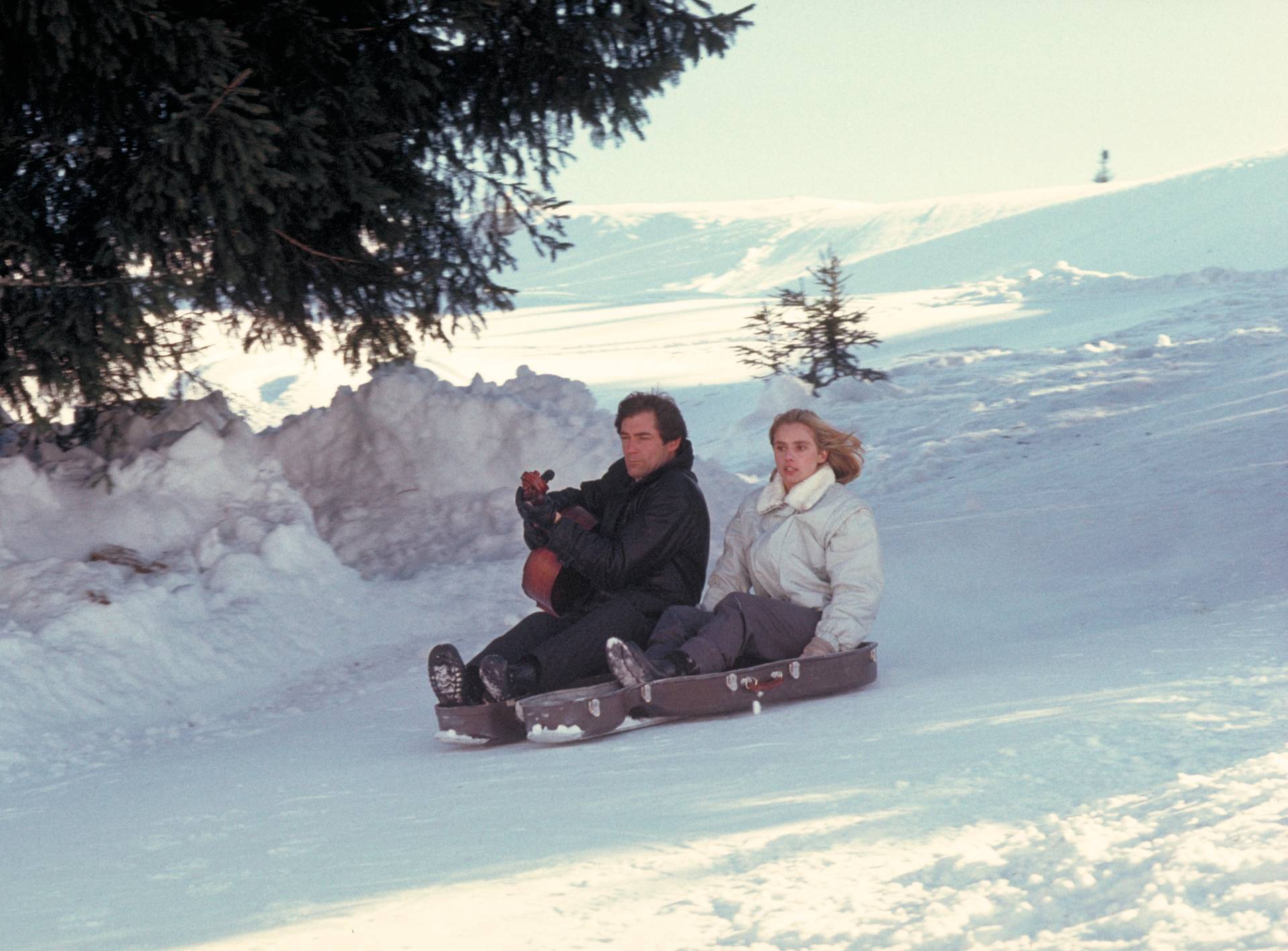
THE VEHICLE: The girlfriend of the villainous Koskov (Jeroen Krabbe), Kara Milovy, is a world-class cellist. Her bulky cello and its case might initially have been a hindrance — “Why didn’t you learn the violin?” quips Bond — but it proved to be a lifesaver.

THE ACTION: Heading for the Austrian border, Bond’s Aston Martin loses its skis and comes to a sudden stop in the snow. Exiting the car, Bond and Kara come under heavy fire, so 007 takes the cello case and improvises into a toboggan, using the cello as a rudder. Reaching the Austrian border, Bond tosses the cello over the barriers, quipping, “Nothing to declare!” It’s no way to treat a Stradivarius.

LOCKHEED C-130 HERCULES

AS SEEN IN: The Living Daylights

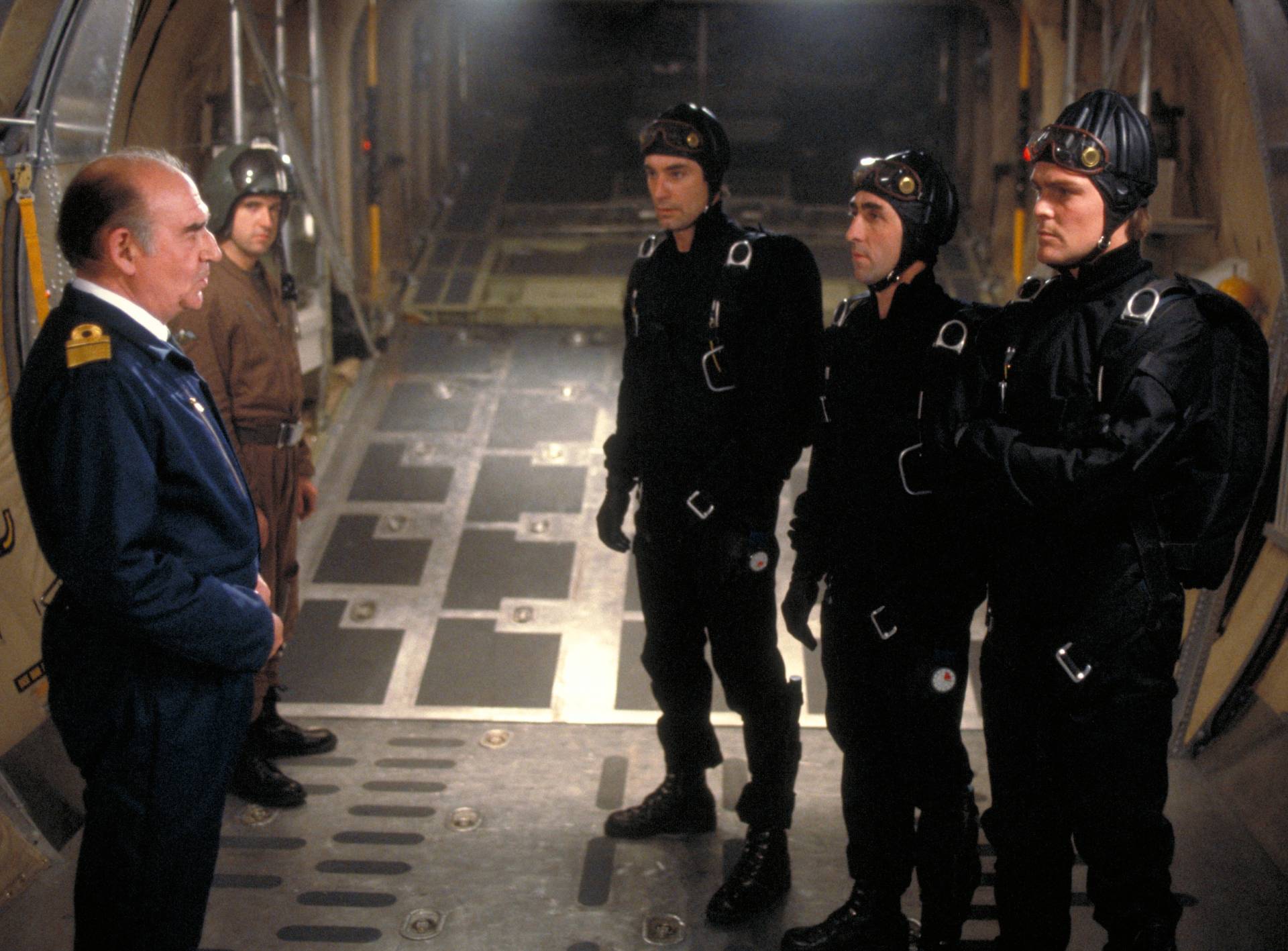
THE VEHICLE: A four-engine cargo aircraft, the Hercules appeared in You Only Live Twice before its starring role in The Living Daylights. The aircraft appears twice, firstly as the RAF plane used to drop the 00 agents into Gibraltar but takes a more substantial role during the siege at the Soviet airbase in Afghanistan.

THE ACTION: Helped by the Mujahideen, Bond and Kara infiltrate an air base to plant a bomb in a Hercules carrying a large shipment of opium waiting to be sold by Koskov and Whitaker (Joe Don Baker). Bond hijacks the plane, and Kara assumes control as he defuses the bomb. Meanwhile, mercenary-for-hire Necros (Andreas Wisniewski) has stowed away onboard and charges at Bond. The threat is heightened when Kara accidentally opens the cargo doors. The two men are sucked out of the plane, hanging onto the net holding the opium for dear life — as Necros hangs from 007’s boots, Bond cuts the laces, and the assailant plunges to his death.

But the danger isn’t over, even after Bond manages to utilise the bomb to drop it on Soviet soldiers fighting the Mujahideen. Machine gunfire from the ground battle punctures the fuel tank, and the Hercules plummets to the ground. Bond quickly improvises an escape. Pulling the release chute on a jeep in the hold, Bond and Kara exit the aircraft as it crashes into Pakistan airspace. When the dust and the vehicle settle, 007 suggests he knows a good restaurant in Karachi, and the pair head off for dinner. 

THE WAVEKREST

AS SEEN IN: Licence To Kill

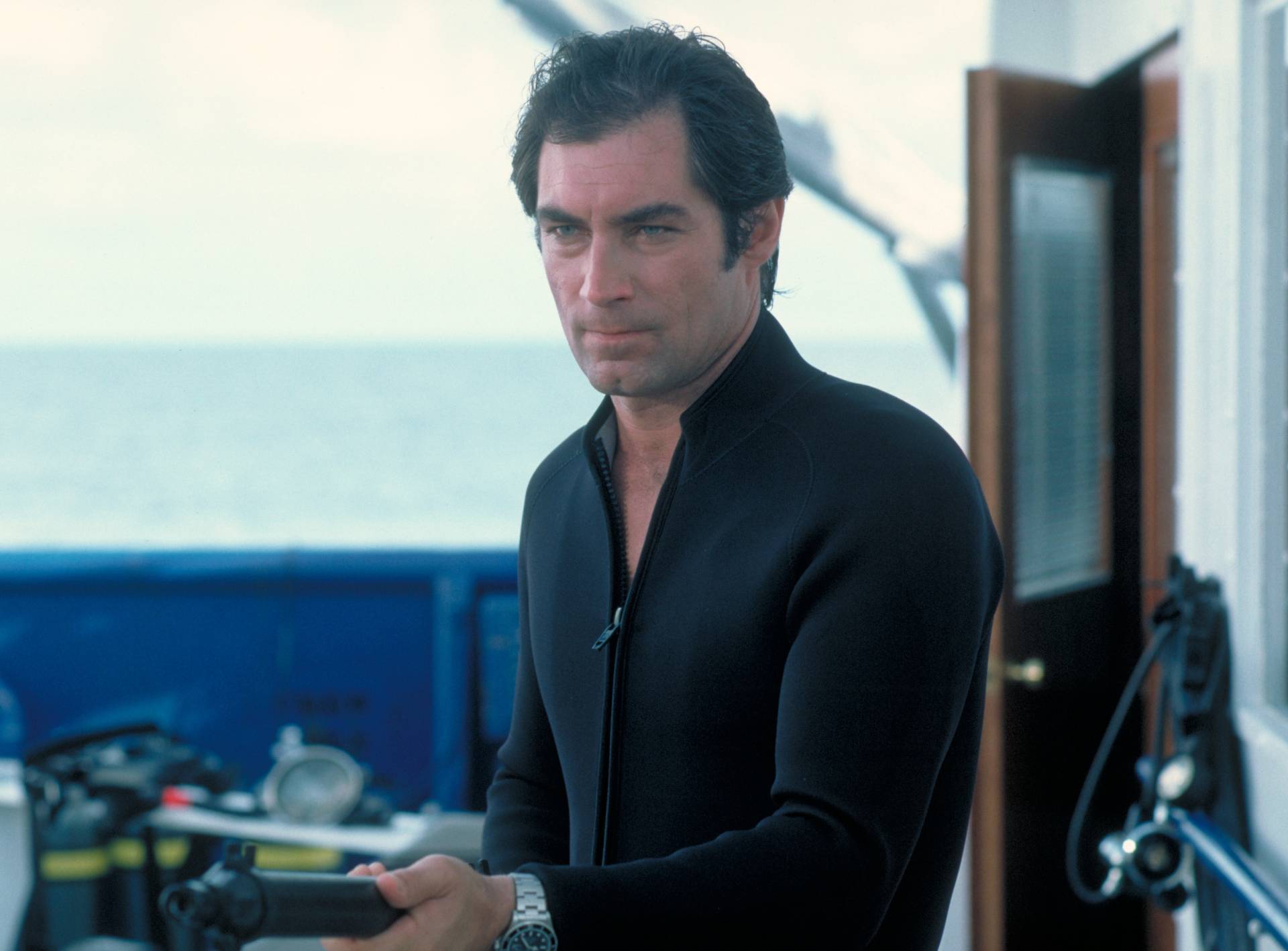
THE VEHICLE: First appearing in the Ian Fleming short story The Hildebrandt Rarity as a luxurious cruiser, the Wavekrest in Licence To Kill is a drug emporium masquerading as a marine research vessel.

THE ACTION: The Wavekrest is owned by the businessman and drug smuggler Milton Krest (Anthony Zerbe). The ship contains a luxurious state room and pieces of oceanographic research equipment used to mask its purpose of smuggling cocaine. The vessel also plays host to an unmanned, remotely-controlled underwater vehicle that is deployed to transfer narcotics and money in concealed compartments. 

On the trail of drug kingpin, Franz Sanchez (Robert Davi), Bond infiltrates the ship and scuppers the drug lord’s latest shipment, stealing five million dollars. Later, Bond reboards the Wavekrest and sets up Krest by placing the missing millions into the ship’s hyperbaric chamber. When Sanchez discovers the money, he entraps Krest in the chamber and, with an axe, rapidly depressurises the chamber, dispatching Krest to a grisly demise.

THE KENWORTH W-900

AS SEEN IN: Licence To Kill

THE VEHICLES: A fleet of trailer trucks used by Franz Sanchez to hide and transport illegal drugs. Sanchez uses a clandestine drug lab to dissolve 20 tonnes of cocaine into petrol shipments — the drug lord provides a process to separate the drugs from the petrol and solidify them for resale.

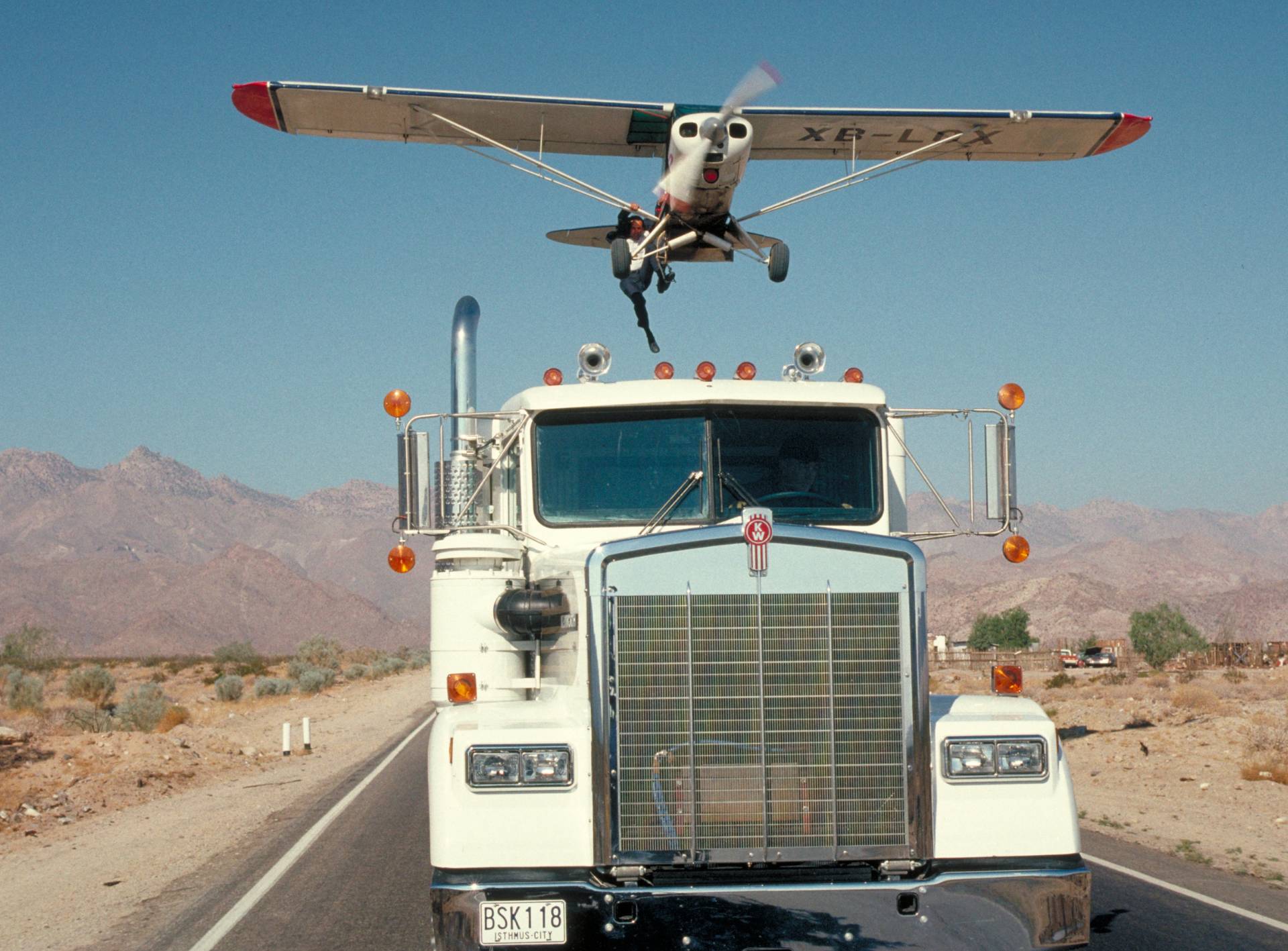
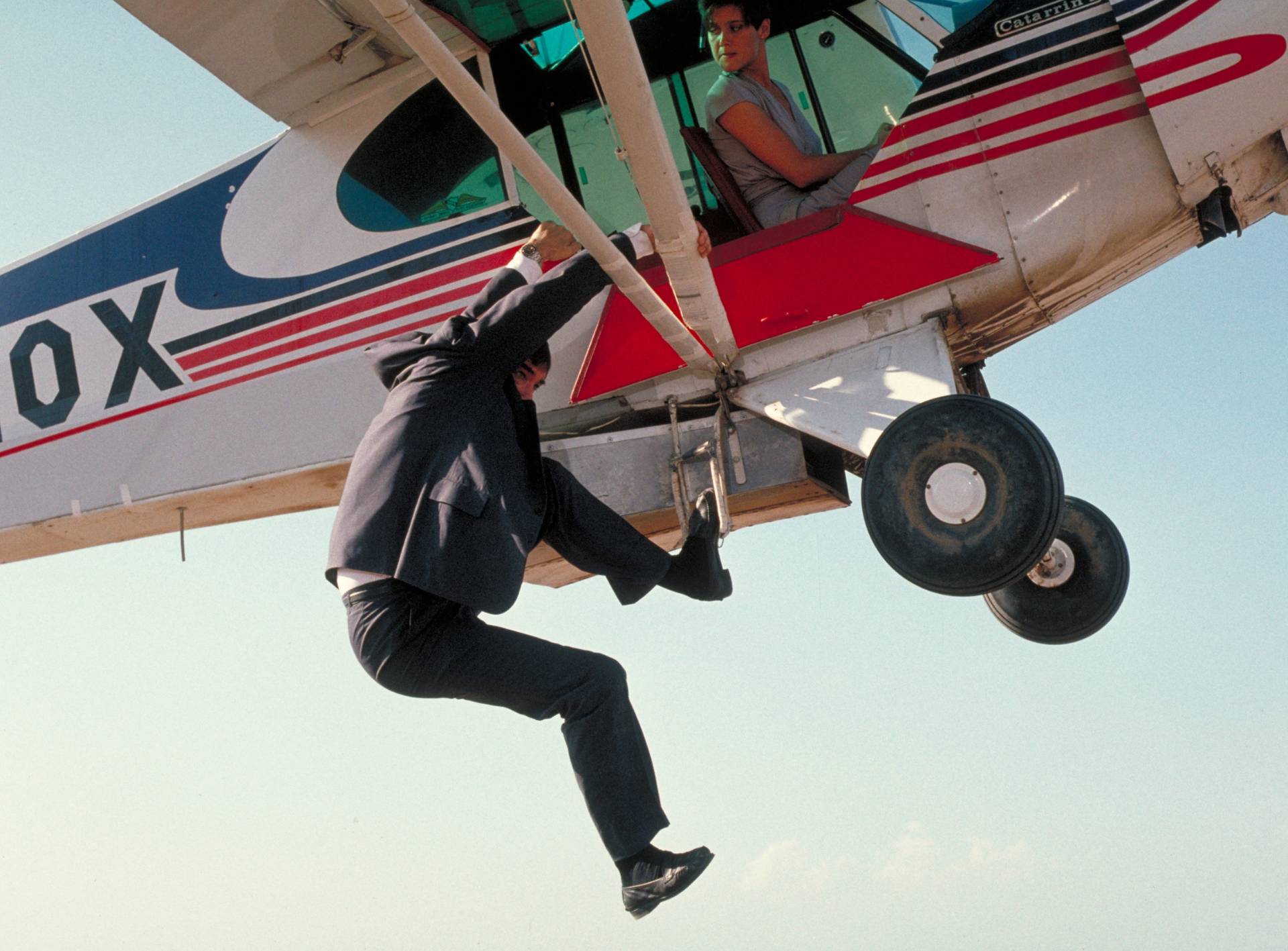
THE ACTION: After Bond destroys the lab converting the cocaine to petrol, Sanchez orders four trucks to transport the narcotics, joining the procession in a Maserati. In a Piper Super Club, flown by CIA agent Pam Bouvier (Cary Lowell), Bond tracks the trucks, leaping from the plane onto the top of a Kenworth trailer. Ejecting the driver from the cabin, Bond sets out to disrupt the convoy. Evading a Stinger Missile by jacking the vehicle on its side, Bond then takes out the next Kenworth by decoupling the tanker and rolling it down the hill so it collides into the third tanker, causing a huge explosion.

Driving through the resulting fire by lifting the engine in the air, Bond is on the tail of Sanchez, who has commandeered the remaining truck. Bond scrambles onto Sanchez’s tanker, opening the valve to let the diluted drug stash pour out onto the road, creating a trail of fire. As 007 climbs towards the truck’s cabin, Sanchez’s henchman slams on the brakes, forcing Bond to fall forward. The truck moves off again, with Sanchez chasing Bond with a machete. The pair fight as the Kenworth, with its driver having bailed, topples over down a steep bank, leaving Bond and Sanchez dazed but ready for a final duel. 

PIPER SUPER CUB

AS SEEN IN: Licence To Kill

THE VEHICLE:  A two-seat single-engine monoplane flown by CIA agent Pam Bouvier that plays a pivotal role in helping Bond stop Sanchez’s convoy. 

THE ACTION: During the hunt for Sanchez, Bond and Bouvier arrive in Isthmus in a Beechcraft B55 Baron aircraft, which is later dismantled by Sanchez’s men to stop the CIA agent following Bond to Sanchez’s cartel operation. Bouvier steals the Piper Super Cub to continue the chase, and after Bond destroys the lab, gives him a ride to pursue the tanker convoy. 

During the pursuit, she saves Bond’s life by dropping dust on Sanchez’s men as they move in for the kill. Later in the chase, Sanchez blows a hole in the Piper’s tail, forcing the plane to crash into the rocks, breaking off the wings. Showing her facility with a very different kind of vehicle, Pam shows up in the last remaining Kenworth tanker truck to pick up an exhausted Bond after he has defeated Sanchez.

How Daniel Craig Became James Bond

In 2005, James Bond producers Michael G. Wilson and Barbara Broccoli decided the series needed a reboot. Following Die Another Day, it was, in Wilson’s words, “very important to bring it back to Earth.” The decision was solidified when the rights to Casino Royale, Ian Fleming’s first James Bond book, became available, and the filmmakers grabbed the opportunity to return 007 to his realistic roots.

“It’s really the first mission that Bond has,” said Wilson. “It’s right after he got his 00 status and is about what he goes through, the physical ordeal, the mental pressures he has and then the love affair he has.”

A fresh start needed a new Bond. Casting Director Debbie McWilliams, who had participated in casting both Timothy Dalton and Pierce Brosnan, was tasked with finding the new 007 and initially focused her search on young actors to match the story of a new agent earning his stripes. Yet when it was decided to widen the age range of the actors, Barbara Broccoli had one name at the top of her list: Daniel Craig. It was an iconic role that had never been on the Cheshire-born actor’s wish list.

“When I became an actor, I never fantasised about playing James Bond,” said Craig. “As a kid, yeah, but that was being James Bond, that was something else, that was fantasy.”

A graduate of the National Youth Theatre and Guildhall School of Music and Drama, Craig had caught the eye in the BBC drama Our Friends In The North. He subsequently proved his range in a succession of diverse, critically acclaimed roles, all collaborations with major filmmakers; as the muse of artist Francis Bacon in John Maybury’s Love Is The Devil, as Paul Newman’s son in Sam Mendes’ Road To Perdition, and as a Mossad agent on the trail of Palestinian terrorists in Steven Spielberg’s Munich. While it is often cited that Craig’s lead performance in Matthew Vaughn’s Layer Cake was his calling card for 007, it was his performance as Jesuit priest John Ballard in Shekhar Kapur’s 1998 period drama Elizabeth that grabbed Broccoli’s attention.

“He defines his generation of actors,” she said. “He’s got everything that is required — he has that toughness but he has that vulnerability, he’s incredibly sexy, he’s very charismatic, and he’s very, very versatile and agile as an actor.”

While Craig had been in discussions with Broccoli and director Martin Campbell, even reading Paul Haggis’ Casino Royale script, the actor still had to do a screen test. The testing process for Casino Royale started in July 2005 under the code-name Destiny, with a second phase taking place in September using the faux title Alcatraz

Bond screen tests are elaborate affairs involving hair and make-up, costumes, sets, and other actors. Under the guidance of Martin Campbell, the would-be 007s were led through a scene from From Russia With Love, where Bond first meets Tatiana Romanova. On September 27, Henry Cavill donned the tux. The following day, Sam Worthington stepped in front of the camera, and then on September 29th, it was Craig’s turn. The actor was scheduled to do the whole day, but by lunchtime decided he had had enough. “I was like, ‘This is crazy’,” Craig told Mark Salisbury for the book Being Bond. “I started the way I meant to go on – being a pain in the arse!”

Despite Craig being perfect in the role, it was still not a done deal. The actor was wary of the huge responsibility of the role and the potential of being typecast. He sought advice from family, friends, and colleagues, including former Bond Pierce Brosnan, who just said, “Go for it.” To help allay Craig’s concerns and give him greater control over his own destiny, Broccoli gifted him creative input into the development of the script, the choice of director, and the key cast.  

Craig learned he had won the role on a phone call while out shopping, during a day off shooting The Invasion opposite Nicole Kidman in Baltimore.

“It’s a bit anticlimactic, really, because your expectations go so high, and then, suddenly, they go, ‘Yes, it’s yours’,” he remembered. “And you never really know what to do with yourself. I went out and got very drunk on my own — I was filming in Baltimore and everybody else was working. Of course, I couldn’t really tell people in the bar I was sitting in getting very drunk, ‘I’m James Bond’. I think I would have been thrown out on my ear or sent off to a mental hospital.”

The actor was announced to the world as the next 007 in a media event on the River Thames on October 14, 2005. Having flown back from the US, he was escorted to the press conference by a convoy of Royal Marine Rigid Raider Speedboats.

“I’m just glad I didn’t fall off the boat.” He laughed. “I mean, that’s really the only thing that really matters. If I had fallen off, I would have swum to the other shore and said, ‘Thanks. Goodnight. I had a go but it didn’t work.’ The Royal Marine next to me just said, ‘If you fall off, you’ll probably be dead anyway, so don’t worry about it.’”

The initial response was mixed. The actor was derided for being too short — he’s 5ft 11” — and for not having the dark hair described by Ian Fleming in the novels. He was even criticised for sporting a life preserver, which naval health and safety regulations demanded he wear at the last minute. “Apparently it was a sign I couldn’t swim or something,” he said. “I should have worn orange arm bands — it would have been a much better look.” Some of the Bond veterans had seen all this sniping before.

“When Sean Connery was hired everyone said, ‘Oh disaster!’ because he wasn’t a David Niven type,” observed Broccoli.

“It was the typical tabloid bullshit that goes with any new Bond,” chimed Martin Campbell, who directed Pierce Brosnan’s first 007 mission, GoldenEye. “You’re guilty until proven innocent.”

With characteristic good humour, the actor took all the brickbats in his stride.

“Some of the stuff that’s been said is as close to a playground taunt as you are going to get,” he laughed at the time. “‘You’ve got big ears!’ Fucking hell! Well, the only way I can do that is to get it right. Believe me, no one cares more about this than I do.”

Of course, opinions changed immediately after Casino Royale premiered on November 14, 2006. Craig became the first actor to earn a BAFTA nomination for playing Bond and took the character in new directions over four more films. Not bad for a kid who grew up playing James Bond in the playground.

And The Award Goes To…

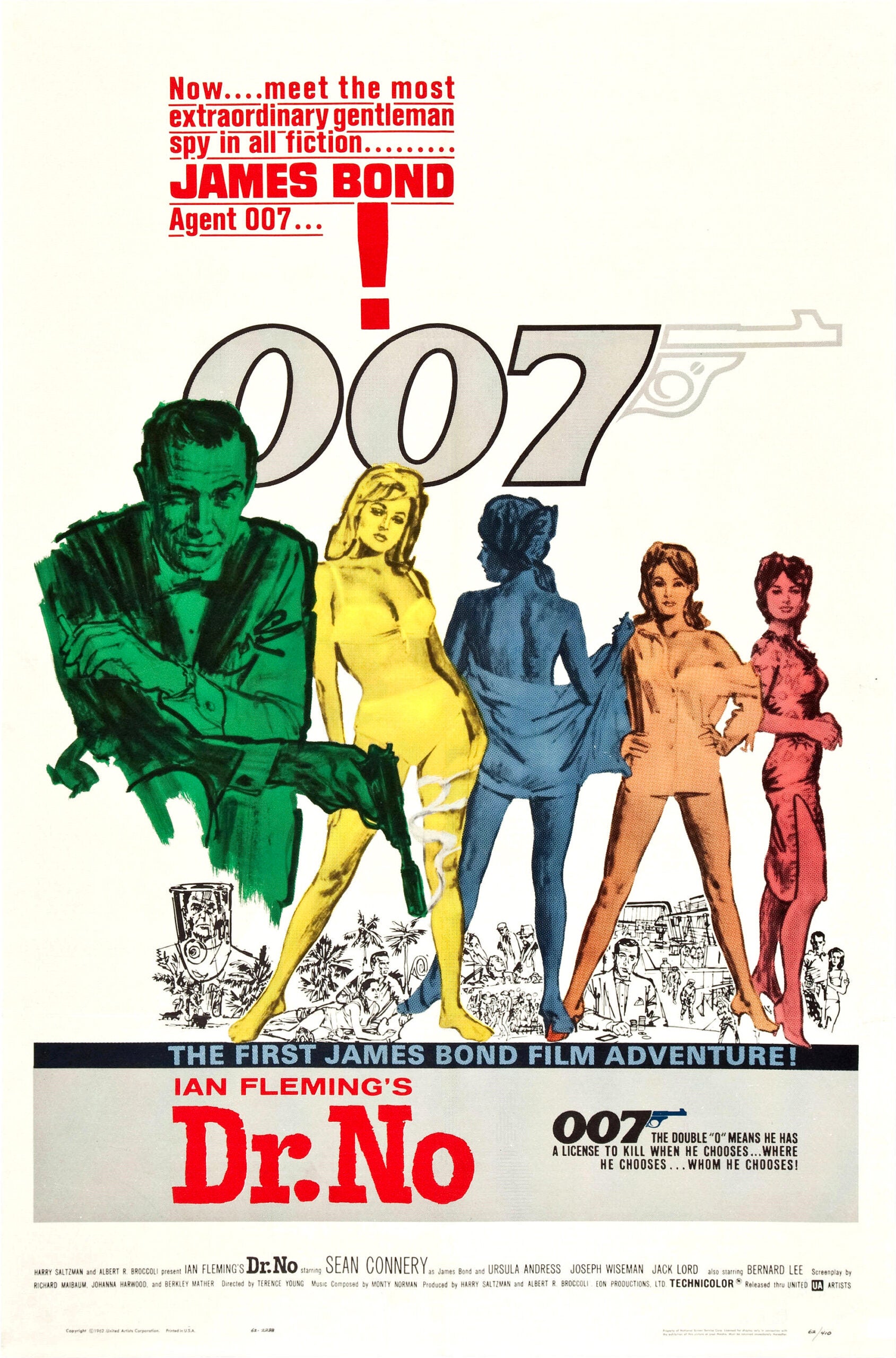
The first Bond film, Dr. No, won ‘New Star Of The Year’ award at the Golden Globes for Ursula Andress’ portrayal of Honey Ryder.

The first 007 film to win an Academy Award was Goldfinger. Norman Wanstall won the Best Sound Effects Oscar the first time the series was nominated. “When Angie Dickinson announced I’d won I just couldn’t believe it,” recalled Wanstall. “After the presentation, you have to go outside where you’re interviewed. When I returned to my seat, I remember my wife saying to me, ‘Do you realise you’ve missed Judy Garland live?’ She always remembers that as the highlight of the whole affair, the fact that she saw Judy Garland sing live.”

Thunderball won the following year in the Best Special Visual Effects category for John Stears. The award came as a complete shock to its winner, who didn’t even attend the ceremony. “I had a call from a friend in Wisconsin who said, ‘I’ve just seen Jordan Klein receive an Oscar from Bob Hope for you in your absence. You’ve won the Special Effects Oscar for Thunderball,’” remembered Stears. “I thought he was kidding but he wasn’t. Later I had a call from the customs people at Heathrow Airport to go over and collect a package, which I did on a wet and windy day and I had to pay import duty too.”

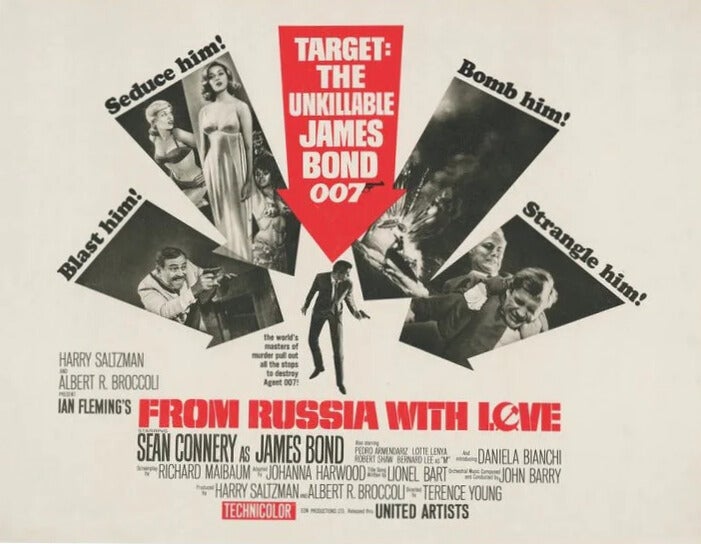
The first 007 BAFTA went to Ted Moore for From Russia With Love. The award was for Best Cinematography — Colour.

The Bond film with the most Oscar nominations? That would be Skyfall with five, for Best Cinematography, Original Score, Original Song, Sound Mixing and Sound Editing. It won for Sound Editing (Per Hallberg, Karen Baker Landers) and Original Song (Adele, Paul Epworth).

The Bond film with the most BAFTA nominations is Casino Royale, nominated for Outstanding British Film, Adapted Screenplay, Cinematography, Editing, Original Music, Production Design, Sound, Visual Effects and Best Actor In A Leading Role for Daniel Craig, the first actor to be BAFTA nominated for playing James Bond.

Skyfall became the first 007 film to win in the BAFTA Outstanding British Film category, also winning Best Original Music for Thomas Newman.

At the Saturn Awards, created to recognise the science fiction, fantasy and horror genres, Casino Royale and Skyfall have won for Best Action Or Adventure Film. Pierce Brosnan has won for Best Actor in Tomorrow Never Dies.

Production designer Ken Adam has been nominated for four BAFTAs, for Best British Art Direction — Colour (Goldfinger, Thunderball, You Only Live Twice) and Production Design (The Spy Who Loved Me). He also was Oscar nominated for the Best Art Direction Academy Award for The Spy Who Loved Me.

Speaking of The Spy Who Loved Me, composer Marvin Hamlisch was nominated for Best Original Score at the Oscars, BAFTAs and Grammys but was pipped at the post by John Williams for Star Wars at the Oscars and Grammys, and by John Addison for A Bridge Too Far at the BAFTAs.

The first James Bond song to be Oscar-nominated was ‘Live And Let Die’. The category went on to become the series’ most fruitful hunting ground, gaining six nominations and three wins (‘Skyfall’, ‘The Writing’s On The Wall’ and ‘No Time To Die’). The year the song ‘For Your Eyes Only’ was nominated, Sheena Easton performed the song in an elaborate staging featuring Richard Kiel as Jaws and Harold Sakata as Oddjob.

The only James Bond actor to ever win an Academy Award (to date) for acting is Sean Connery, who won Best Supporting Actor for The Untouchables. He began his speech: “Good evening, ladies and gentlemen…friends… a few enemies.”

Another Bond actor, Roger Moore, played a significant role in Oscar history. Presenting the Best Actor award alongside Liv Ullmann in 1973, the third actor to play 007 was supposed to give the statuette to Marlon Brando for The Godfather. Refusing the award, Brando sent Sacheen Littlefeather to deliver a speech, criticising Hollywood’s representation of Native Americans on-screen.

In his autobiography, Moore recounted that the rejected award wasn’t retrieved from him, so he took it home, crowds outside the Dorothy Chandler pavilion shouting congratulations as he carried the little gold man home. The Academy later sent a representative to pick up the prize.

To mark 50 years of the franchise, the 85th Academy Awards paid special tribute to the franchise, the year after the golden anniversary in 2013 (the year Skyfall was eligible for awards). Bond actor and Oscar winner Halle Berry introduced a montage of clips, while Shirley Bassey performed ‘Goldfinger’ and Adele sang ‘Skyfall’. BAFTA also commemorated the 60th anniversary of the series.

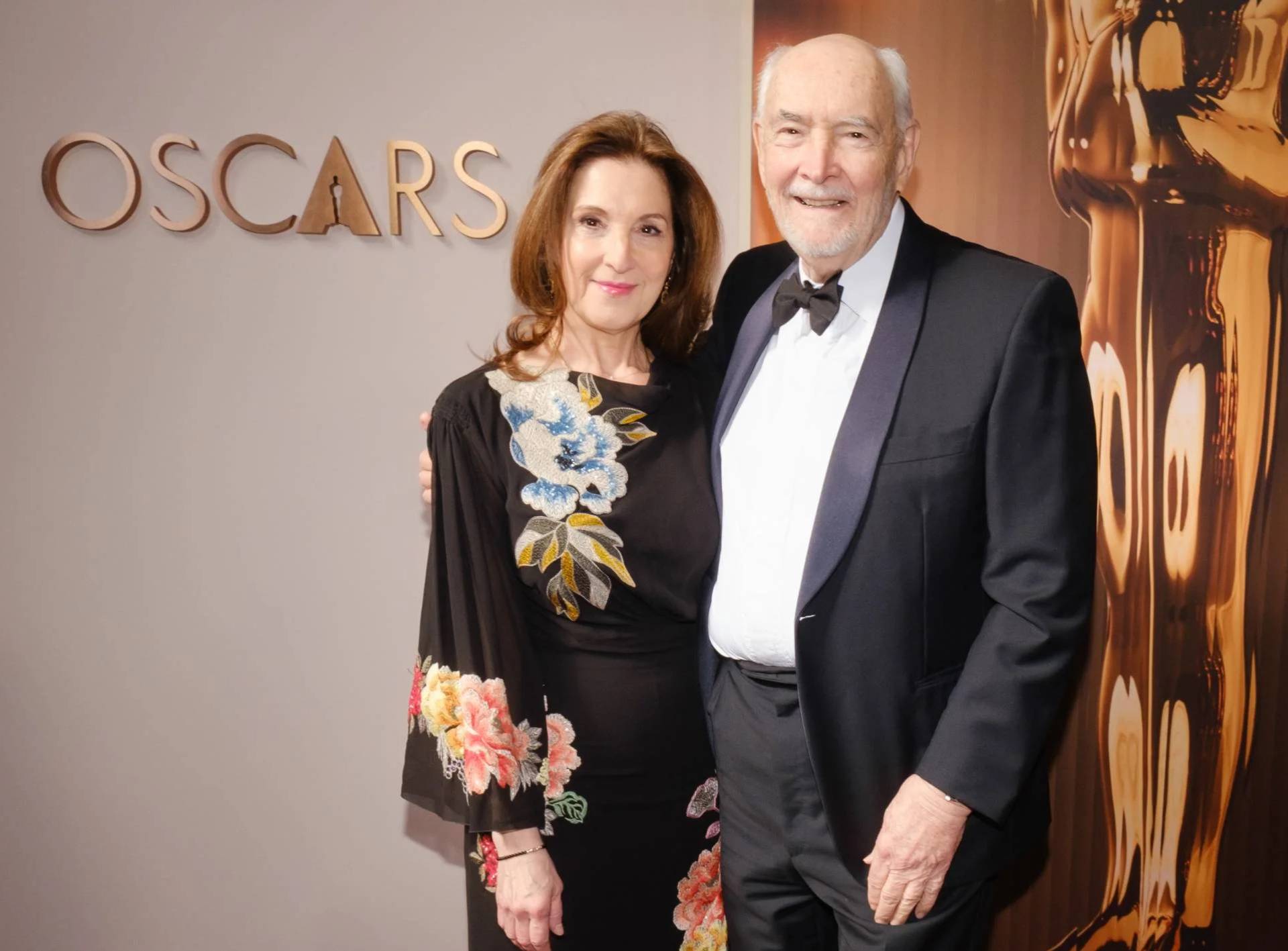
In 1982, EON co-founder and series originator Albert R. Broccoli was presented with the Irving G. Thalberg Memorial Award, which honours creativity in producing, at the 54th Academy Awards. The same honour was bestowed on Michael G. Wilson and Barbara Broccoli at the 2025 ceremony, receiving an Oscar statuette rather than the traditional bust of Thalberg. The series was also celebrated with a medley of songs sung by Lisa (‘Live And Let Die’), Doja Cat (‘Diamonds Are Forever’), and Raye (‘Skyfall’). The sequence started with actor Margaret Qualley dancing to the James Bond Theme.

The Making Of Thunderball — A Timeline

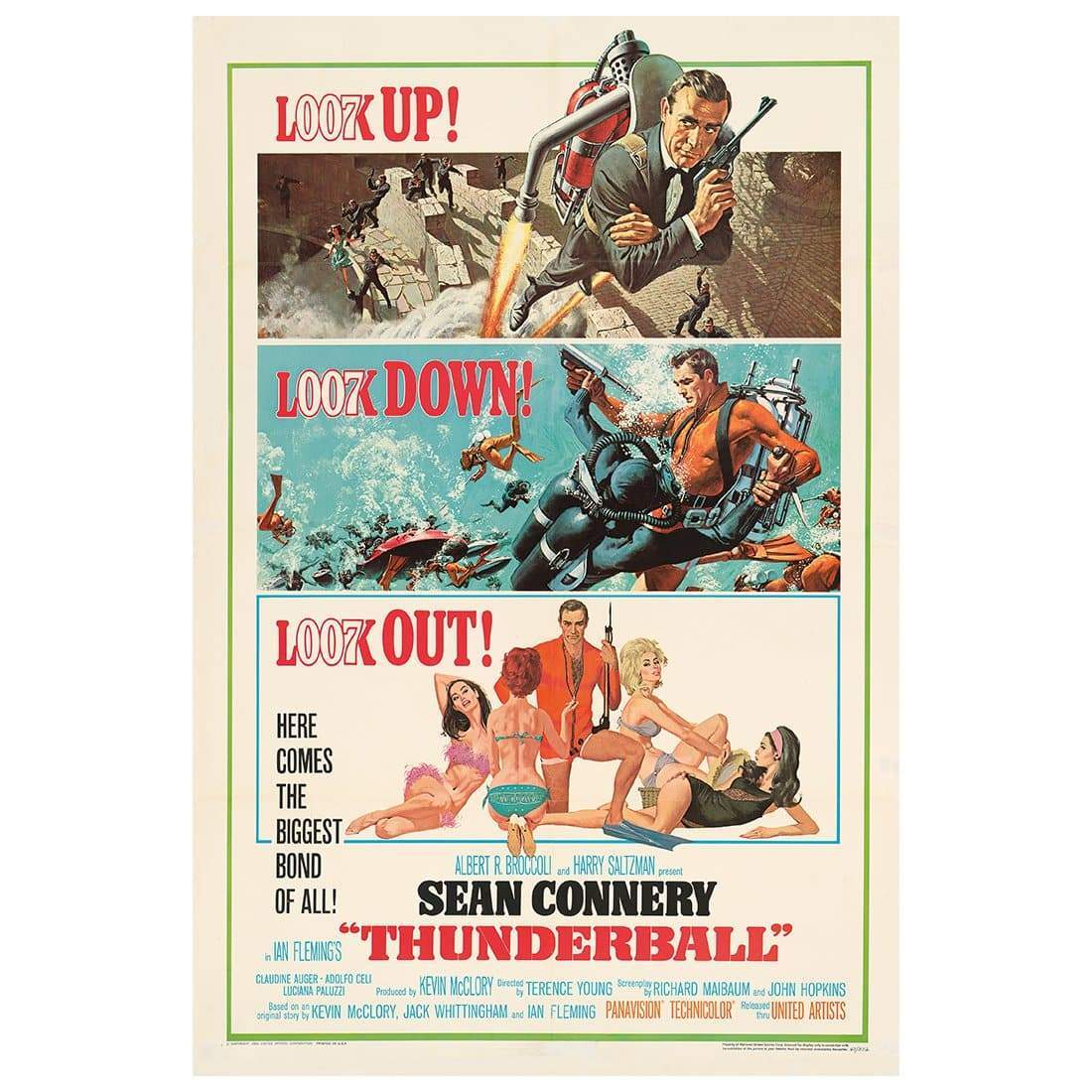
“LOOK OUT! HERE COMES THE BIGGEST BOND OF ALL!” 

So ran the tagline for Thunderball, the fourth adventure to star Sean Connery as 007. Directed by Terence Young, the filmmaker behind the first two missions, Dr. No and From Russia With Love, Thunderball sees Bond travel to the Bahamas to retrieve two nuclear warheads stolen by SPECTRE number two Emilio Largo (Adolfo Celi), used to hold NATO to ransom for the sum of £100 million. Full of exotic locales and spectacular action (often underwater), the shoot was the most ambitious in the series to date. Here is a timeline detailing how the film was made…

February 16 1965

Filming on Thunderball began at the Château d’Anet, west of Paris, with the pre-title sequence. Bond attends a service for a dead spy, Jacques Bouvar, 007 meeting his widow in a living room. The grieving wife turns out to be Bouvar himself, and a fist fight to the death erupts. The widow was played by stuntman Bob Simmons, who was awoken in his hotel room at 6 am and dressed in a blonde wig, stockings, and high-heeled shoes by the crew.

“They marched me out in full drag in broad daylight, making me cross the hotel foyer crowded with people and down the hotel steps into the car,” recalled Simmonds. “I felt a right Charlie and the last glimpse I had of Terence and Sean was as they collapsed into two huge chairs in the foyer, gulping for air in barely controlled hysterics.”

After filming for two days, the crew moved on to shooting Bond’s escape from the Château via a Q dept. jet pack. The US Air Force had been experimenting with jet packs, so the production contacted Bell-Textron for a demonstration. “It actually worked and was very dangerous because you could only fly for 20 seconds,” said production designer Ken Adam. “Then you ran out of fuel and had nothing.” Close-ups of Sean Connery didn’t show 007 sporting a protective helmet, but when jet pack pilot Bill Suitor insisted on wearing headgear, the close-ups were reshot. 

February 25 1965

The production returned to the series’ spiritual home of Pinewood Studios. Scenes shot here included Bond undercover at the Shrublands health clinic, seducing physiotherapist Patricia (Molly Peters), fighting with a SPECTRE pilot, and a love scene with SPECTRE assassin Fiona Volpe (Luciana Paluzzi).

March 24th 1965

Departing on March 22, the crew relocated to Nassau in the Bahamas. Filming began with Bond discussing the aphrodisiac properties of Clam Chowder with Domino (Claudine Auger), continuing with the Bond-Domino dinner at the Casino filmed at the Café Martinique on Paradise Island.

April 12 1965

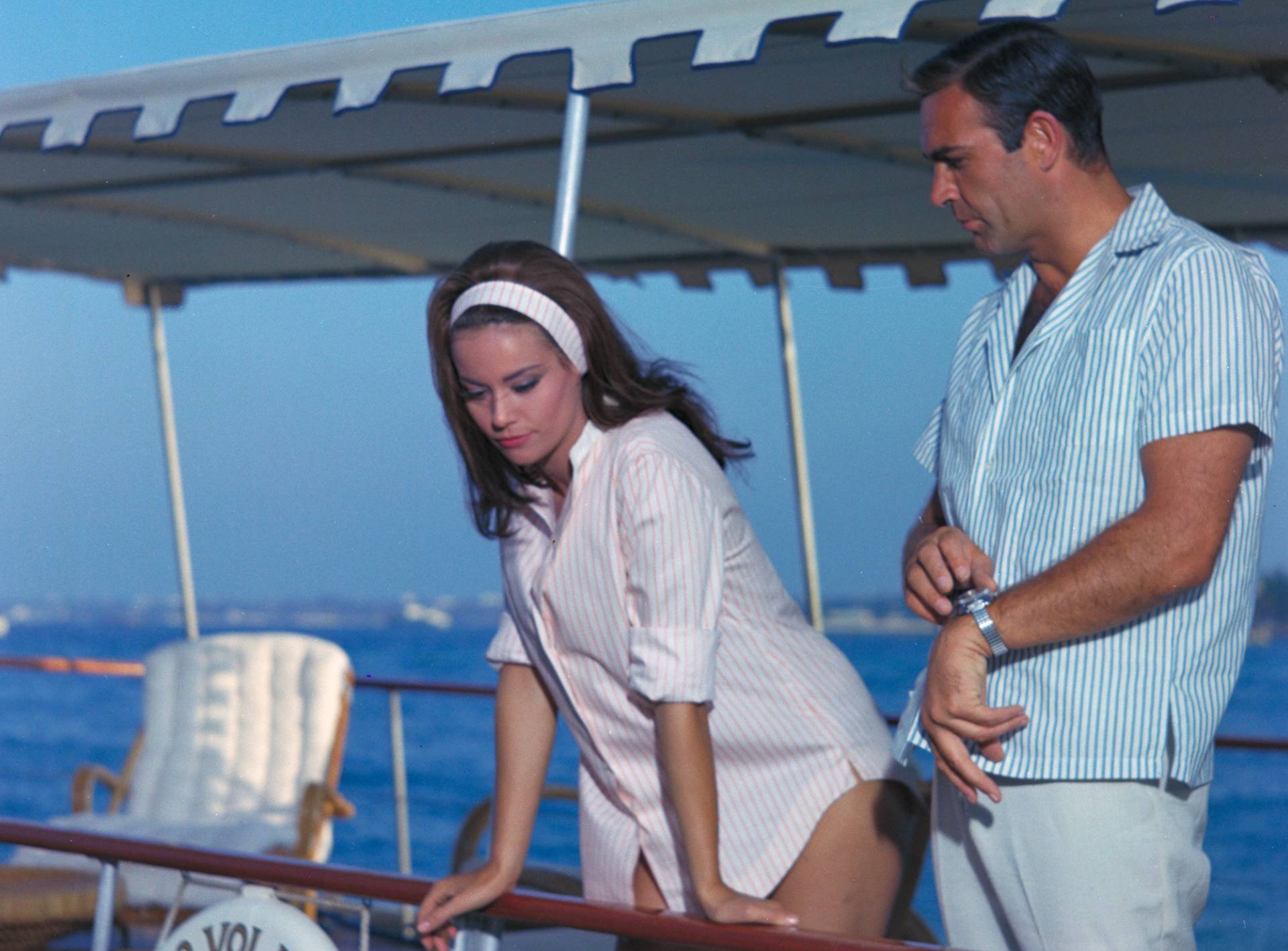
The crew assembled to start filming on Largo’s yacht, the Disco Volante. Designed by Ken Adam, the vessel needed to separate from the hull and become a hydrofoil to outrun the US Navy. Envisaged as 160 ft long and capable of travelling at 50 knots, Adam bought an old hydrofoil and built a catamaran at the back to increase the size; the two hulls held together by two one-inch slip bolts. A week before the shoot, the team was still struggling to get the two hulls to separate. On the day of filming, Young recalled, “Everybody got ready; we had a helicopter following, we had this fast speedboat, and three cameras mounted on this enormous great Mississippi barge. The boat came by, and clean as a whistle the front came off, the back remained, and that was it! We had nothing else to do, so Sean and I went off and played golf!”

April 26 1965

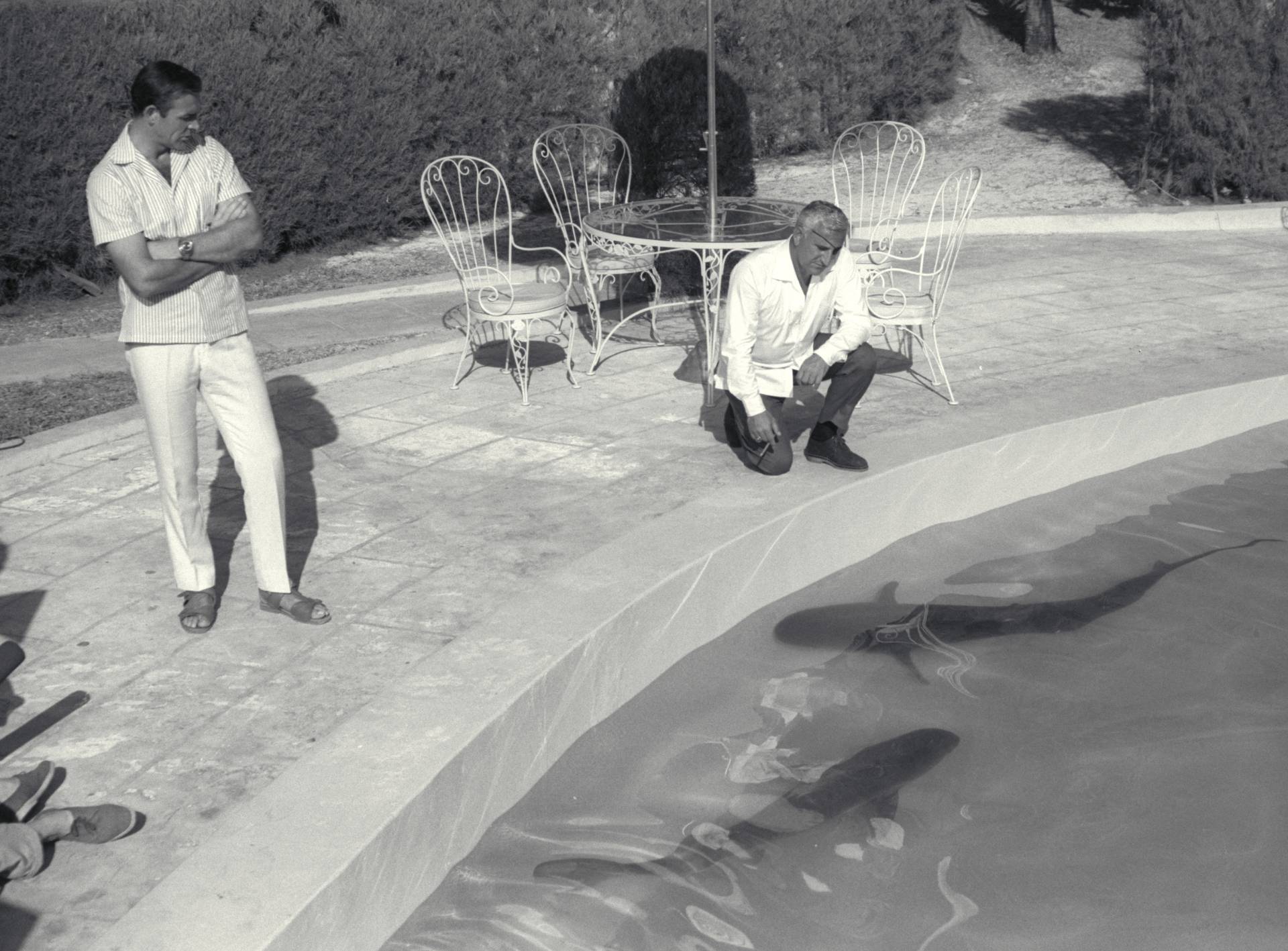
On a recce, the production decided on a villa at Rock Point to double as Largo’s villa. The abode, belonging to Mr. Livingston Sullivan, hosted two swimming pools, which the crew filled with approximately 16 live sharks ranging from seven to 15 feet long. To achieve shots of Sean Connery in the water with the sharks safely, Ken Adam created a plexiglass corridor so the actor was on one side and the sharks on the other. On the third take, a shark got through, and Connery found himself face-to-face with a predator. “I got out of the water so fast I was dry when I touched the side,” recalled the actor. According to Young, “The shot we have in the picture of Sean Connery is not acting.”

May 10 1965

Shooting the big climactic underwater battle started with close-ups on Connery and Celi. While the main unit returned to the UK, the underwater unit continued working on the sequence, employing 45 divers. With so many stunt people carrying dangerous weapons, rehearsals were undertaken onboard a huge barge and then replicated below the waves.

“You can only retain so much in your mind before you need to talk again,” remembered underwater cameraman Ricou Browning. “And in those days, we didn’t have underwater communication so we had to use hand signals. When it got so complicated you couldn’t use hand signals, you just came topside and rehearsed it again, and went back again. It was time consuming.”

May 31 1965

Shooting the destruction of the Disco Volante. The scene started with special effects supervisor John Stears and his team revamping a floating hull of a boat to resemble Largo’s vessel. Shot at Rose Island, 30 miles from Nassau, the boat was primed with pyrotechnics and sent into the rocks. The subsequent explosion was spectacular, but after a five-minute delay, the debris started raining down on the crew. Stears recalled there was “40 tons of boat coming down on top of us…The engine was the biggest piece, came down in one, and crashed into the coral. The miraculous thing is nothing hit us.”

June 21 1965

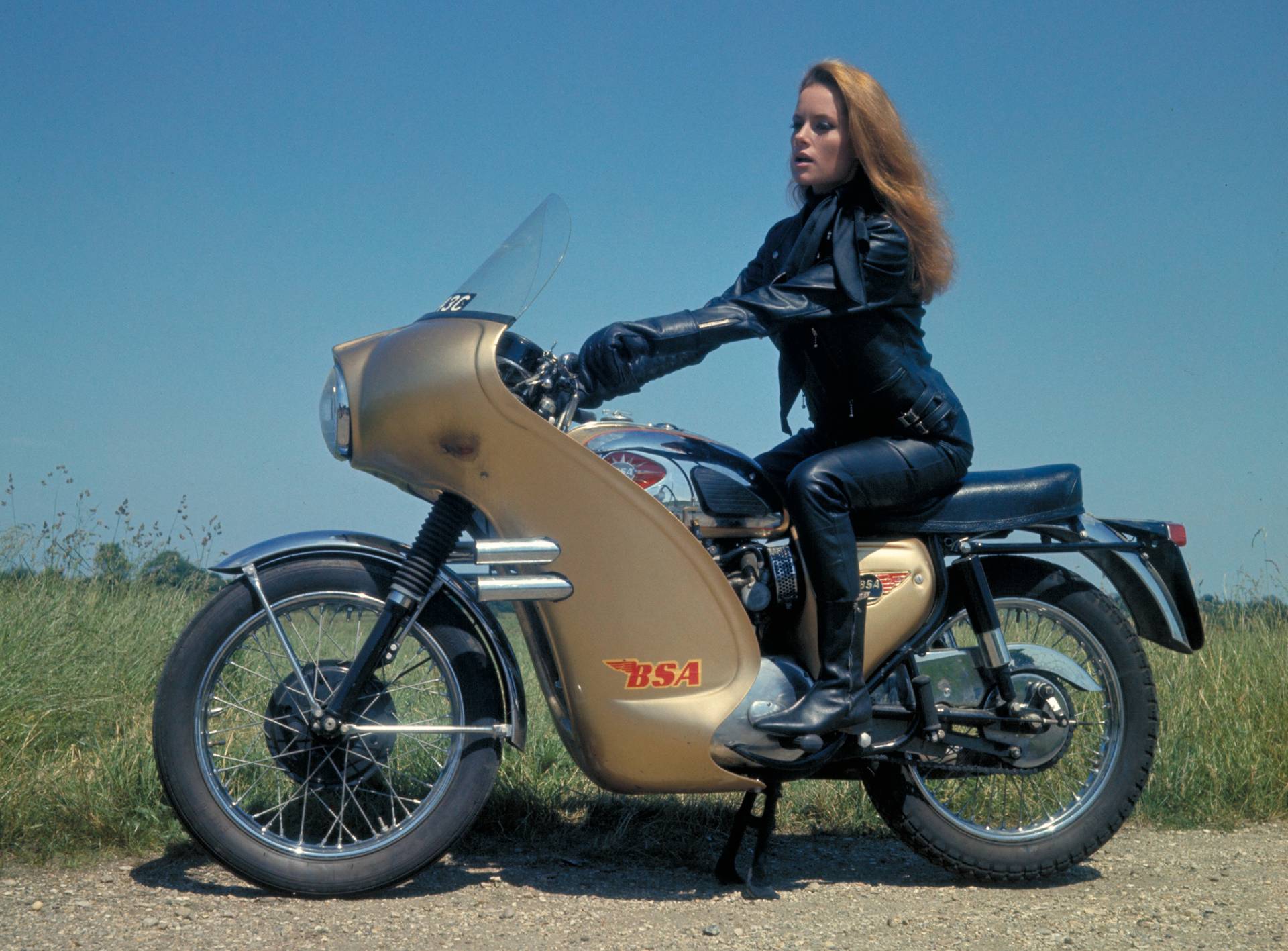
Following a week of shooting the fight on the bridge of the Disco Volante, the production moved to Silverstone racetrack on June 21 to shoot the chase between Bond in the Aston Martin and Count Lippe (Guy Doelman) in a Ford Fairlane Skyliner, which ends with Lippe being killed by Fiona Volpe firing rockets from a Lightning BSA motorbike. With the Ford Fairlane prepped to explode, the cars were doing speeds of 70mph, with stunt supervisor Bob Simmons driving for Lippe. 

“The rockets were fired on the motorbike,” recalled John Stears. “It all happened perfectly: the car exploded, went off the track, down the ditch, and we cut. We raced up the track with the ambulances and a fire engine. Bob wasn’t there. We thought he was under the car. Terence and everybody were really panicking, then a voice behind Terence said, “How was that, guv?” and it was Bob. He’d crawled out of the car, up the bank and come around the back of us. Terence said, “You bastard! Don’t you ever do that to me again!”

July 8 1965

The film completed production with key Largo scenes such as the SPECTRE boardroom and torturing Domino. The tank at Pinewood was also employed for close-ups of the Vulcan cockpit — heat from the underwater lights threatened to crack the glass of the tank — and for Maurice Binder’s title sequence. The production wrapped on July 8. 

Dec 9 1965

Thunderball premiered in Tokyo on December 9, with a US release following on December 22. As a marketing stunt, certain cinemas were open 24 hours a day for audiences to experience the new 007. With a budget of $9 million, the film went on to gross £142 million worldwide, with over 58 million admissions in the US alone. Once adjusted for inflation, the film is among the highest-grossing Bond films of all time. Next up: You Only Live Twice.

The Loves Of James Bond

As a jet-setting secret agent, James Bond has been surrounded by women, some fleeting dalliances, others more lasting. To mark Valentine’s Day, let’s take a look at the complex, compelling relationships of 007: his first true love, the mother of his child, and the woman he married.

Tracy di Vicenzo

Played by: Diana Rigg

As seen in: On Her Majesty’s Secret Service

The Back Story: Contessa Teresa ‘Tracy’ di Vicenzo is the only daughter of Marc Ange Draco (Gabriele Ferzetti), the head of Europe’s biggest crime syndicate, Union Corse. Perhaps as an act of rebellion against her father’s wealth and status, Tracy lived life in the fast lane, causing her father to withdraw her allowance. An ill-fated marriage gave her the title of Countess. She prefers the name Tracy to Teresa, saying, “I am not a saint.”

The Love Story: Bond (George Lazenby) first meets Tracy at her lowest ebb, saving her from attempted suicide, wading into the sea in Portugal. Tracy speeds away in her Red Cougar but Bond catches up with her at Hotel Palacio Estoril’s casino, where he bails her out of a bad bet. Bond returns to his suite to be held at gunpoint by Tracy with his own Walther PPK. Bond disarms and seduces her but, in the morning, Tracy leaves Bond in bed, repaying her gambling debt in full. 

The act of saving Tracy’s life puts 007 on the radar of Draco, who kidnaps Bond and offers him information on SPECTRE leader Ernst Stavro Blofeld (Telly Savalas) in return for marrying his daughter. Still, Bond starts courting Tracy. Once Tracy learns of 007’s arrangement with her father, she breaks off the relationship, heartbroken. Bond reveals that his feelings were sincere, and the pair slowly fall in love.

The Height of Passion: Tracking Bond down in Switzerland, Tracy helps 007 escape in a frantic car chase on ice. The couple takes refuge from a blizzard in a remote barn, where Bond not only professes his love for Tracy but proposes marriage. She accepts.

Love Language: “I love you. I know I’ll never find another woman like you. Will you marry me?”

The Long Goodbye: Having defeated Blofeld at Piz Gloria, Bond and Tracy marry at Draco’s estate. The pair set off on honeymoon in 007’s Aston Martin festooned with flowers. As Bond pulls over to remove the garlands, Blofeld and his number two, Irma Blunt (Ilse Steppat), pull up and shower the car with bullets. Tracy is killed, leaving a bereft, disbelieving Bond to mutter, “We have all the time in the world.”
Vesper Lynd

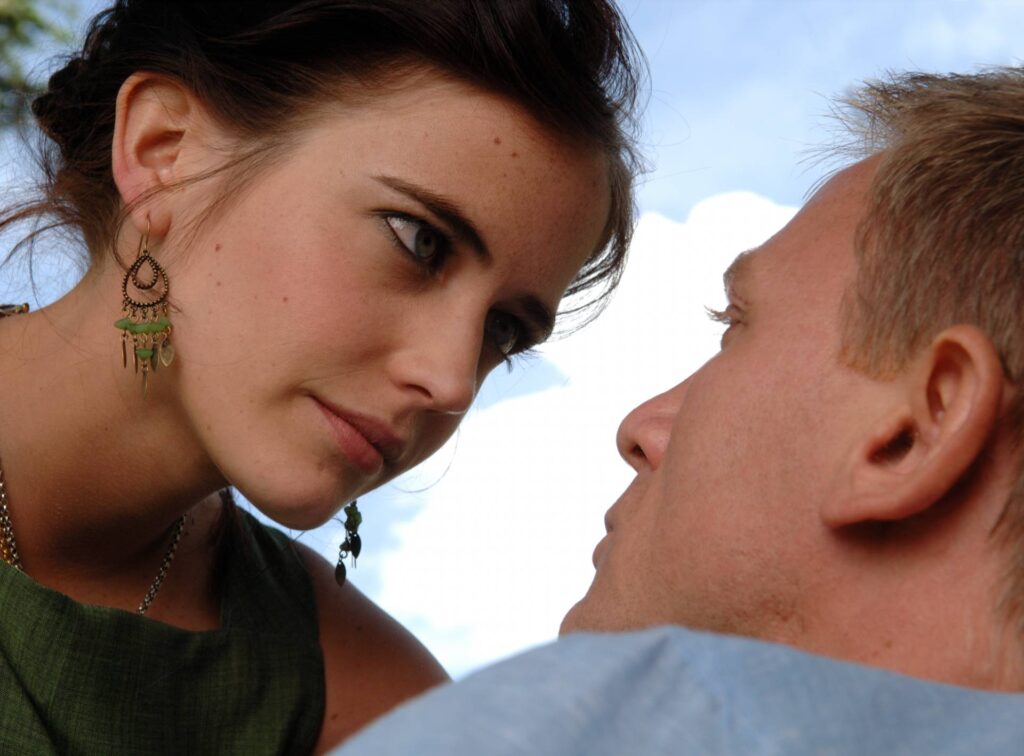
Played by: Eva Green

As seen in: Casino Royale 

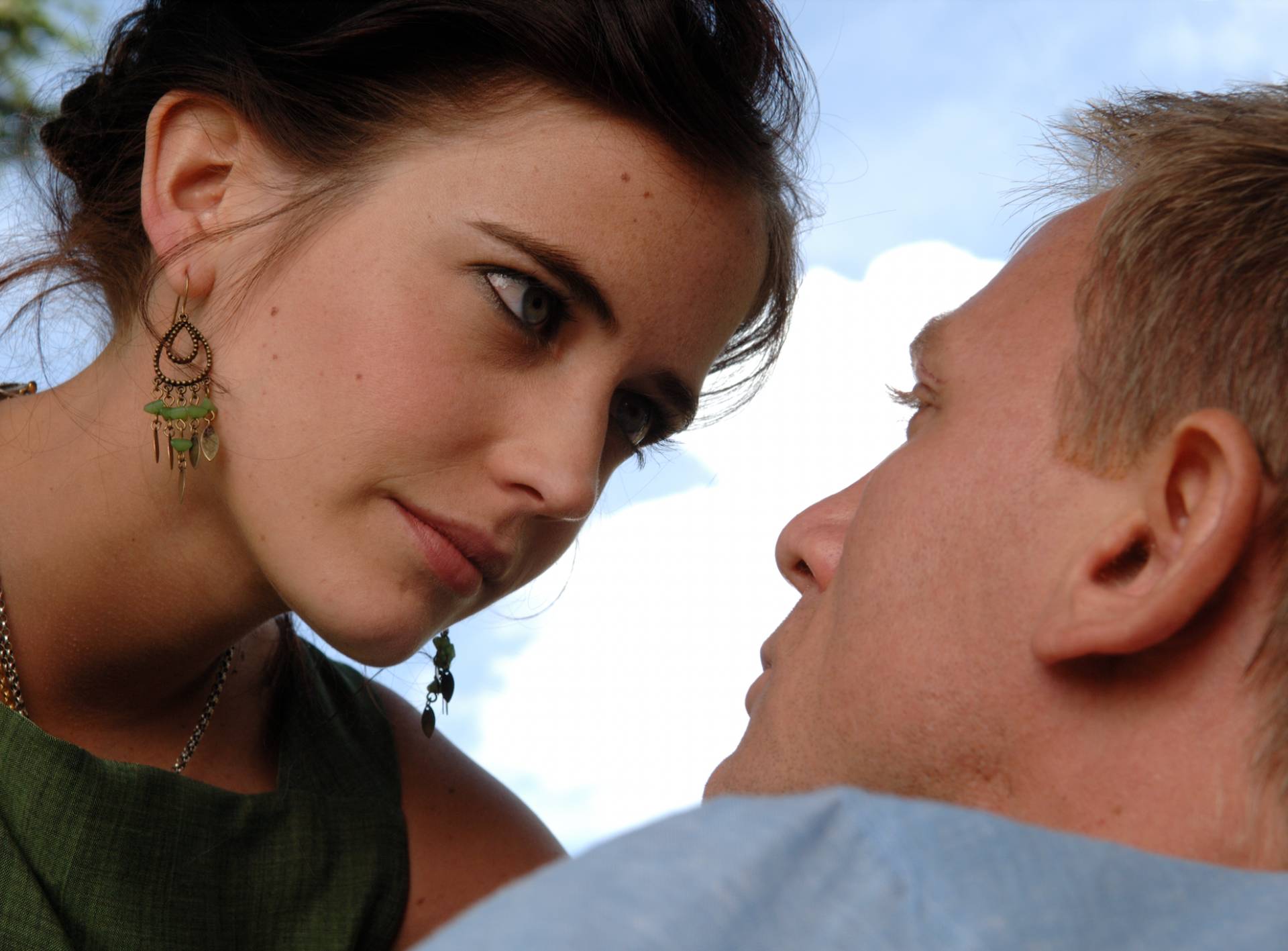
The Back Story: Vesper Lynd works for the Financial Action Task Force of Her Majesty’s Treasury and has a deep understanding of illicit banking practices. Unknown to Bond (Daniel Craig), Vesper was in a clandestine relationship with French-Algerian QUANTUM operative Yusef Kabira (Simon Kassianides), who had been held hostage by his bosses, forcing Vesper to betray 007.

The Love Story: Bond first meets Vesper in a dining car on a train bound for Montenegro, their smart, flirtatious banter signalling an instant attraction. She has been assigned to bankroll 007 in a high-stakes game of Texas Hold ‘Em at Casino Royale, with the aim of engaging Le Chiffre (Mads Mikkelsen), a banker who finances international terrorism.

As the game begins at Casino Royale, Vesper reluctantly poses as Bond’s trophy girlfriend and refuses to stake him in the game as he begins to lose money. She aids Bond in a titanic struggle with Ugandan Warlord Steven Obanno (Isaach de Bankolé) but the tussle leaves her shaken, Bond comforting her later in their hotel shower, both fully clothed, a moment of intimacy that draws the pair closer together. 

She then saves Bond’s life after he drinks a drugged shaken-not-stirred vodka martini (a drink Bond dubs a Vesper) by plugging in a defibrillator that saves his life at the last moment. After winning the poker game, Bond chases after a kidnapped Vesper, swerving to miss her in his Aston Martin as she is left tied-up in the middle of the road.

The Height of Passion: While recuperating in hospital, Bond and Vesper admit their love for each other, causing Bond to resign and head for a romantic break in Venice. 

Love Language: “I have no armour left. You’ve stripped it from me. Whatever is left of me – whatever is left of me – whatever I am – I’m yours.” 

The Long Goodbye: After Vesper embezzles the Casino Royale winnings to save Kabira, Bond gives chase to try to stop her from handing over the money. Vesper is thrown in an elevator and, as the antiquated Venetian building begins to sink in the melee, locks herself in. Bond does his best to save her, finally getting her out of the sunken lift but unable to revive her through CPR.

As a final act of love, Vesper leaves her phone for Bond to discover a vital clue to infiltrating QUANTUM. It also starts a trail that leads him to the next and possibly biggest love of 007’s life.
Madeleine Swann

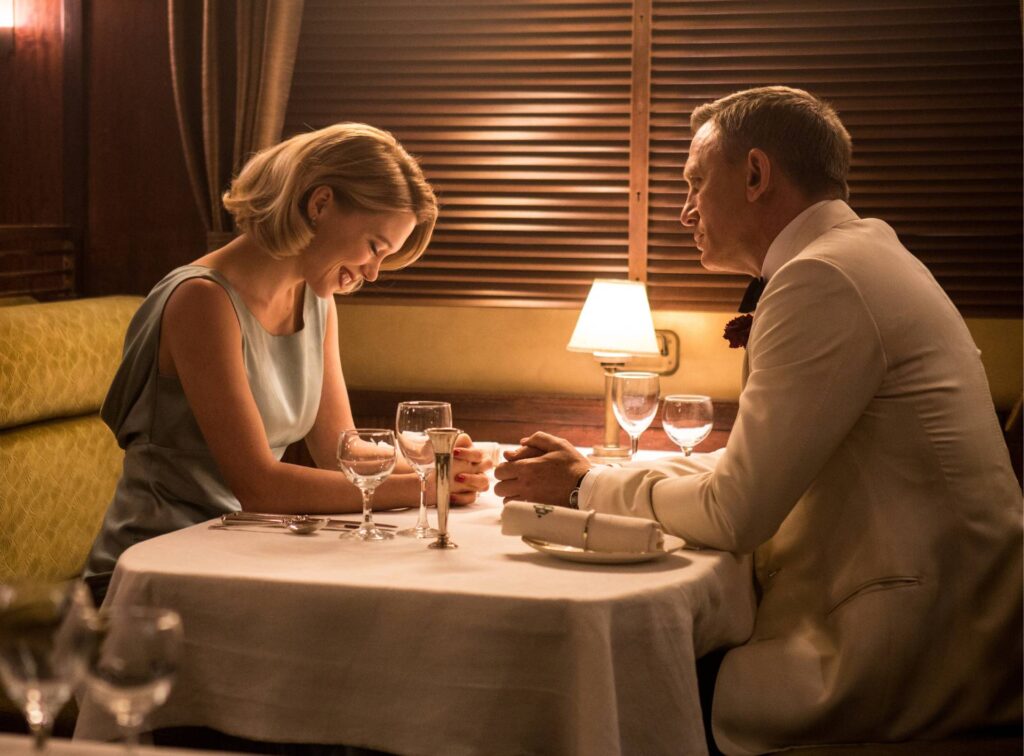
Played by: Léa Seydoux

As seen in: Spectre, No Time To Die

The Back Story: The daughter of high-ranking SPECTRE member Mr. White (Jesper Christensen), Madeleine renounced her father and his lifestyle, going into hiding, working for Médecins Sans Frontières, and then as a psychiatrist at the Hoffler Klinik near Sölden in the Austrian Alps. A traumatic event in her childhood — being attacked by terrorist Lyutsifer Safin (Rami Malek), who murdered her mother — gave her a lifelong fear and hatred of violence and weapons.

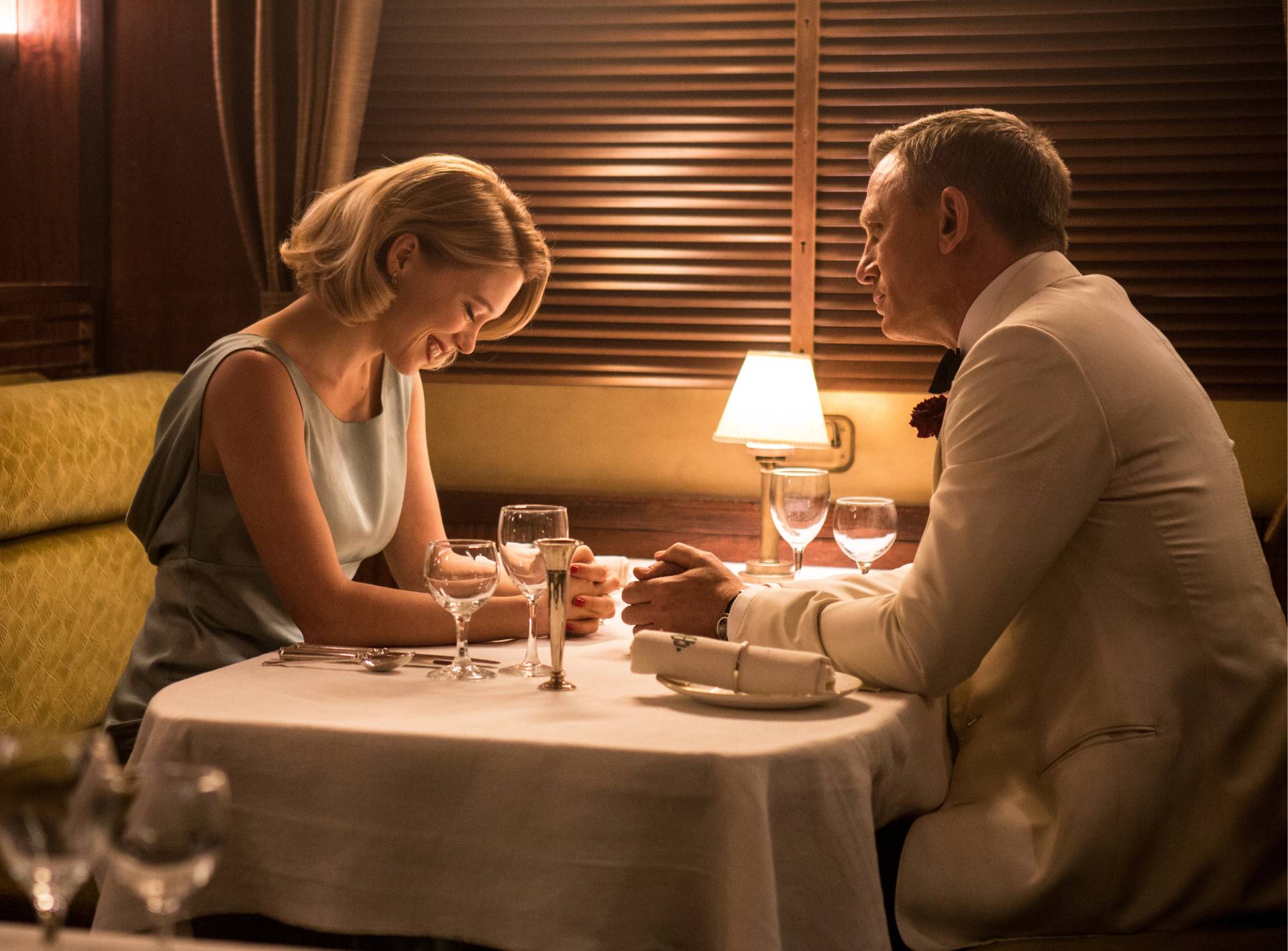
The Love Story: Following the suicide of Mr. White, Bond seeks out Madeleine at the Hoffler Klinik. She leads him to the L’Americain Hotel in Morocco, where White has left a secret stash of information that leads them to the nerve centre of SPECTRE and Ernst Stavro Blofeld (Christoph Waltz) in the middle of the desert. With the help of an exploding watch, Bond and Madeleine escape, destroying SPECTRE HQ and head to London. Madeleine is kidnapped by SPECTRE but Bond rescues her, the pair escaping by speedboat, then taking down Blofeld in a helicopter. The following morning, Bond and Madeleine leave in 007’s Aston Martin for a new life.

In No Time To Die, Bond and Madeleine are travelling through Matera, Italy. The couple comes under attack from SPECTRE, Bond believing Madeleine has set him up. He sends her away by train, unaware she is carrying his child. Swann comes back into 007’s orbit five years later when, under the orders of Safin, she is instructed to kill Blofeld via nanotech biological weapon, Heracles, while he is imprisoned at Belmarsh prison. Her hand inadvertently touches Bond’s, transferring the Heracles virus to 007, who kills Blofeld but not before the agent learns Madeleine didn’t betray him in Matera.

The Height of Passion: Bond tracks Madeleine to her home in Norway — the site of her childhood run-in with Safin — and the pair begin to open up (Madeleine: “I understand you’re not built to trust people”; Bond: “Neither are you.”) As they move in for a kiss, they are interrupted by Swann’s five-year-old daughter Mathilde (Lisa-Dorah Sonnet), Madeleine denying the child is Bond’s. The makeshift family unit is interrupted by Safin’s henchman. After a furious car chase, Bond hides Madeleine and Mathilde but they are captured by Safin.

Love Language: “We have all the time in the world.”

The Long Goodbye: Madeleine and Matilda are taken to Safin’s hideout on Poison Island, where Bond mounts a rescue mission and kills Safin, opening the island’s missile silos allowing the warship HMS Dragon to destroy the island. In a heart-breaking farewell, Bond radios Madeleine, who has been escorted off the island by Nomi (Lashana Lynch), to say goodbye and declare his love for her and Mathilde. Bond dies as the missiles strike the island but not before Madeleine confirms that Mathilde is his daughter, Bond admitting he knew all along.

Later, Madeleine drives Matilda to Matera, telling her daughter. “I’m going to tell you a story about a man. His name was Bond, James Bond.”
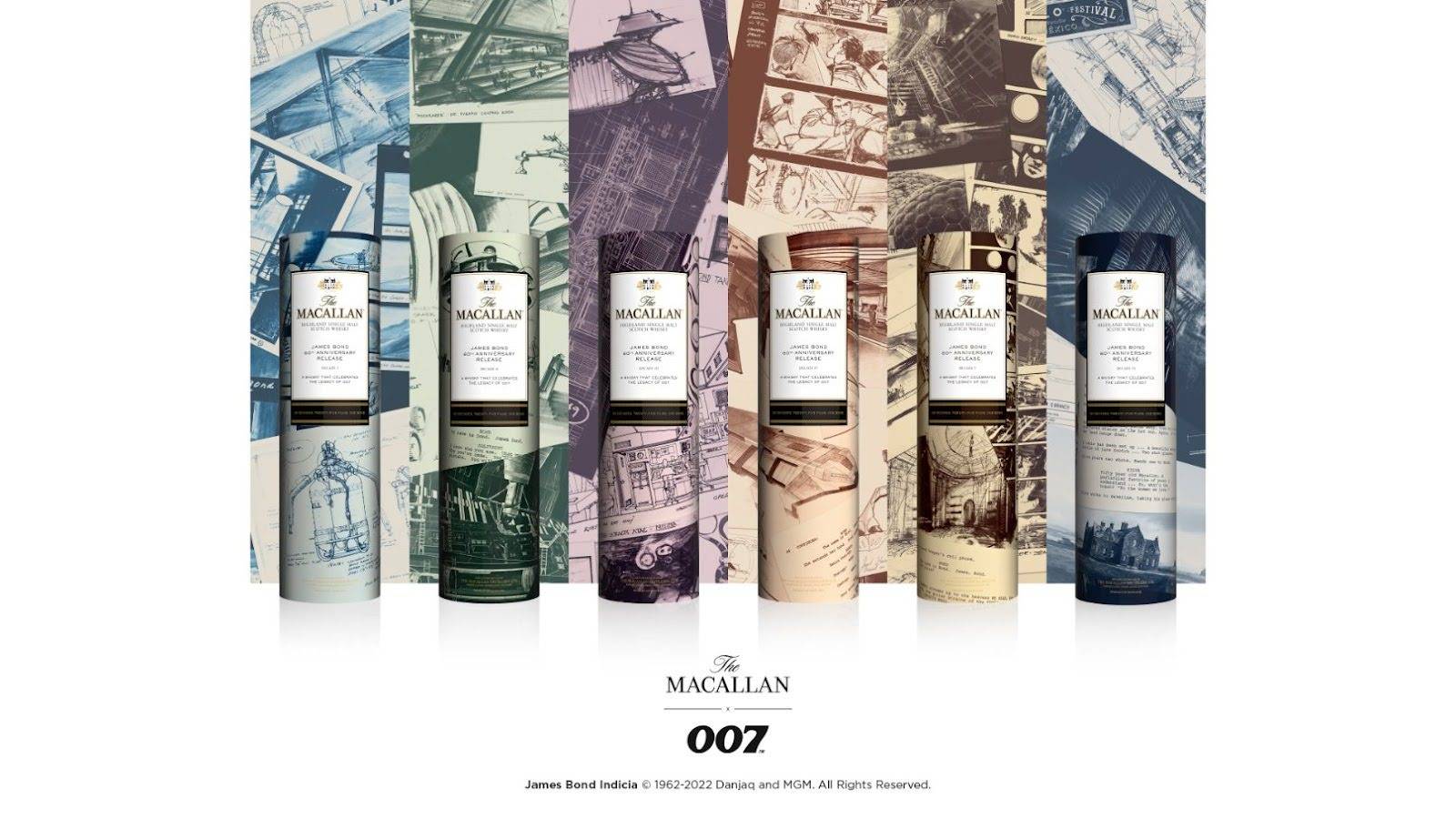
The Macallan Diamonds Are Forever 55th Anniversary Release

The Macallan Diamonds Are Forever 55th Anniversary limited edition release is a new single malt Scotch whisky, marking 55 years since the film was released in cinemas, in 1971.

Following The Macallan James Bond 60th Anniversary Release (2022), this continues the creative collaboration between the two brands. Crafted by Whisky Maker Russell Greig, the release draws from the Diamonds Are Forever plot, including Bond’s knowledge of sherry and red wine.

This release was distilled in 2-007 and matured for 18 years. Bespoke hybrid casks – crafted from sherry seasoned European and American oak – are complemented with the inclusion of casks made from American oak which previously held red wine.

The 007 Store is running a ballot for the chance to order a bottle. The ballot is open from 5th – 19th March 2026 for UK customers only. Ballot winners will be selected at random and contacted directly. You can enter the ballot here.

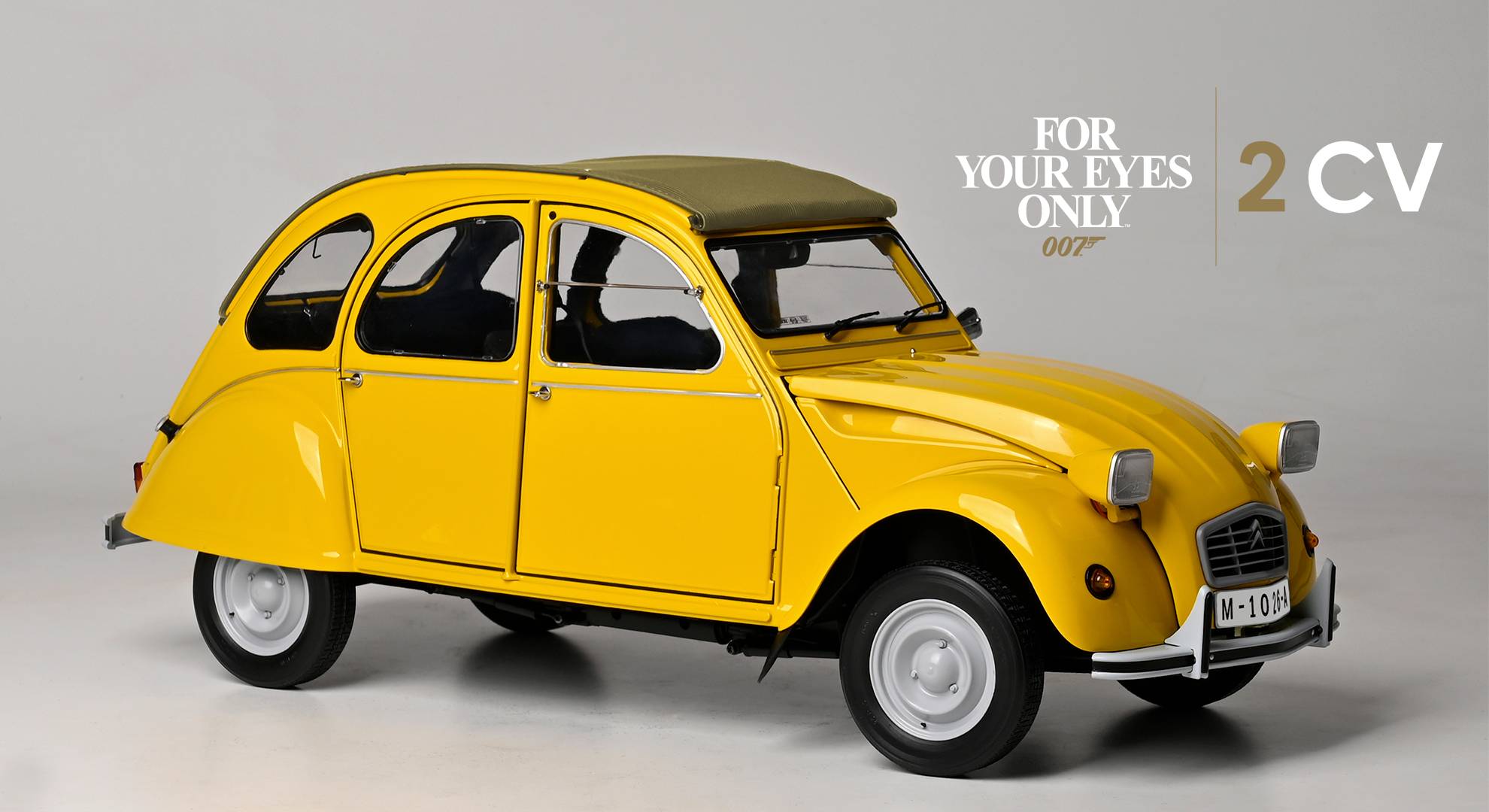
For Your Eyes Only Citroën 2CV Model Car Kit

Agora Models brings you a build your own numbered edition 1:8 scale model of the iconic sunshine yellow 2CV from For Your Eyes Only

The two-cylinder Citroën described by its manufacturer, Pierre-Jules Boulanger, as “a chaise longue under an umbrella” provided the perfect machine for Roger Moore’s 007 to demonstrate his skills behind the wheel. 

This 1:8 scale model kit has been designed using 3D laser scanning technology of an original car together with film footage. All the individual parts come pre-painted allowing you to create a museum-quality big-scale model, and you can customise the model to be pristine or damaged as all the elements are included as standard. The Collector’s Edition comes with a For Your Eyes Only display case to show and protect your model, and a numbered certificate of authenticity. 

Available at 007store.com, and is priced between £1499 and £1999.

The World Is Not Enough — In Pictures

Beginning principal photography on January 17th 1999, The World Is Not Enough became Pierce Brosnan’s third outing as James Bond following GoldenEye and Tomorrow Never Dies. Directed by Michael Apted, the plot sees 007 assigned to protect M (Judi Dench)’s family friend Elektra King (Sophie Marceau) following the murder of her father by the terrorist Renard (Robert Carlyle). The film mixed trademark 007 action — a high speed boat chase along the Thames, a thrilling ski sequence with a twist — with a grounded political backdrop and psychological complexity in the relationships between the characters. Here is the making of the movie told through stunning behind the scenes images. 

ROOTED IN REALITY 

THE SHOT: The World Is Not Enough takes James Bond to Azerbaijan to survey the oil empire of Elektra King. Brosnan is featured in a publicity shot with Bond’s BMW Z8 inside Bibi-Heybat oil field near Baku. 

BTS: The oil field backdrop to the story came from co-producer Barbara Broccoli, who saw a recorded edition of US TV show Nightline on a flight, which detailed the economic value of oil pipelines, and the issues in getting the oil out of Azerbaijan due to hostile neighbouring states. True to the series, the country offered a range of eye-catching locales from desert oil fields to the snow-capped Caucasus Mountains.

ROCK AROUND THE DOCK 

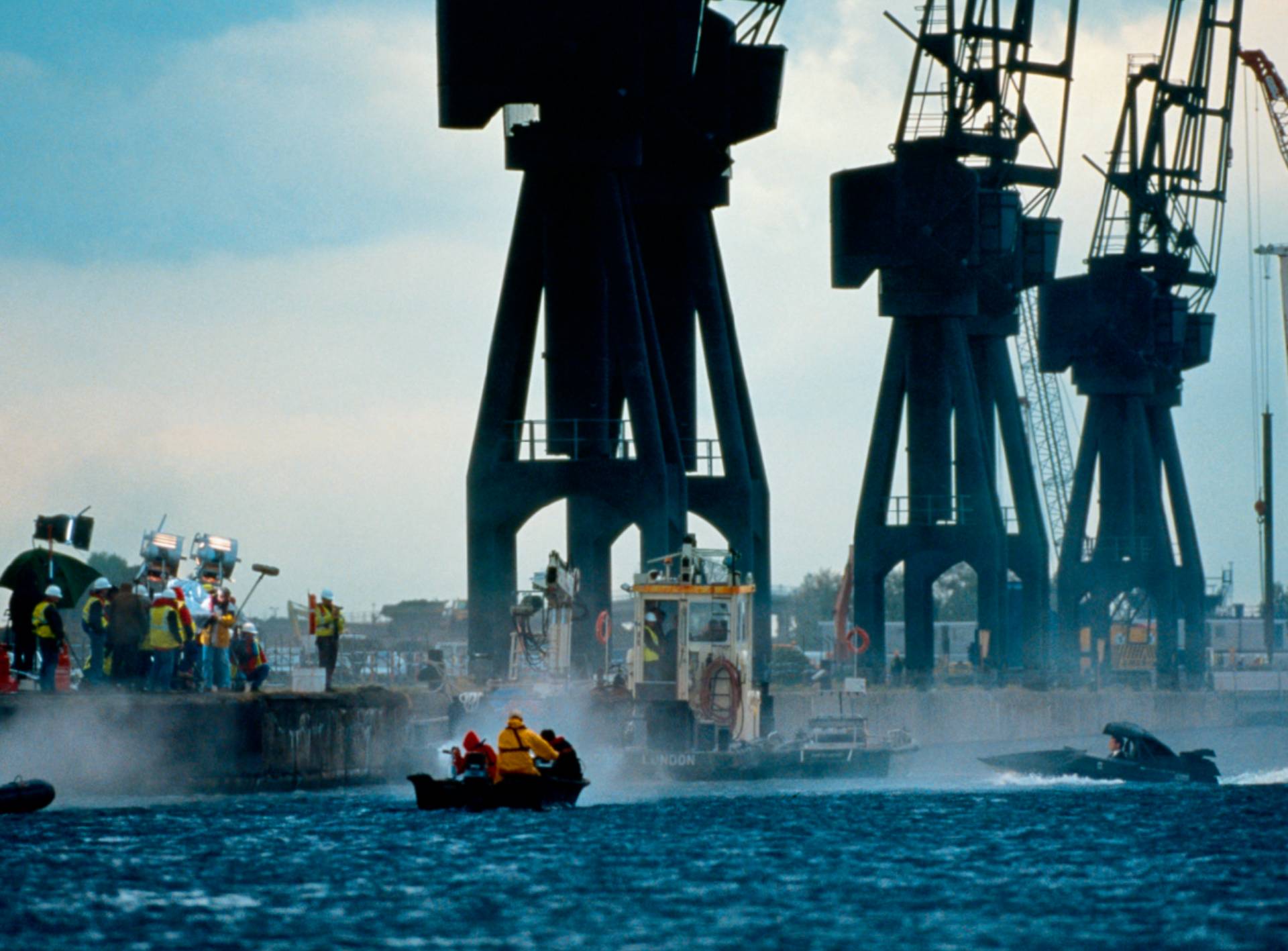
The Shot: Following an explosion at MI6 HQ, Bond jumps in a work-in-progress Q dept boat and chases an assassin (Maria Grazia Cucinotta) down the Thames, finally destroying her boat at the Millennium Dome. Directed by action unit director Vic Armstrong, this shot sees the Q Boat speeding along the Thames near the cranes at Royal Victoria Dock.

BTS: The sequence sees Bond take a detour from the Thames through Tobacco Wharf, a fish market and a restaurant. Staging the sequence in the heart of the city was a logistical and bureaucratic nightmare but, as director Michael Apted recalls, “everybody is in love with Bond and everybody wants to co-operate.”

SKIDOO OR DIE

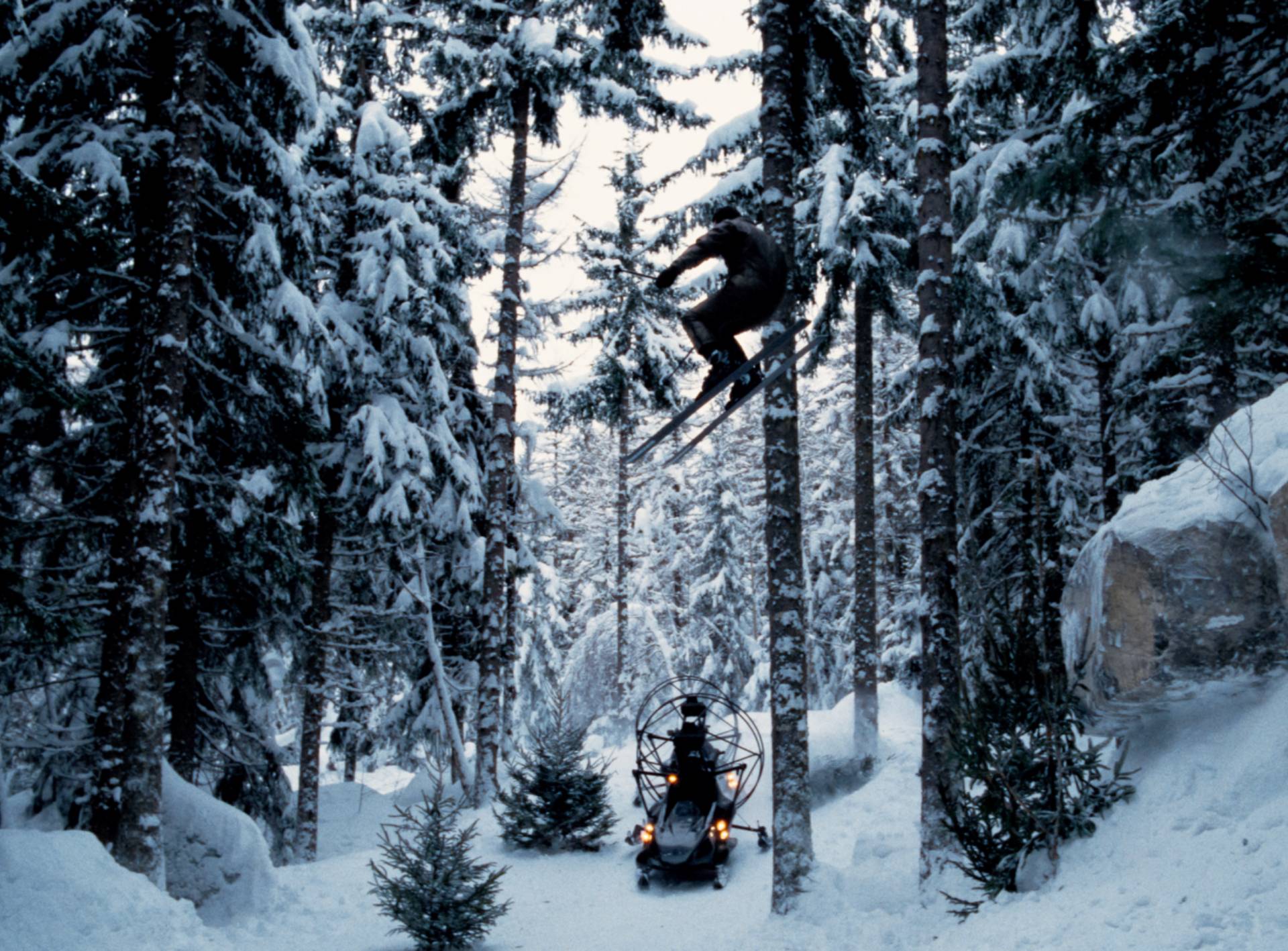
The shot: In the Caucasus Mountains, Bond and Elektra travel on skis to survey the King Industries pipeline. The pair come under attack by a band of assassins piloting parahawks (skidoos suspended from parachutes), which Bond manages to evade by causing them to crash into the landscape or each other. While expert skiers Stephane Dan, Yan Andre and Camille Jacroux doubled for Bond, the team also employed dummies to capture the sequence safely. 

BTS: The sequence is set in Azerbaijan but was actually shot in alpine woodlands in Chamonix, France. The set-piece was shot in four weeks by a 170 strong crew with the cameras tested in the British Airways refrigerator at Heathrow airport to make sure the equipment would work in freezing conditions.

SHE’S ELEKTRA 

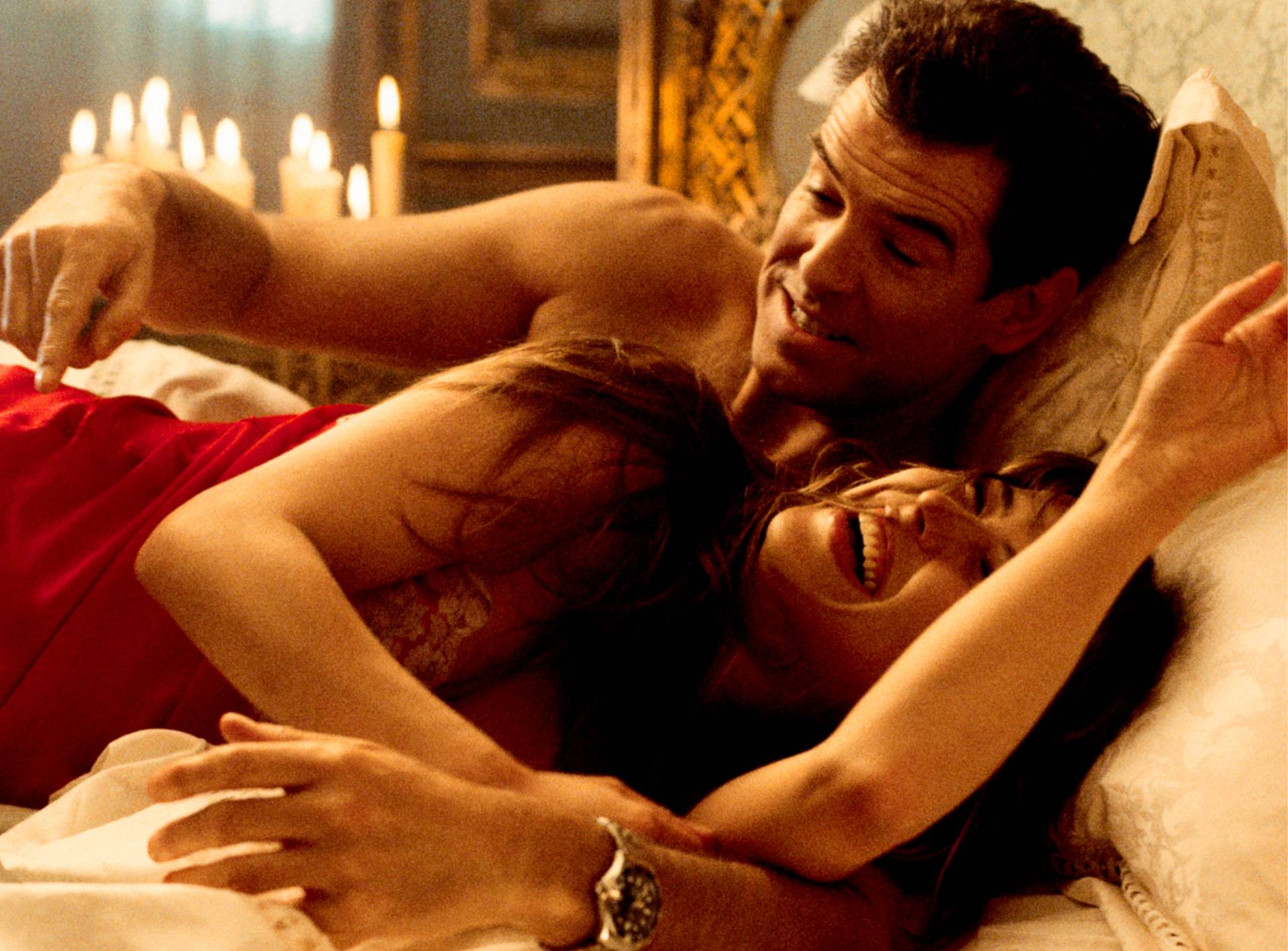
The Shot:  Captured on the villa bedroom set on Pinewood’s C Stage, Pierce Brosnan and Sophie Marceau share a lighter moment rehearsing an intimate scene between Bond and Elektra. 

BTS: “She’s a complex character because she has different faces,” said Marceau about Elektra. “She has a great power, because she owns the pipelines. She’s coming from a great family, so you have this image of a ‘boss woman.’ I think there’s a lot of softness and femininity about her as well, because otherwise Bond wouldn’t fall in love with her.”

CUNNING AS A FOX 

The shot: On the trail of Renard, a terrorist who is actually in league with Elektra King, Bond travels to a decrepit Kazakhstan underground nuclear weapons facility where warheads are dismantled. Here, the crew shoots the scene where 007 briefly captures and interrogates Renard who is stealing an active nuclear warhead.

BTS: “I wasn’t expecting it to be such a realistic portrayal of a terrorist,” said co-screenwriter Robert Wade. “The realism is because it’s Robert Carlyle, who’s very good at getting into the psychology of the outsider. I think that gave us a better terrorist than we could have hoped for.” Incidentally, Renard is the French word for ‘fox’.

KEEPING UP WITH THE JONES 

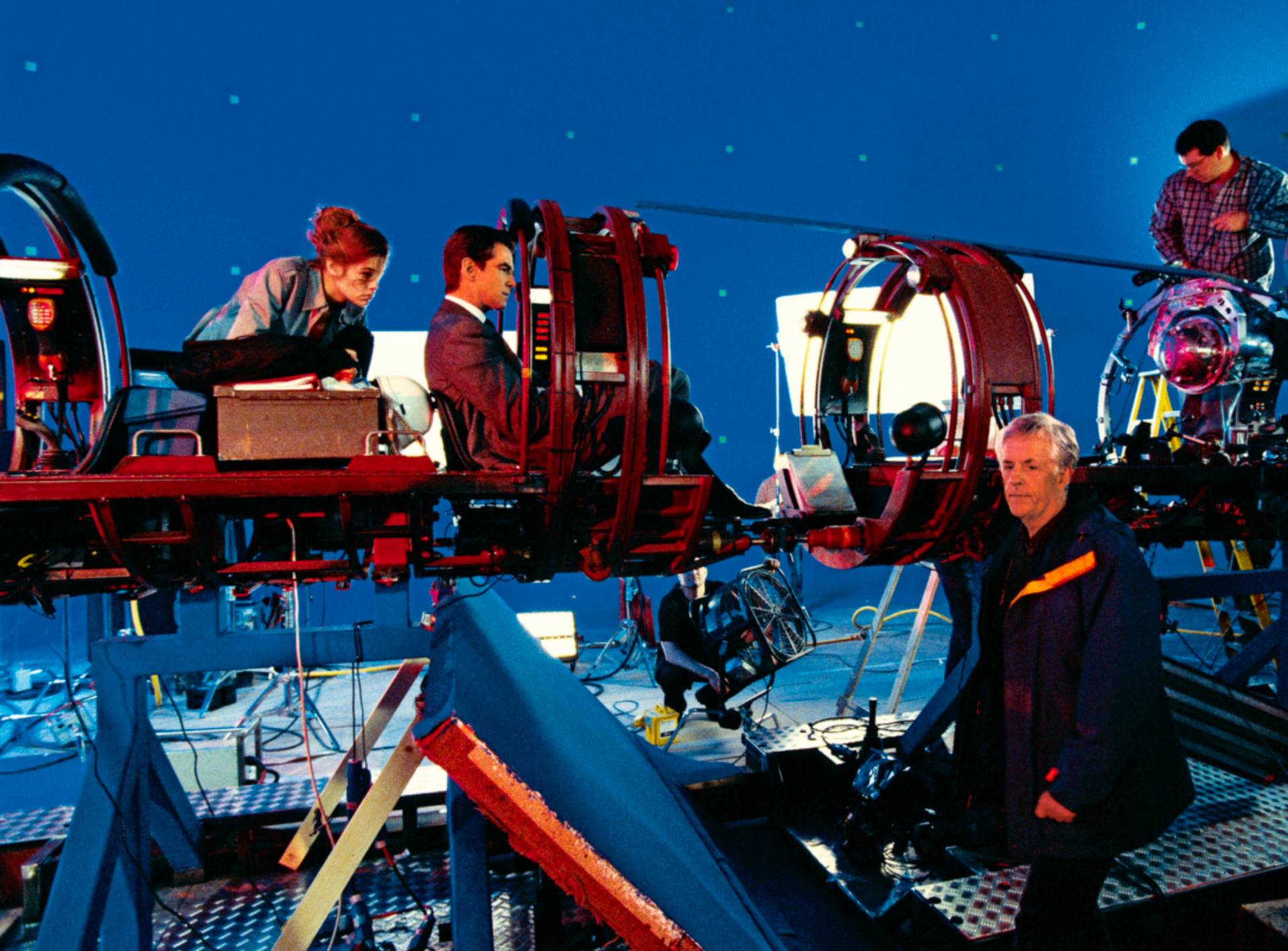
The shot: Renard plants a stolen warhead onto an inspection cart inside the pipeline with the aim of blowing it up, Here the crew shoot Bond and nuclear scientist Dr. Christmas Jones (Denise Richards) against bluescreen, speeding down the pipeline in another rig so the scientist can defuse the warhead. At the last minute, Bond suggests to let the explosive charge detonate giving the illusion the pair have died in the blast.

BTS:  Christmas Jones was named by screenwriters Neal Purvis and Robert Wade after Christmas Humphreys, the prosecutor in the Derek Bentley Case, which the pair had dramatised in their screenplay for Let Him Have It. She was initially conceived as Polynesian, an insurance investigator working for Lloyd’s of London’s South Seas Bureau on the same trail as Bond. The character’s profession was changed at the behest of the studio United Artists who had just greenlit The Thomas Crown Affair with Rene Russo as an insurance investigator opposite Pierce Brosnan’s master thief. Jones briefly became a bounty hunter before becoming a nuclear physicist working for the International Decommissioning Agency.

CAVIAR & CARNAGE 

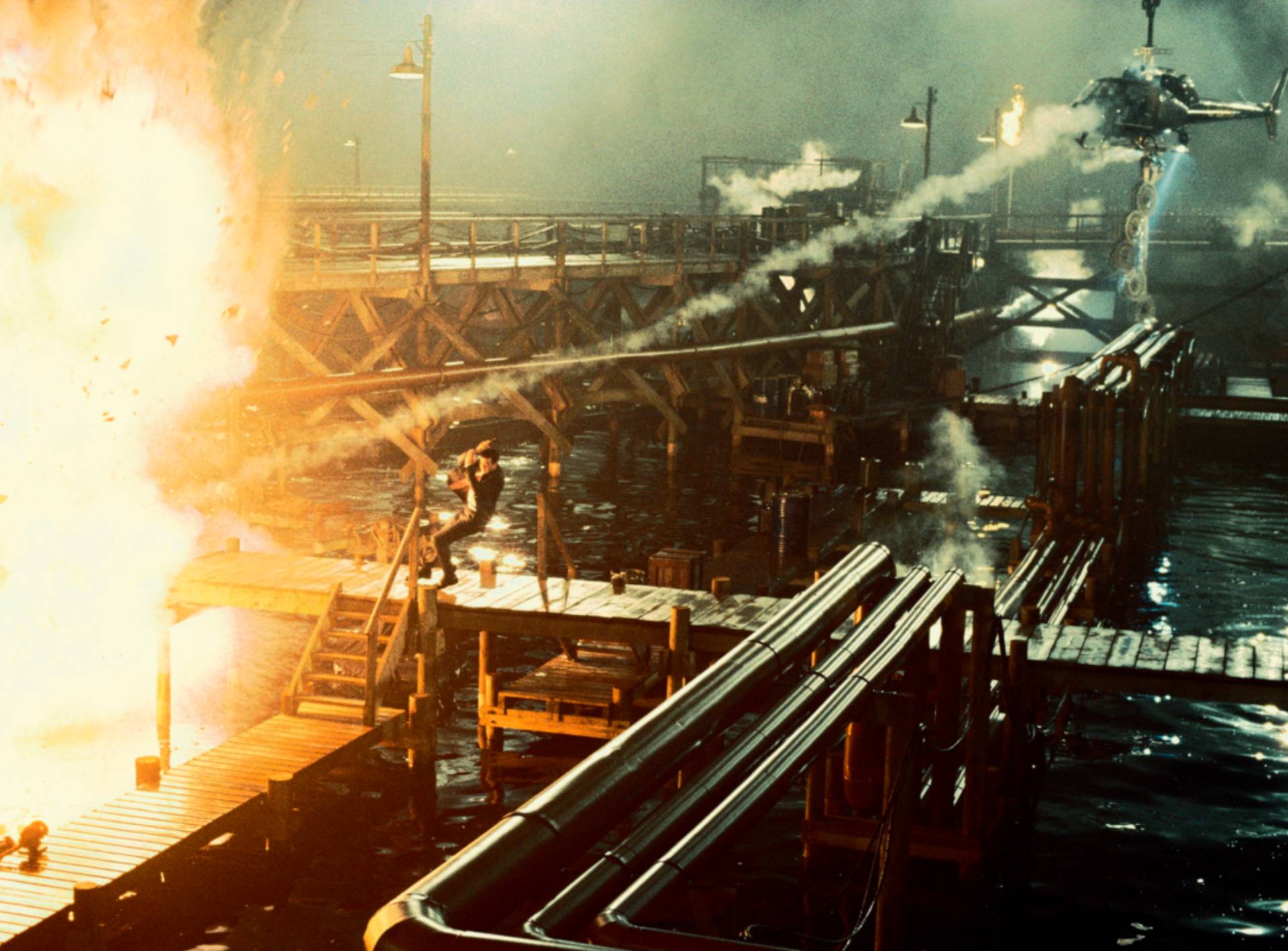
The Shot: Bond revisits his old rival Valentin Zukovsky (Robbie Coltrane) at his Caviar Fishery in Baku. The pair come under attack by Elektra King’s helicopters which are brandishing suspended circular saw blades. Bond destroys the choppers from missiles fired from his BMW then zip wires across the fishery, destroying the second helicopter by igniting leaking gas with a flare gun.

BTS: The buzz-saw helicopters were originally conceived to appear in GoldenEye. Zukovsky’s caviar factory was created on Pinewood’s paddock tank, which was doubled in size to accommodate the set. The scene was shot at night to help conceal the tank, adorned with several thousand fibre optics providing a glimmering backdrop. Designed by production designer Peter Lamont and constructed mainly out of timber (including 300 discarded telegraph poles), the intricate set was dubbed the ‘City of Walkways’. The scene was also enhanced with model work and CGI.

A LIGHTNING ROD 

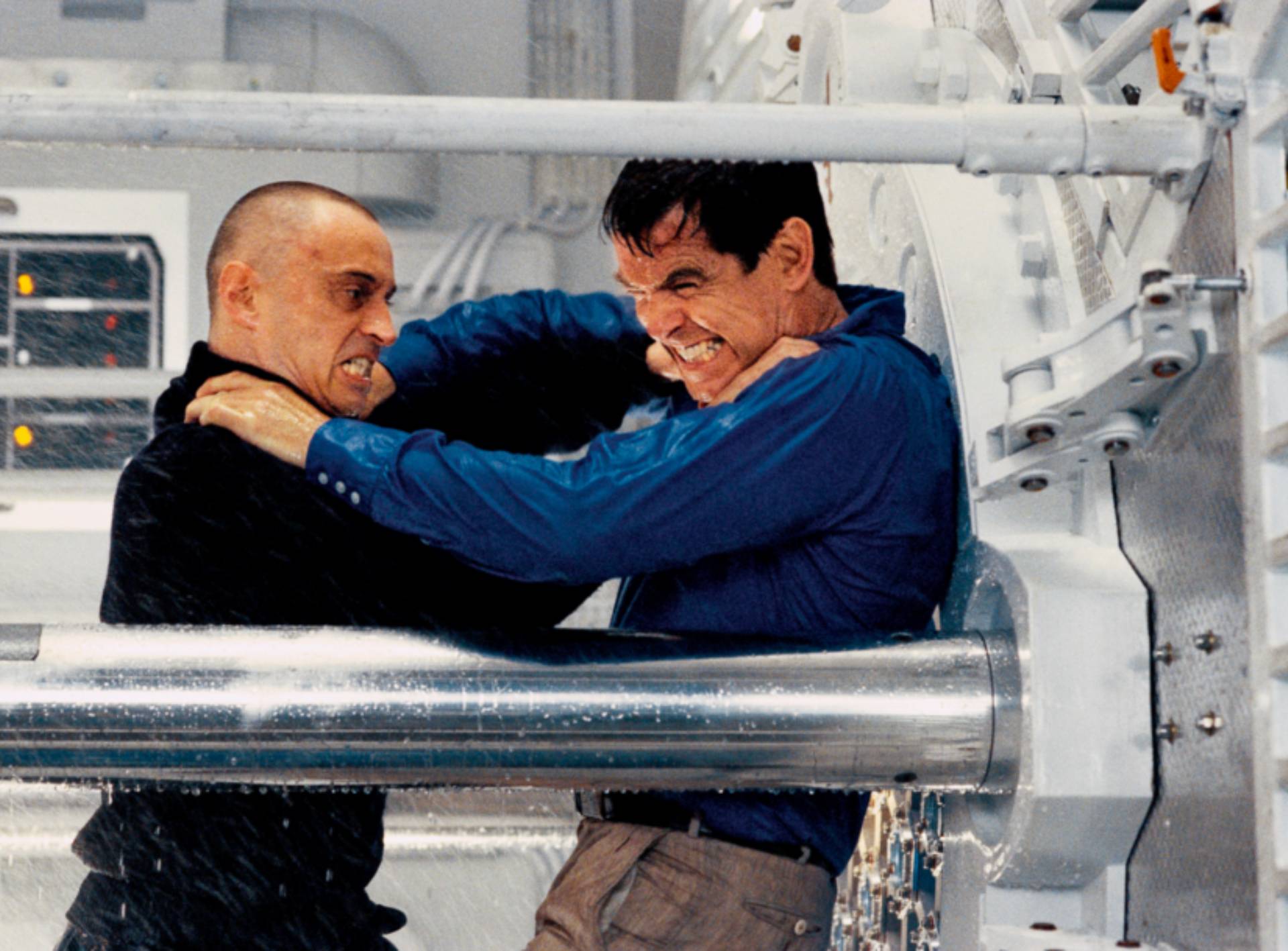
The Shot: Barely getting on board Renard’s stolen submarine before it dives, Bond’s attempts to get the vessel to the surface see it capsize and hit rock bottom causing a breach in the hull. As the sub starts to fill with water, Bond finds Renard inserting the plutonium into the reactor. A titanic tussle ensues, which ends when Bond activates the emergency ejection of the rod, which blasts directly into Renard. 

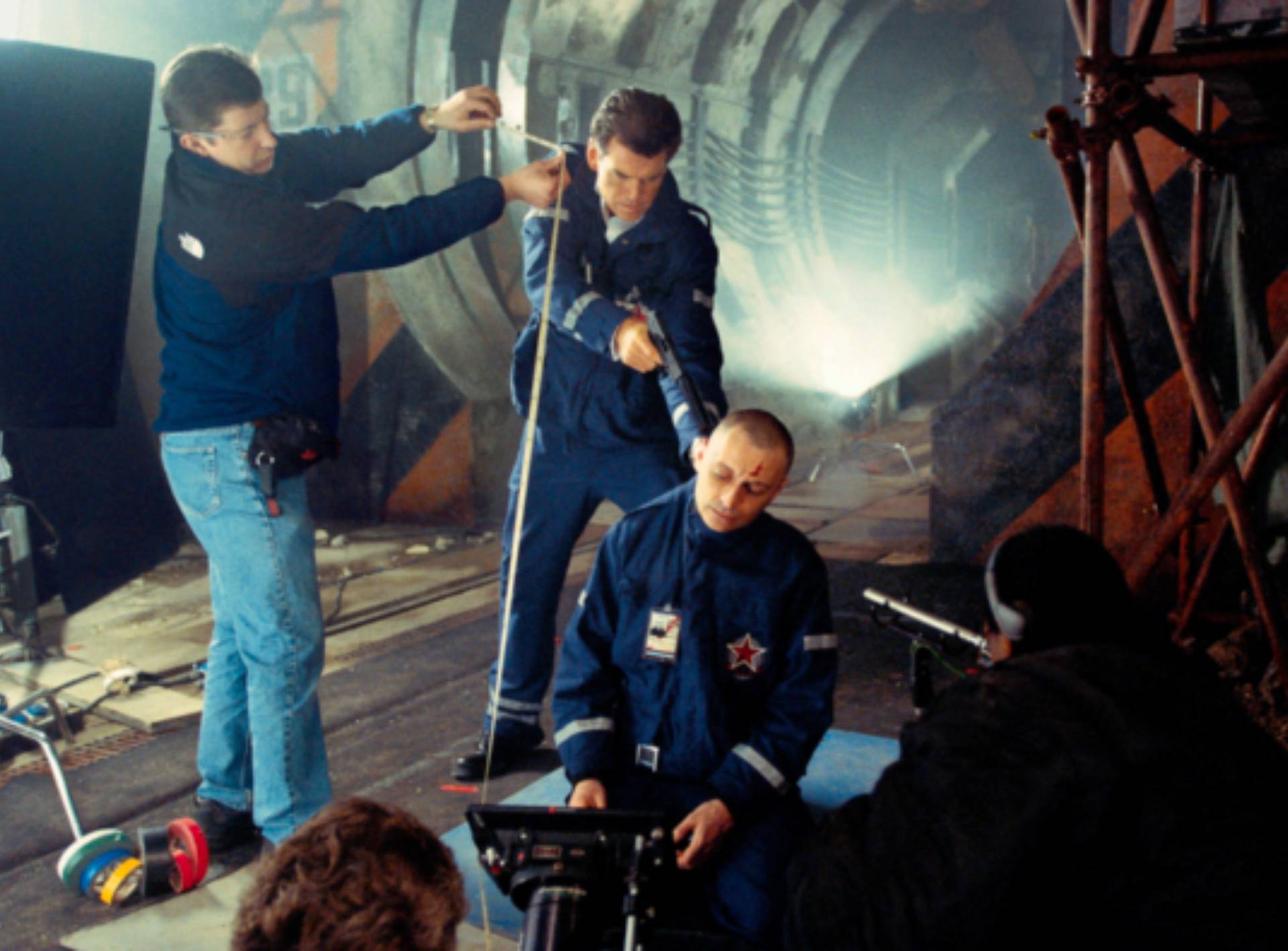
BTS: The submarine’s reactor room was built on A stage at Pinewood. The set was flooded by building whole set on a rig and lowering it into the tank. The exterior shots of the submarine were filmed with a 45-foot model over a five-week period one mile offshore from the Clarion Resort, New Providence in the Bahamas.

A TERRIFIC TEASER 

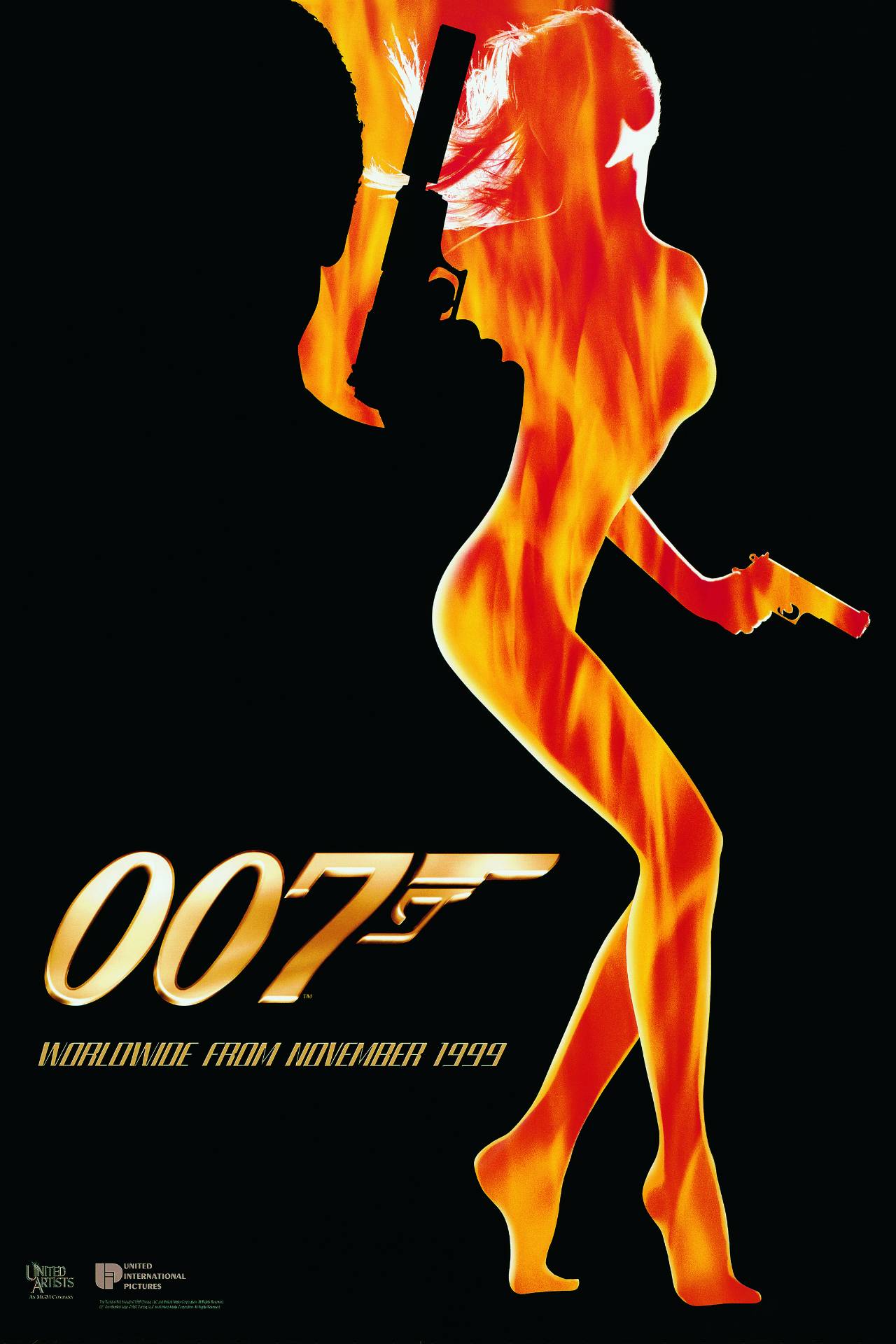
The shot: Designed by Diane Reynolds, the advance poster artwork played with classic Bond imagery, mirroring the iconic main title designs of Maurice Binder. The film premiered in Westwood, California on November 8 1999, eventually grossing over $350 million. 

BTS: In early drafts, the film was titled ‘Elektra’. The final title is a translation of the Latin phrase ‘Orbis non Sufficit.’ The name is Bond’s family motto and comes from On Her Majesty’s Secret Service

Model Behaviour

The adventures of James Bond are often larger than life but this often means starting small. Over its 25-film history, the series has used cutting-edge model work to create iconic vehicles, action and locales that would have been impossible to stage in the real world. Led by visual effects masters such as Derek Meddings, John Richardson and Chris Corbould, the 007 model units have applied attention to detail, artistry and imagination to make the fantastical seem simultaneously breathtaking and convincing. Here we pay tribute to some of the greatest miniatures in Bond’s history. 


The Avro Vulcan Bomber

As seen in: Thunderball (1965)

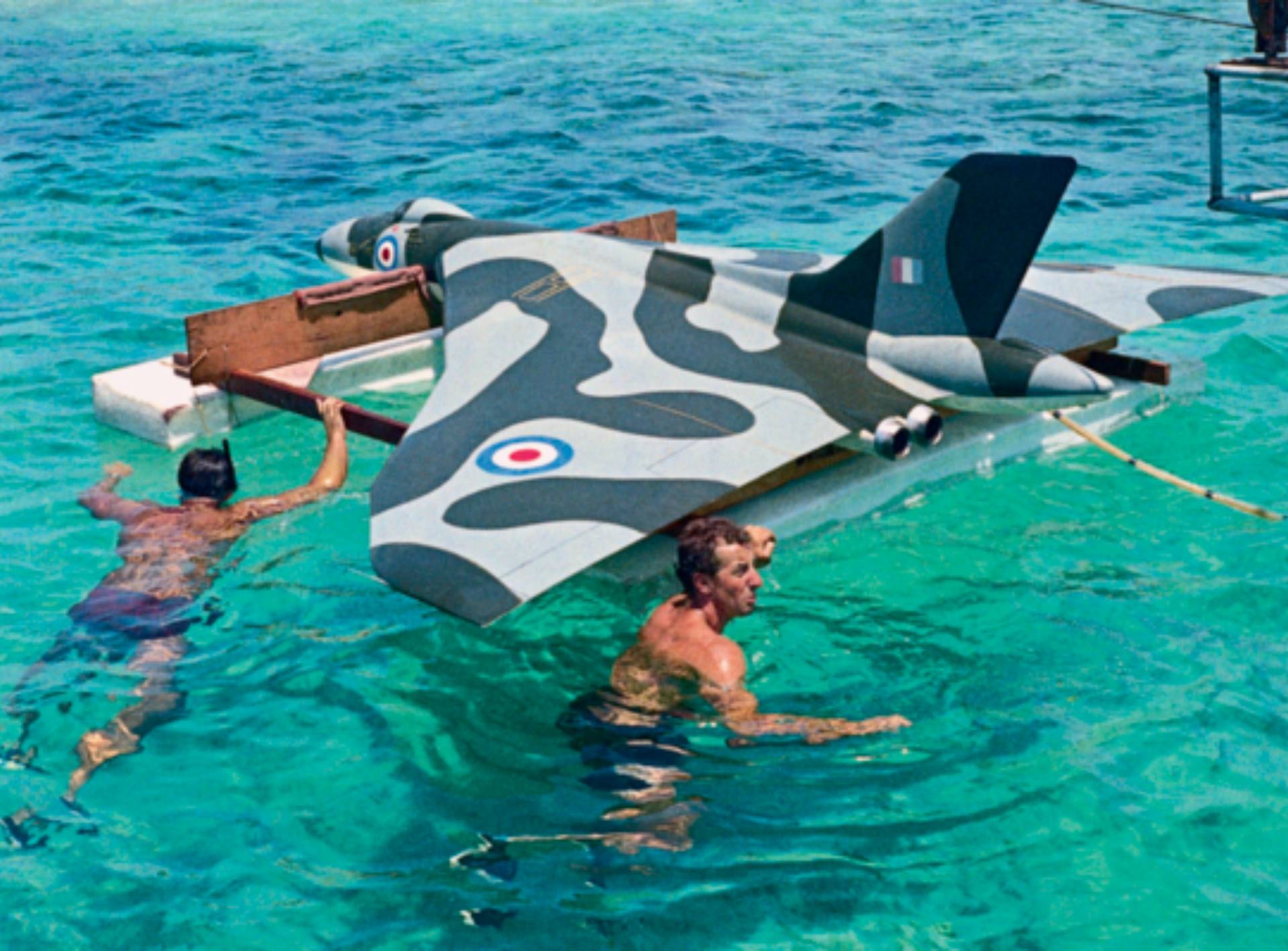
The miniature: A RAF-V-Force bomber carrying two atomic bombs is stolen by SPECTRE henchman Angelo Palazzi (Paul Stassino). The aircraft subsequently lands in the middle of the ocean near the Bahamas and is left on the seabed. 

The magic:  A 13 ft model was built for the Vulcan landing on the water. The miniature was suspended under a skate which was rolled down wires between two towers. A second model was created for the Vulcan drifting down to the seabed — the shot was made hazardous by ever-present sharks circling the waters. The dicing with danger was worthwhile. Thunderball won an Academy Award for special effects, the first 007 film to win an Oscar.  

Bird 1

As seen in: You Only Live Twice (1967)

The miniature: Launched from Ernst Stavro Blofeld (Donald Pleasence)’s base hidden in a volcano, Bird 1 is a multi-stage rocket and space vehicle used to ensnare enemy spacecraft, capturing American and Soviet astronauts to manipulate a war between the two superpowers.

The magic:  The model work shoot on You Only Live Twice was started on January 12, 1967 at Pinewood and took eight weeks to complete. The models of the SPECTRE, American and Russian spacecraft were shot separately against black velvet and optically composited into the various shots.


The Lotus Esprit

As seen in: The Spy Who Loved Me (1977) 

The miniature: A white sports car that transformed into a submarine, fitted with Q Dept trickery such as depth charges, surface-to-air missiles and black dye (think Octopus ink) to blind underwater assailants.

The magic:  The special effects unit, led by Derek Meddings, started work in Nassau in August 1976. Shot by Lamar Boren, the miniature Lotus was moved around by ultra-thin wires. For the moment the Lotus goes underwater, the model was simply let go by a diver and captured as it floated down — the shot was repeated until the model descended at the correct angle. As well as the Lotus, the unit also created Karl Stromberg’s super tanker, the Liparus and his submersible base Atlantis.


Moonraker Space Shuttle

As seen in: Moonraker (1979)

The miniature: Launched from a secret Amazonian compound owned by billionaire industrialist Hugo Drax (Michael Lonsdale), the reusable spacecraft was used to ferry Drax’s master race to his space station. 

The magic:  The team were given access to Edwards Air Force base where the real shuttle was being fitted out with ceramic tiles. Based on actual shuttle designs, the largest shuttle model was 5 ft in length. Rather than front projection or the bluescreen techniques of Star Wars, Meddings decided to shoot elements on the same piece of film by shooting, rewinding the film, then filming different elements (a space shuttle, a starfield, the Earth). Filming of shuttles docking with Drax’s Space Station employed 48 passes on one piece of negative.

The take-off of the shuttles proved dangerous as magnesium flares were used to double the flame of the rocket thrusters. “We had to keep the shuttle on the move because the minute we stopped, there was a chance the magnesium flares would make the shuttles catch fire,” said Meddings.


The Latin American Hangar

As seen in: Octopussy (1983)

The miniature; As the film begins, Bond (Roger Moore)’s mission is to blow up a Latin American aeronautical supply base run by Colonel Toro (Ken Norris). 007 manoeuvres a lightweight single-seat jet into the bustling hangar, using the ground-to-air missiles on his tail to blow the building to smithereens. 

The magic: While the jet flying through the hangar was achieved through old school know-how — a plane mounted on a pole and driven by a car inside the hangar — the explosion could only be pulled off in miniature, the hangar recreated in a 1/8th scale model. 

“All of the sheets of corrugated tin that were on the hangar were made of plastic, fixed on individually, so that when the hangar blew, they’d all come off one-by-one,” said visual effects supervisor John Richardson. “Then we built a little model airfield around it, put the camera in a crane from Bond’s point of view, and shot it at about 120 frames per second. We put a series of explosions inside, so that it got bigger as it blew up. Quite an interesting bang, I thought.”

Janus Satellite Control Centre

As seen in: GoldenEye (1995)

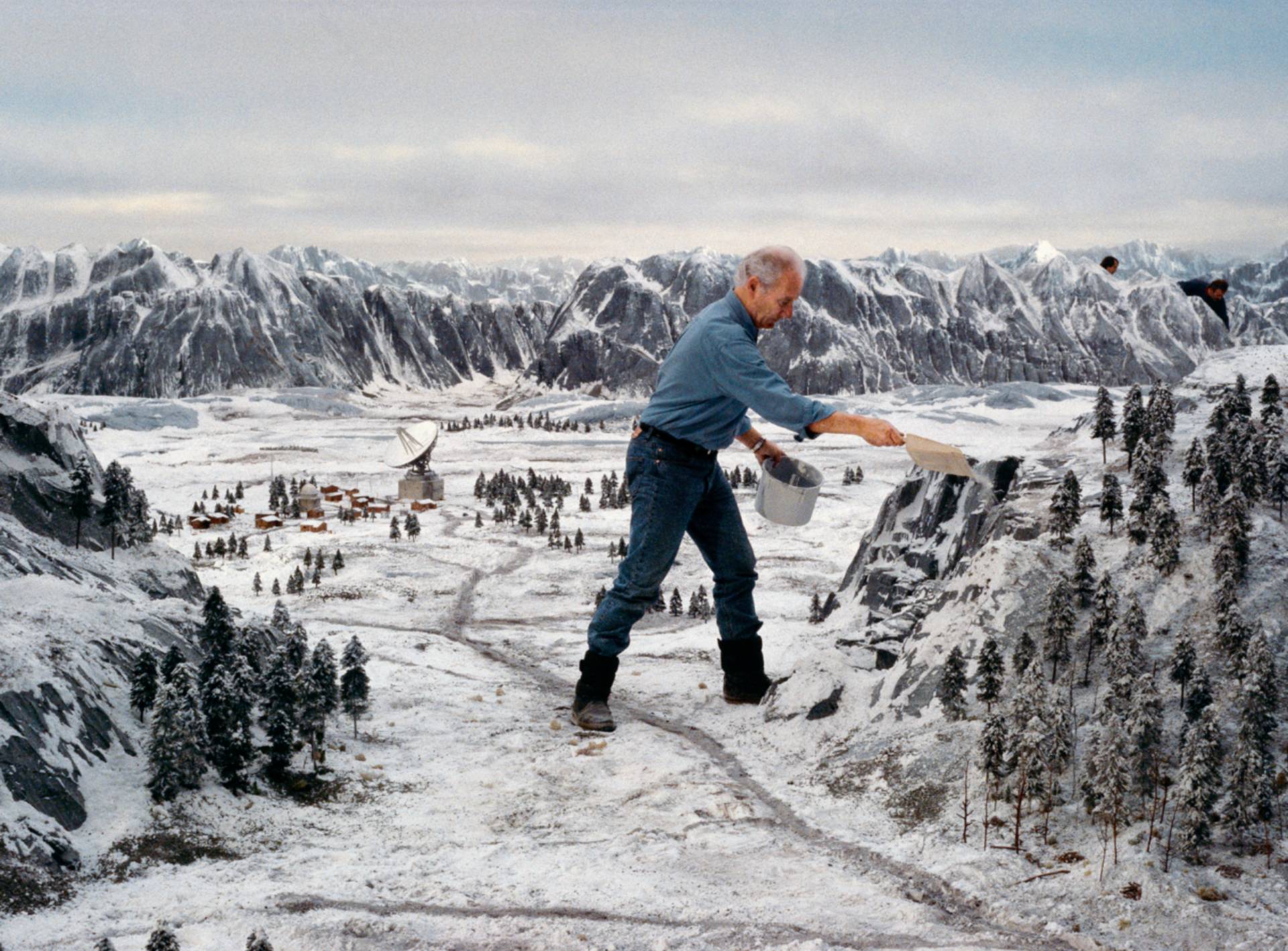
The miniature: A secret satellite control and tracking centre located in Cuba. The huge communications disc is built into the ground and flooded while not in use, making it impossible to spot from the air or satellites. 

The magic: Inspired by the world’s largest spherical radar-radio telescope in Arecibo, Puerto Rico, a miniature model was created on the back lot of Leavesden. “The giant antenna and its rig had to rise out of a lake,” said special effects cameraman Paul Wilson. “The lake then had to empty to reveal the huge reflector dish. In reality it measures some 1000 ft across which itself was no mean task — the water having disappeared down a gigantic ‘plughole’ at the bottom of the antenna.” The gigantic size of the dish meant the 1/10 scale model measured 50ft across, the landscape surrounding the miniature running to 100ft across. GoldenEye proved to be the last film of special effects maestro Derek Meddings. 


Stealth Ship 

As seen in: Tomorrow Never Dies (1997)

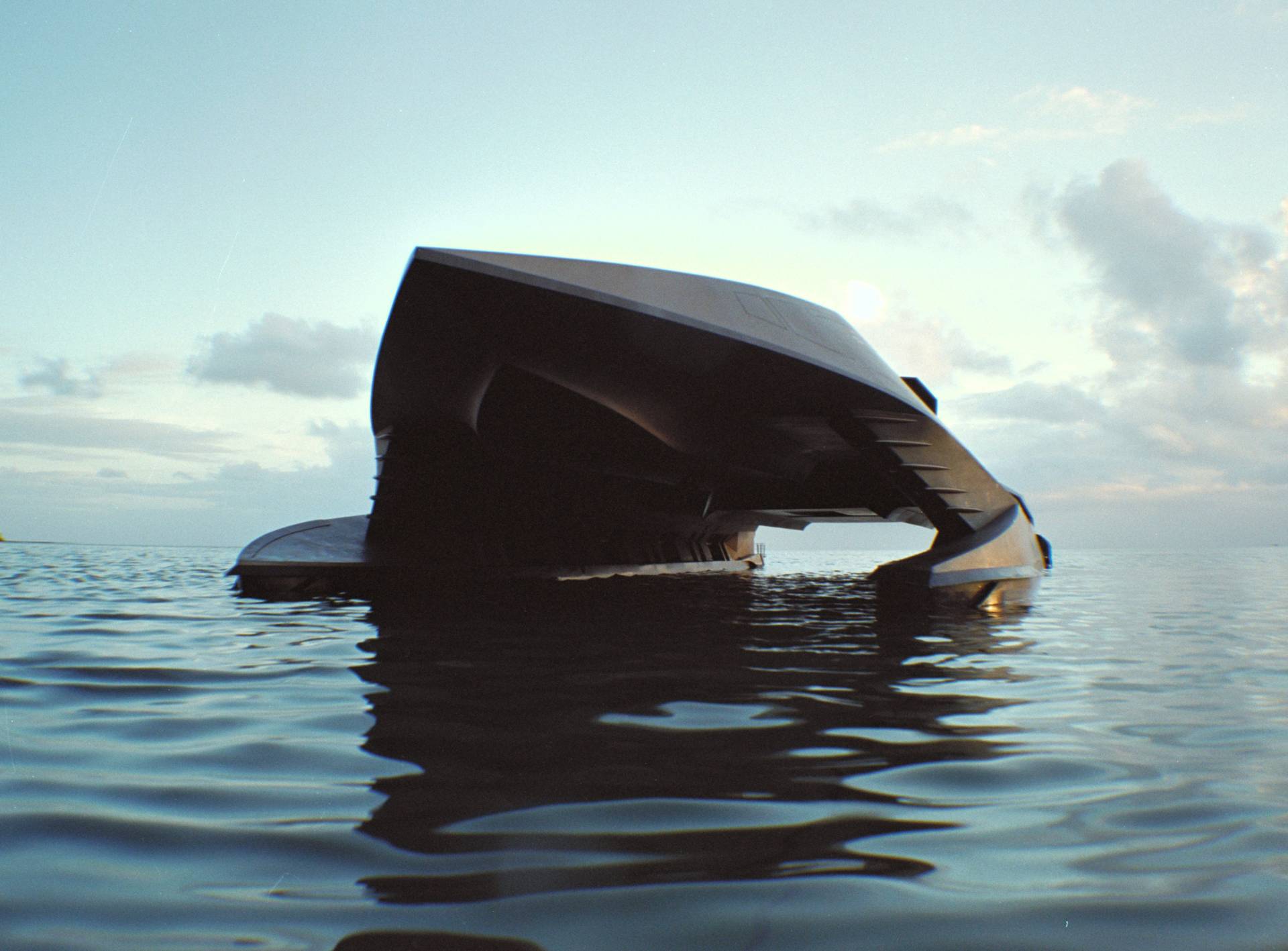
The miniature: A covert radar and sonar-resistant catamaran-style ship constructed by media baron Eliot Carver (Jonathan Pryce) in league with the People’s Republic of China. The vessel was instrumental in Carver’s plan to orchestrate a war between Britain and China. 

The magic:  The model work on Tomorrow Never Dies was shot over 39 days in Baja, Mexico using the same water tank as James Cameron’s Titanic. The stealth boat model was 30 ft long, weighed approximately three and a half tonnes and was photographed against miniature recreations of Phuket islands. The unit also created a model frigate measuring 55ft long that stood in for three different ships. “There was a sinking rig under the surface that controlled the ship and its angle,” recalled visual effects supervisor John Richardson. “Buoyancy tanks in the back of the ship controlled the rate the ship sank and how much water was let in. The bow of the ship tipped up, as it would do in real life, and we used the rig to let it slip beneath the waves.”

The Venetian Villa

As seen in: Casino Royale (2006)

The miniature:  Bond (Daniel Craig) chases Vesper Lynd (Eva Green) through the streets of Venice, Lynd ducking into a villa under renovation. As a gunfight ensues, 007 shoots and punctures the flotation bags that hold the building above water level, causing the house to sink, with Vesper locked inside an old elevator.

The magic:  A model of the villa was created at Pinewood in the studio’s 800,000-gallon outdoor Paddock Tank. The villa miniature was mounted on a gimbal powered by hydraulics, which tilted 15 degrees in four directions. “The miniature was about 26 feet tall,” said visual effects supervisor Chris Corbould. “It was a pretty big miniature, all controlled by computerised hydraulics. We could program it and repeat it ad infinitum.” The model was shot against bluescreen to allow CG elements to be added in, including spray, smoke and flying birds.