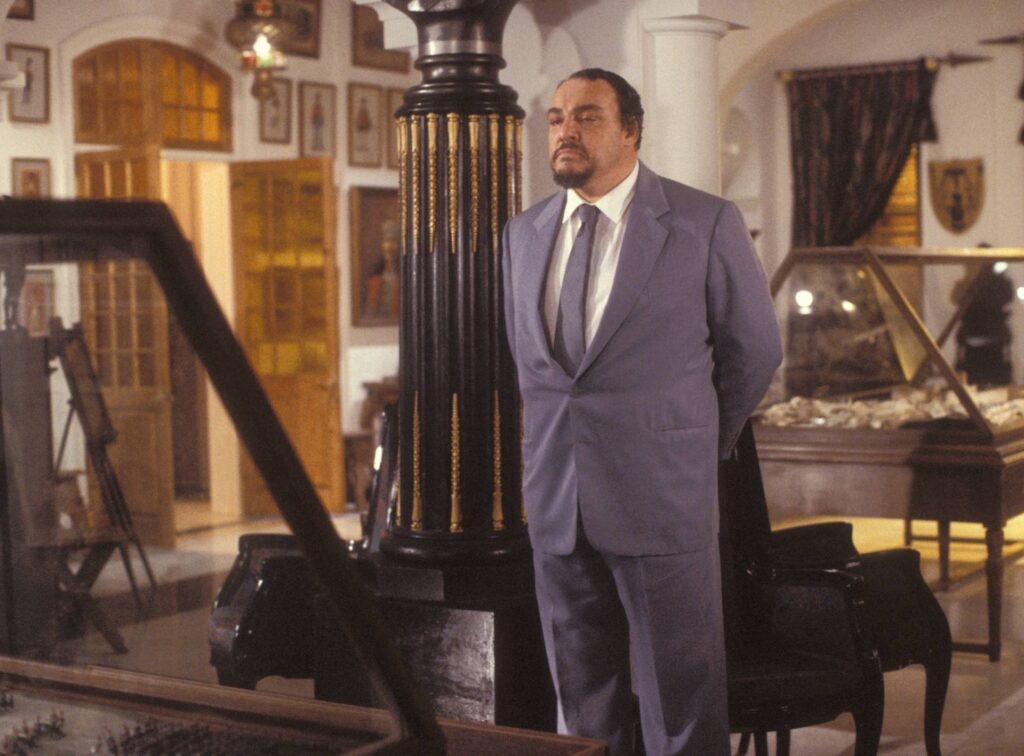
10 Great Gigantic Gadgets

As played by Desmond Llewellyn, Q specialised in creating handy pocket-sized gadgets that could aid Bond on any mission, be it a magnetic watch (Live And Let Die), radioactive lint (On Her Majesty’s Secret Service) or exploding pens (GoldenEye). But sometimes, bigger is better. Here is a survey of the outsized creations of Llewellyn’s quartermaster, proving larger than life in more ways than one.

ASTON MARTIN DB5

As seen in: Goldfinger (1965) 

On-screen: In the first visit to Q’s lab, we meet arguably his most famous creation. Upgrading Bond’s (Sean Connery) Bentley, Q talks the secret agent through his new ride, an Aston Martin DB5, fitted with all new gizmos and gadgets; front-mounted machine guns hidden behind the indicator lights; revolving licence plates valid for England, France and Switzerland; a high-powered oil jet, rear smoke screen, revolving tyre slasher, onboard radar display, a weapons panel in the centre armrest and, of course, an ejector seat operated by a button hidden in the gear stick. “Ejector seat? You’re joking!” suggests Bond. “I never joke about my work,” comes the classic reply.

Off-screen: The idea for the revolving licence plates came from director Guy Hamilton, who fantasised about escaping parking tickets.

BELL-TEXTRON JET PACK

As seen in: Thunderball (1966)

On-Screen: After a brutal fight with SPECTRE operative Jacques Bouvar (Bob Simmons), Bond (Sean Connery) looks trapped inside the magnificent French château. As the colonel’s security team move in, 007 puts on the Bell-Textron jet pack and makes a short flight from the château’s roof to his Aston Martin DB5 parked nearby. The jet pack fits nicely into the DB5’s boot. 

Off-screen: The rocket belt makes a cameo appearance in Q’s lab in Die Another Day.

LITTLE NELLIE 

As seen in: You Only Live Twice (1967)

On-screen: Needing to fly a reconnaissance mission over remote Japanese volcanoes in search of missing US and Soviet spaceships, Bond (Sean Connery) orders ‘Little Nellie’ from Q. Arriving in four large suitcases, ‘Little Nellie” turns out to be a nifty autogyro in striking yellow cowling decked out with a range of armaments: two forward-facing machine guns, two rocket launchers, heat-seeking missiles and aerial mines floated down on mini parachutes. When Bond is attacked by four SPECTRE helicopters, Bond confirms Little Nellie “defended her honour with great success.”

Off-screen: ‘Little Nellie’ was built and flown in the film by Wing Commander Ken Wallis. The name derives from a WWII tradition of people named Wallis or Wallace being given the nickname Nellie after the famous music hall star Nellie Wallace. The machine was given the nickname by Wallis’ Group Captain Hamish Mahaddie.

LOTUS ESPRIT

As seen in: The Spy Who Loved Me (1977)

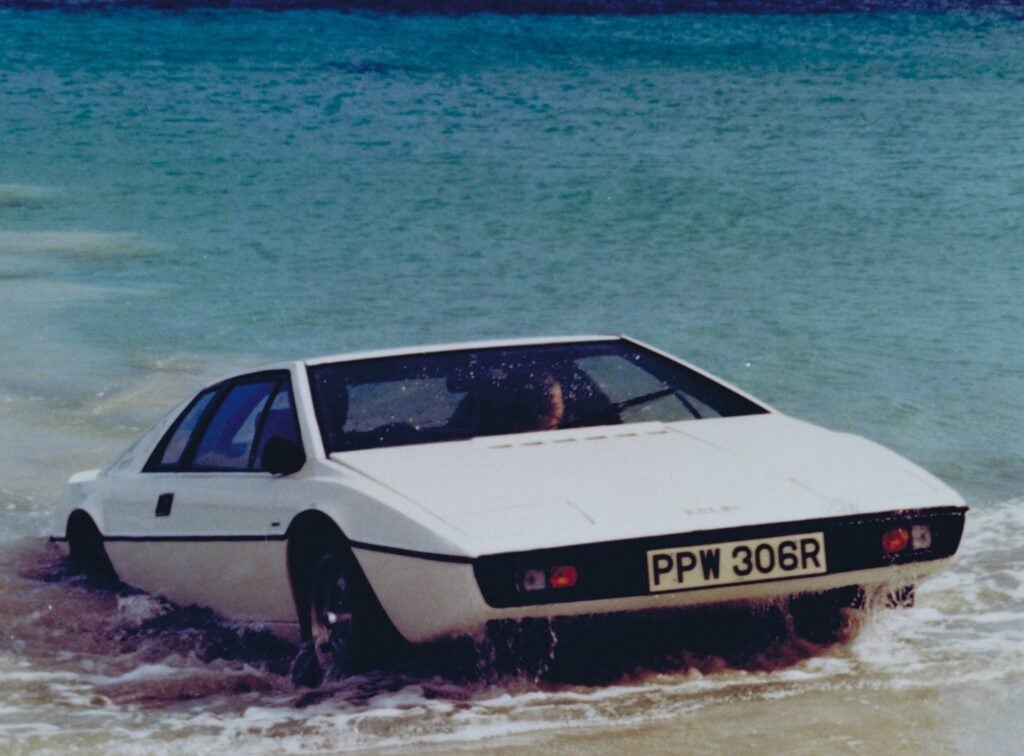
On-screen: Introduced in a chase around the Sardinian coast, the Lotus Esprit is impressive on land and under the water. During the road chase, Bond (Roger Moore) deploys cannons hidden behind the rear number plate used to spray cement on chasing vehicles. But the Lotus really comes into its own when it drives off a jetty and transforms into a submarine, as the wheel arches turn into fins, propellers extend from the rear of the vehicle, and a small periscope emerges from the roof to help 007 navigate. Its underwater arsenal is equally impressive, boasting front-mounted rockets, a smoke screen, a limpet mine dispenser and a radar-guided surface-to-air missile. No wonder agent Anya Amasova (Barbara Bach) stole the blueprints of the vehicle two years earlier. 

Off-screen: Lotus supplied the production with seven car shells for use as the submarine. One was motorised, the others represented the car in various stages of transformation.

GONDOLA HOVERCRAFT

As seen in: Moonraker (1979)

On-screen: Bond (Roger Moore) drifts down the canals in a seemingly ordinary gondola. But when he is attacked by Drax’s assassins, he turns the gondola into a speedboat via a hidden steering column and a propeller-driven motor. The high-speed pursuit takes another unforeseen twist when the vehicle converts into a hovercraft and starts gliding across St. Mark’s Square. Even the pigeons can’t believe it.

Off-screen: “There were thousands of tourists who didn’t know there was a film going on,” recalled Roger Moore. “I didn’t have that much control over it, so they eventually gave me a little klaxon to warn people.”

THE ACROSTAR “BEDE” JET

As seen in: Octopussy 1983

On-screen: Bond is on a mission to sabotage a spy plane. Escaping capture, he jumps into the Range Rover of ally Bianca (Tina Hudson). Bond detaches the horse box, and, from a mechanical horse’s derriere, emerges in an Acrostar Jet, a one-man aircraft with folding wings capable of speeds up to 300mph. Weaponised by Q Branch, the nifty jet deftly dodges a heat-seeking missile, 007 slipping through a gap in a large hangar before the missile smashes into the closing doors, blowing the huge shelter to smithereens.

Off-screen: To shoot the aerial action, stunt pilot J.W. “Corkey” Fornof flew his jet over Southern Utah.  

ICEBERG SUBMARINE

As seen in: A View To A Kill (1985)

On-screen: On assignment to retrieve a microchip from the body of murdered agent 003, Bond (Roger Moore) comes under attack from Soviet troops. After evading his pursuers by snowboarding on the runner of a broken snowmobile, Bond enters a watercraft cunningly disguised as an iceberg. Decked out with luxury facilities including a couch that converts into a bed, it is piloted by field agent Kimberley Jones (Mary Stävin) using monitors showing images from exterior cameras to navigate the way. In a typically patriotic touch, the interior of the hatch is decorated with a Union Jack.

Off-screen: The pre-credit sequence was shot around Lake Jökulsárlón in Iceland, doubling for Siberia.

MANTA RAY COVER

As seen in: Licence To Kill (1989) 

On-screen: Q has a rich tradition of creating animal-assisted gadgets, from a fake seagull snorkel (Goldfinger) to a crocodile submersible (Octopussy). Here, 007 (Timothy Dalton) dons this unique outfit to blend in with marine life and swim undetected past the underwater surveillance cameras of the Wavekrest. While Milton Krest’s (Anthony Zerbe) men register a presence (“It’s just a manta ray”), his disguise allows Bond to travel undetected. Simple but highly effective. 

Off-screen: Juan Dario Corona doubled as Bond for the underwater scenes filmed around Isla Mujeres, Cancún.

BMW 750IL

As seen in: Tomorrow Never Dies (1997)

On-screen: Used by Bond (Pierce Brosnan) to escape from Elliot Carver’s (Jonathan Pryce) men in a Hamburg car park, the BMW 750IL is packed with gadgets, some deadly, some just useful; rockets concealed in the sunroof, re-inflatable tyres, a retractable chain cutter hidden in the bonnet, an electric shock device to ward off car-jackers, metal spike dispenser, flash grenades and a tear gas mechanism. But, perhaps, most ingeniously, the car can be driven by remote control via a cell phone closed-circuit monitor that allows 007 to steer from the back seat. 

Off-screen: The unit used 17 BMW 750ILs in Aspen Silver. Four were adapted to accommodate a hidden driver for when 007 is using remote control. 

Q BOAT

As seen in: The World Is Not Enough (1999)

On-screen: First seen in Q’s workshop, Bond commandeers the hi-tech craft to chase the killer known as Cigar Girl (Maria Grazia Cucinotta) along the Thames to the Millennium Dome, via a detour through Tobacco Wharf, a fish market and a busy restaurant. It is fitted with front-mounted torpedoes (which wreak havoc in the Docklands), jet engines and a submersible mode which allows the craft to briefly go underwater. Of course, Bond uses the sub-aqua moment to straighten his tie.

Off-screen: When the Q Boat does a mid-air barrel roll, performed by stunt performer Gary Powell, the impossible manoeuvre was achieved by attaching Vickers air mortars to the side of the boat. Six cameras captured the action.
Profiling Eve Moneypenny

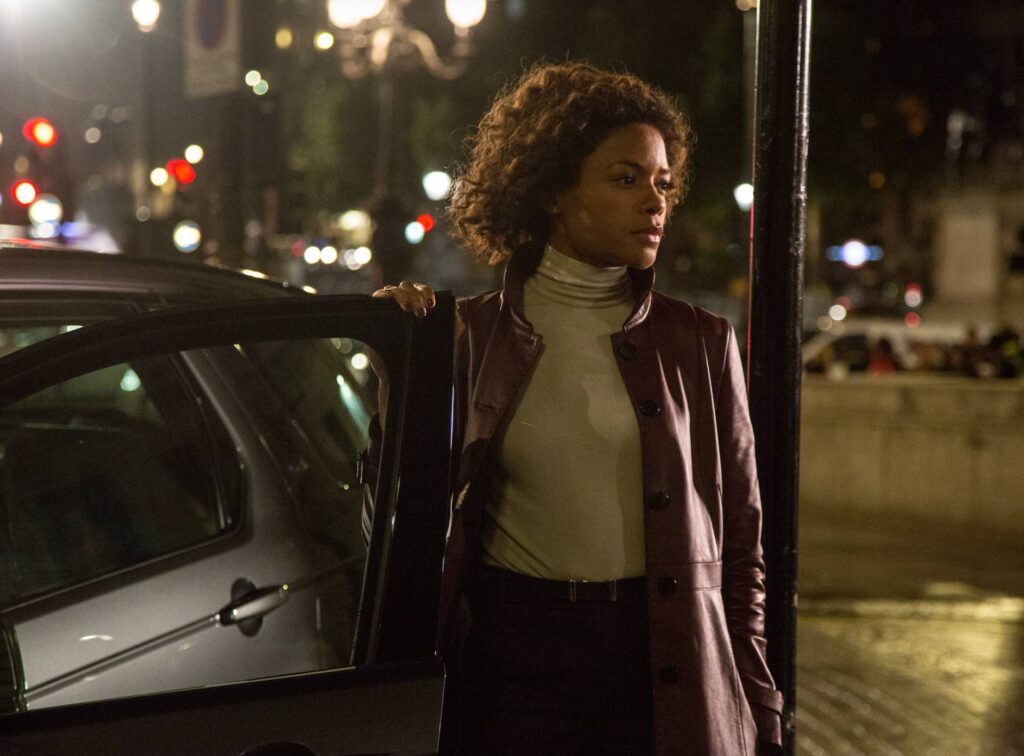
By the time Daniel Craig reached his third film, the 007 team thought it was time to reintroduce his support team of key allies. Alongside Ben Whishaw as Q, Naomie Harris joined the cast as Moneypenny. From the get-go, it became clear this was a very different interpretation of the iconic character.

Skyfall (2012)

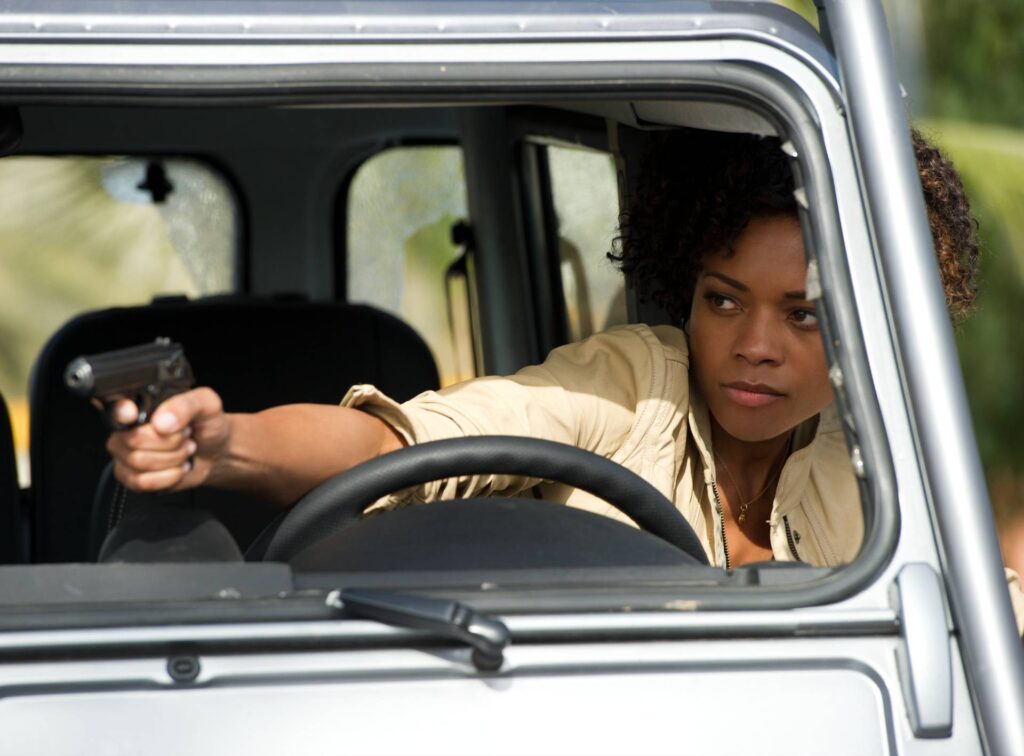
Skyfall introduced Harris as Eve, a field agent on assignment with Bond (Daniel Craig) in Istanbul, Turkey. After Bond discovers and helps wounded MI6 operative Ronson, Eve picks up 007 in a Land Rover Defender and takes off in pursuit of mercenary Patrice (Ola Rapace), who is in possession of a stolen computer drive. A breakneck chase through narrow, crowded streets ensues, with Moneypenny displaying serious skills and nerve at the wheel.

Guided by Tanner (Rory Kinnear) and M (Judi Dench) on comms from London, Eve blocks Patrice on a bridge, opening fire on the mercenary only for him to jump off the bridge and onto a speeding train. Bond, of course, follows suit. 

On M’s orders, Eve takes off after the train. She eventually runs out of road, exits the car and takes aim with a rifle. M demands that Patrice be eliminated, but due to the frenetic fighting and constant movement, Eve can’t get a clear view. Exasperated with her lack of clarity, M bluntly orders Eve to “take the bloody shot”. Eve opens fire and ends up shooting Bond, resulting in his apparent death.

Returning home, Eve is reprimanded and suspended from fieldwork. But when Q (Ben Whishaw) refuses to rendezvous with a rejuvenated Bond in Macau due to a fear of flying, Eve steps in. In a playful interaction, she reveals vital intel about the release of names of undercover NATO agents from the decrypted drive, then gives a shirtless Bond a close shave with a traditional cut-throat razor (“Sometimes the old ways are the best,” she suggests). Eve later aids Bond during a fistfight, incapacitating one of the assailants by hitting him with a case full of money. Bond tells her to put the contents on red.

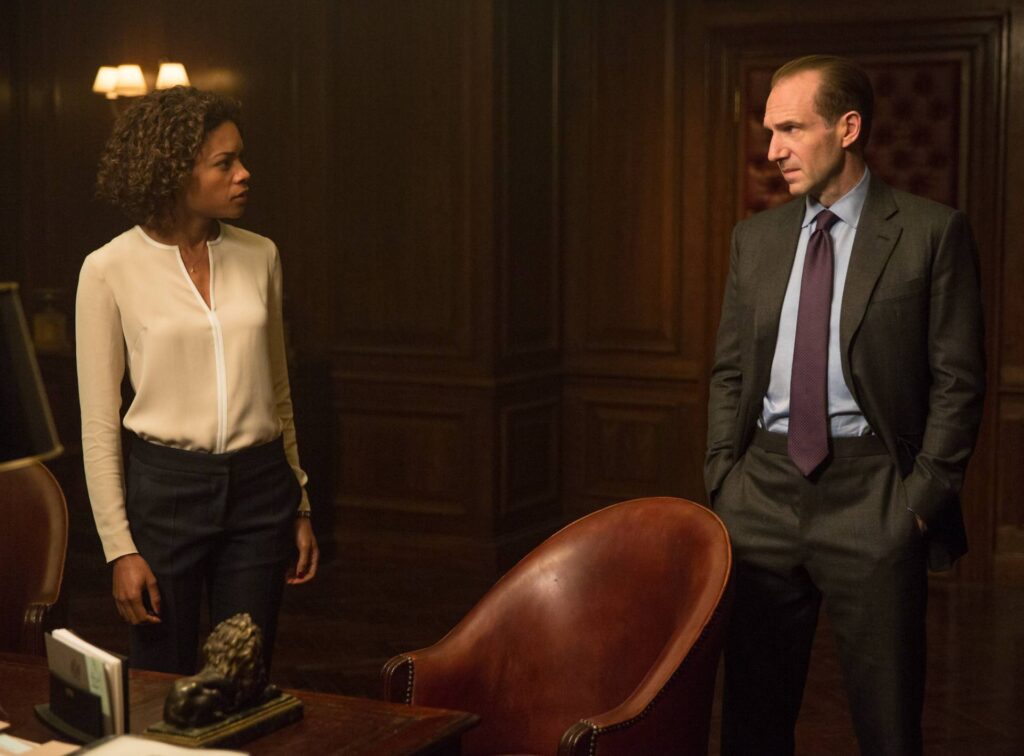
Eve is seconded to work with the Intelligence and Security Committee Chairman Gareth Mallory (Ralph Fiennes) during the transition between M’s ‘voluntary retirement’ and her unnamed successor’s arrival. When M’s Board of Inquiry comes under attack from cyber terrorist Silva (Javier Bardem), Eve returns fire in the gun battle, facilitating the escape of key government officials.

Following the death of M at Skyfall, Eve meets a reflective Bond staring at a sunrise and informs him she is unfit for fieldwork and will now be desk-bound, working as the executive assistant for the new M, Gareth Mallory. Before they part, Eve hands Bond a box containing M’s Union Jack bulldog as a hint that he should take a desk job. Bond reminds her they have never been formally introduced, and she reveals her full name is Eve Moneypenny.

Spectre (2015)

Following Bond’s return from Mexico, Moneypenny brings 007 a box of the personal effects recovered from Skyfall. She meets him at his sparse, undecorated home (“I like what you’ve done with the place,” she deadpans) and reveals he has been the talk of MI6 with his exploits in Mexico. Bond shows her a video message from M that reveals she instructed him to kill SPECTRE assassin Marco Sciarra (Alessandro Cremona) and attend his funeral in Rome. 007 asks Moneypenny to do some quiet digging about a name he heard in Mexico: The Pale King. 

After Sciarra’s funeral in Rome, Bond gets embroiled in a high-speed car chase with SPECTRE heavy Mr Hinx (Dave Bautista) and calls Moneypenny for the intel, seemingly piqued that she has a late-night guest. (“It’s called life, James. You should try it sometimes.”). She confirms The Pale King is actually QUANTUM operative Mr White (Jesper Christensen), whose last known location is Altaussee in Austria. 007 asks her to check on another name — Franz Oberhauser (Christoph Waltz). Later in London, Moneypenny is part of the team alongside M and Tanner, who move to halt the launch of Max Denbigh’s (Andrew Scott) Nine Eyes program. 

No Time To Die (2021)

Moneypenny is now London-bound, helping M keep a lid on the break-in at the secret laboratory working on Project Heracles. She escorts Bond and Nomi (Lashana Lynch) towards M’s office (“I thought you two would get along”). As Bond enters, Nomi tells Moneypenny, “I get why you shot him.” She replies, “Everyone tries at least once.”

After Logan Ash kills Felix, Bond goes to M in London, demanding to be allowed to interrogate Blofeld in Belmarsh Prison. When M refuses, Moneypenny steps in to help Bond, taking him to Q’s house to decrypt a flash drive and backs 007 up when Q shows reticence to help. As the trio reveal the terrifying truths around the power of Heracles — nanobots capable of creating genocide on a massive scale — Moneypenny informs Bond that MI6 have been tracking leaks of DNA information across global databases. She later assists in helping Bond confront Blofeld, later being rebuked by M. 

As Bond infiltrates Lyutsifer Safin (Rami Malek)’s Poison Island, Moneypenny listens in as the Royal Navy missiles launched to destroy the island send 007 to his death. Later back in London, Moneypenny, along with M, Q, Tanner and Nomi, raises a glass to the memory of Bond, as M reads a poignant toast.

“The proper function of man is to live, not to exist. I shall not waste my days in trying to prolong them. I shall use my time.”

Shooting Licence To Kill’s Tanker Chase

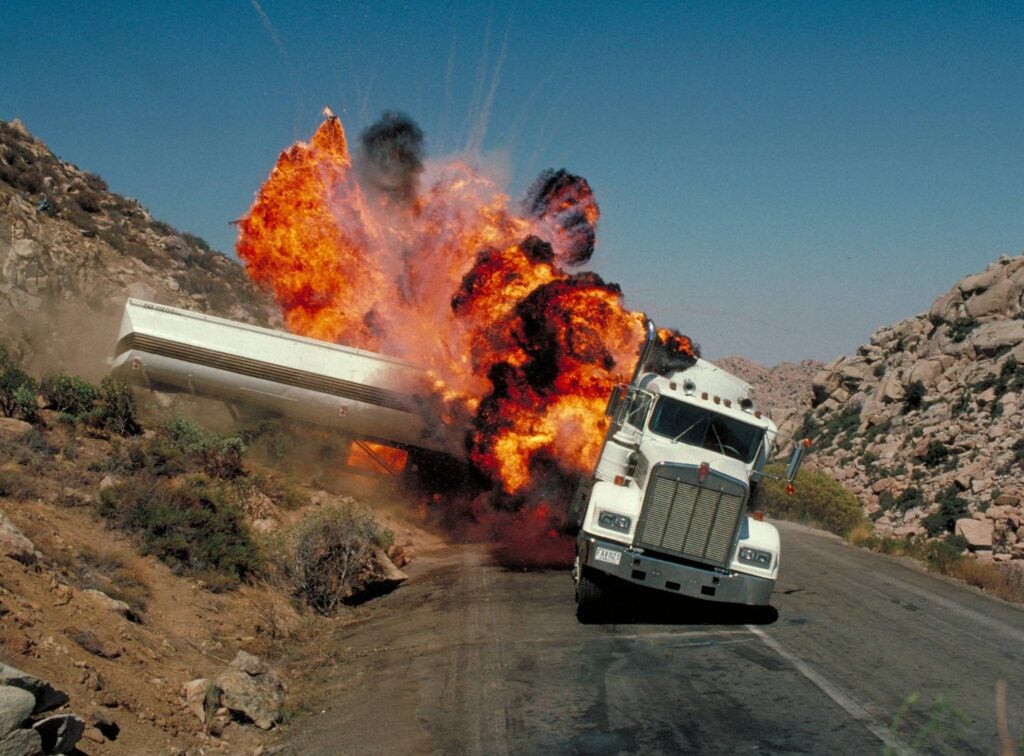
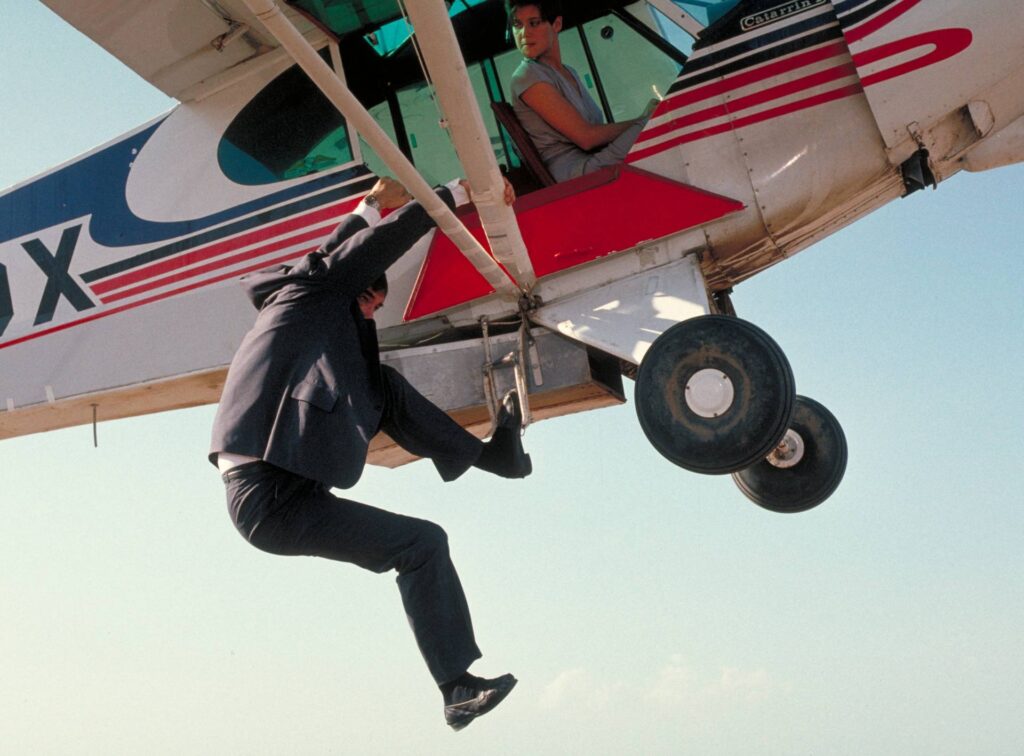
The tanker chase at the end of Licence To Kill remains one of the most exciting and dangerous-to-film set-pieces in the 007 canon. As Bond (Timothy Dalton) destroys drug lord Franz Sanchez’s (Robert Davi) laboratory, the criminal orders four trucks to move the narcotics. Giving chase in a plane flown by CIA agent Pam Bouvier (Carey Lowell), 007 leaps from the plane onto the Kenworth tanker and starts causing chaos. The subsequent action involves a missile, colliding vehicles and huge explosions all staged for real, in the days before CGI. 

Making Mayhem

The spectacle was staged over months by the second unit in the border town of Mexicali. Much of the key action was captured on the Old Rumorosa Road, an hour’s drive from the unit base.

“It was a very dangerous, snakelike mountainous road,” recalled director John Glen. “There’d been many tragic accidents over the years, so they closed this section of road and bypassed it. We had a lot of fun there, because we had full control over it, although any mistakes and it was a 300-foot drop.”

The scene was executed by special-effects supervisors John Richardson and Chris Corbould who, along with driving stunts arranger Rémy Julienne, understood the complexity and scale of the ambitious sequence.

“We were dealing with tankers that weighed in excess of five tons, and doing weird things with them,” says Corbould. “Sending them over the edges of cliffs, front wheelies, and some huge explosions. Probably some of the biggest explosions l’d ever done. To create a 4,000-gallon tanker blowing up, you have to create something pretty immense.”

Plane Crazy

The breath-taking stunt where Bond leaps from a plane onto a tanker was shot on August 30th, with stunt co-ordinator Simon Crane doubling for Bond, and Corkey Fornof flying the Piper Super Cub monoplane and playing Pam.

“It was a very difficult sequence to do,” recalled Crane. “The weather was extremely hot, up to 120 degrees. which had a great effect on the handling of the plane. We had to fly very low to the ground, so it was going up, going down, and I’m hanging on the edge of it, with no cables. I had to jump onto a tanker that’s hurtling along at 70 miles an hour.”

To increase the complexity, the tanker was being followed by a huge convoy of vehicles, including a fire brigade lorry, an ambulance and trucks carrying camera technicians, all hurtling along at 70mph. The crew attempted to shoot the stunt on four different occasions and every time the conditions were unsuitable.

“It was quite a big stunt, so I didn’t eat anything beforehand, just in case, God forbid, something went wrong, and I was taken to hospital to be operated on—you can’t have eaten anything,” recalled Crane. “I didn’t eat for four days, and by the end of it, I was hanging in rags.”

Corkey Fornof flew the plane as Pam, wearing a dress and wig, but according to co-producer Michael G. Wilson, “he didn’t have anything else on because it was so hot!” The first attempt at the stunt saw Fornof put one wheel on the truck and Bond stepped onto the tanker. Once the shot was reviewed, the stunt was deemed too easy, and Crane was asked to jump onto the tanker. 

“Eventually, we got it,” recalled Crane. “It looked a lot more terrifying to me, being on the plane, than it ever did in the film.”

Stranger Things

While the plane-to-tanker transfer was completed safely, other areas of the shoot took on an aura of being cursed.

“Strange things just kept happening while we were shooting,” recalled Richardson. “Trucks mysteriously burst into flames in the middle of the night, car crashes, a whole mishmash of odd things. There were a number of strange tales told about the road we were shooting on—the road was supposed to be haunted.”

While investigations amongst the crew uncovered that five nuns and a dog had been killed in an accident at the location, it did not put an end to the eerie happenings.

“Somebody took a still of one of the exploding tankers,” says Richardson. “When he got the film back, there was this flaming hand, like a claw, coming out of the explosion. I think it was just a freak bit of wind, myself, but it did look like a flaming hand coming out of the explosion. Who knows?”

Happier Accidents

Not all the unexpected incidents were spooky. On September 1, the crew were shooting two lorries trying to pass each other coming around the corner. 

“One of the lorries got pushed into the rock,” says Arthur Wooster. “We were shooting all this, and it was more exciting than the stunt because it was the real thing, I phoned John Glen up, and said, ‘Look, we’ve had an accident. It could be useful to us. We could make this work, and build it into the story.’ John looked at the rushes, and we used it, building on it. That’s the sort of thing where you have to change your mind very quickly, on the spur of the moment.”

Glen later joined the second unit with principal actors at the Mexicali location for the week of October 3 to 7. Key to the action was capturing the demise of Sanchez, which was filmed over three days from October 5.

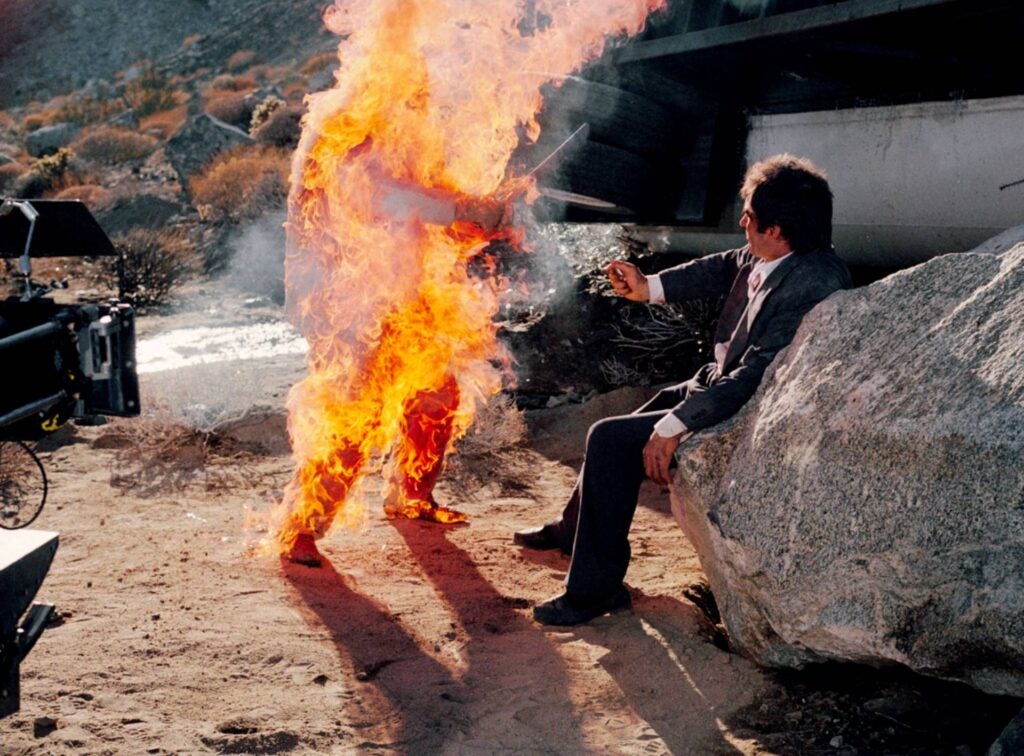
“For the last explosion, where the two tankers blow up and Sanchez was set alight, we had about 200 gallons of gasoline representing each tanker,” recalled Richardson. “We ran all the wires back to a nail board, from which you can choreograph not only the sequence of the explosions but also the direction the flame goes in. Timothy was in the foreground throughout it, running away. You can see as each successive bang went off, Timothy moves a little bit faster.”

The second unit finished at the location on October 19, after shooting for 46 days. The finished sequence represented all the spectacular action audiences expected from 007 but with a tougher feel that marked out Timothy Dalton’s interpretation. It wasn’t just Bond who was living on the edge. 

Race Across The World With 007

Starting with Dr. No in 1962, Sean Connery’s James Bond set new standards in big-screen escapism, with new levels of globetrotting location work bringing the glamorous stories to life. While the studio work stayed at the UK’s Pinewood Studios, the series travelled the planet, ranging from the beaches of Barbados to the mountains of Switzerland to the neon cityscape of Las Vegas. Here are the travel tales of Connery’s Bond, starting in the sunny climes of Jamaica.

Dr. No (1962)

The Mission: Bond travels to Jamaica to investigate the death of fellow agent John Strangways (Timothy Moxon). The investigation brings him into the orbit of mysterious scientist Dr. No (Joseph Wiseman).

Locations: Jamaica

Travel Tales: Sean Connery arrived in Jamaica a week before filming started, staying at the Courtleigh Hotel, which became the film’s production base. The prep week saw the actor discuss the character with director Terence Young, and work out fight choreography with stunt arranger Bob Simmons.

Bond and Honey Ryder’s (Ursula Andress) first meeting was captured on February 6 1962, at the privately owned Laughing Waters Beach in Ocho Rios, Saint Ann, Jamaica, near Ian Fleming’s home, GoldenEye. The shot was witnessed by the author and his wife Ann, who were out for a stroll with poet Stephen Spender and journalist Peter Quennell, and were forced to dive to the ground to avoid the camera. 

The song Bond and Honey sing, ‘Underneath The Mango Tree’, was written by the film’s composer Monty Norman and sparked a battle between the two stars over who could claim the one record player to learn the song. Andress later admitted, “He sings much better than I do. I can’t carry a tune.”

The unit shot for 31 days in Jamaica, finishing on February 21, shooting exteriors of Miss Taro’s house at the Sans Souci Hotel. The crew flew back to the UK on a chartered flight costing £5000.

From Russia With Love (1963)

The Mission: Bond is instructed by M (Bernard Lee) to look after a young Russian woman, Tatiana Romanova (Daniela Bianchi), who has declared her desire to defect with an invaluable Lektor cipher machine.

Locations: Istanbul, Turkey, Venice, Italy, Scotland

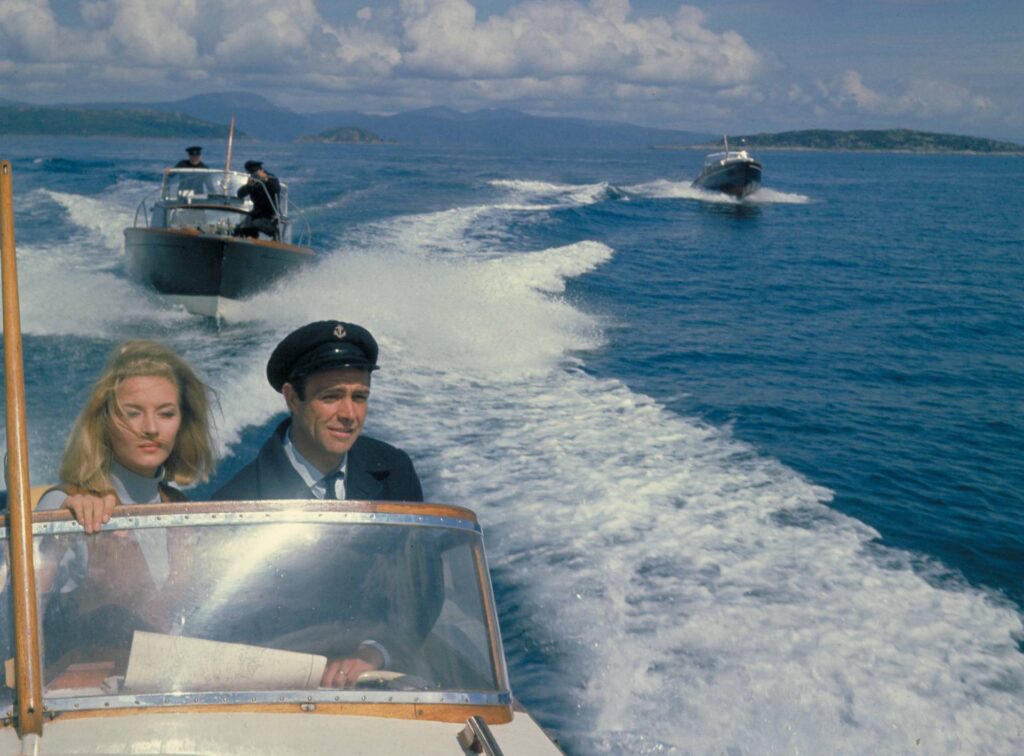
Travel Tales: Filming in Istanbul attracted such huge crowds, Terence Young decided to create a diversion for the scene where Bond runs to the train station. Just before shooting the scene, Young signalled with his handkerchief for a stuntman to appear on a 3rd-floor balcony opposite, shouting and teetering precariously – the crowd shifted their attention to him, leaving Connery free to run to the station.

The helicopter and boat chase were shot at Lochgilphead and Crinan Harbour in Scotland. The helicopter sequence was abandoned during filming in Istanbul, but the weather was equally treacherous in Scotland, so Young had to improvise shots and find the sequence in the cutting room.

Sean Connery and Daniela Bianchi never went to Venice, with Young spending a day in the city capturing background plates for the final gondola ride. Young’s wife, Dorothea Bennett, makes a cameo as the woman who appears on a bridge filming Bond and Tatiana as they pass beneath in a water taxi.

Goldfinger (1964)

The Mission: Bond is assigned to investigate Auric Goldfinger (Gert Fröbe), a wealthy industrialist hell-bent on playing havoc with the world’s gold reserves. 

Locations: Switzerland, Kentucky, Miami

Travel Tales: Goldfinger started production on January 20th 1964, at the Fontainebleau Hotel in Miami. Only a scaled-down crew went to Miami and travelled to Florida to shoot with actor Cec Linder, playing Felix Leiter. The unit also shot the sequence where Solo (Martin Benson) is crushed in his car, capturing shots of the surrounding roads.

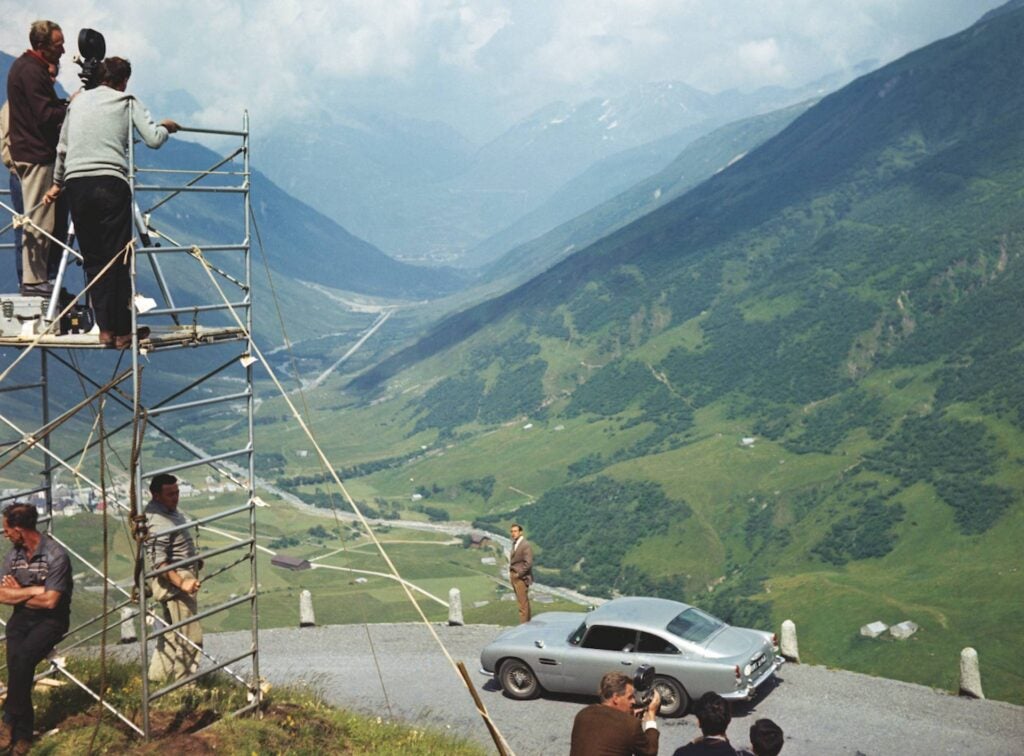
During the shoot, director Guy Hamilton used a weekend to recce Switzerland to find the twisty-turny roads where Bond is tailing Goldfinger. At one point, the shoot was delayed when the clutch on the Aston Martin burnt out. Tilly Masterson’s (Tania Mallet) attempt to assassinate Goldfinger was shot in the Furka Pass. A curve of the pass is now named ‘James Bond Strasse’.

A small team, including future Bond producer Michael G. Wilson, travelled to Kentucky, capturing shots in and around the gold depository at Fort Knox.

Thunderball (1965)

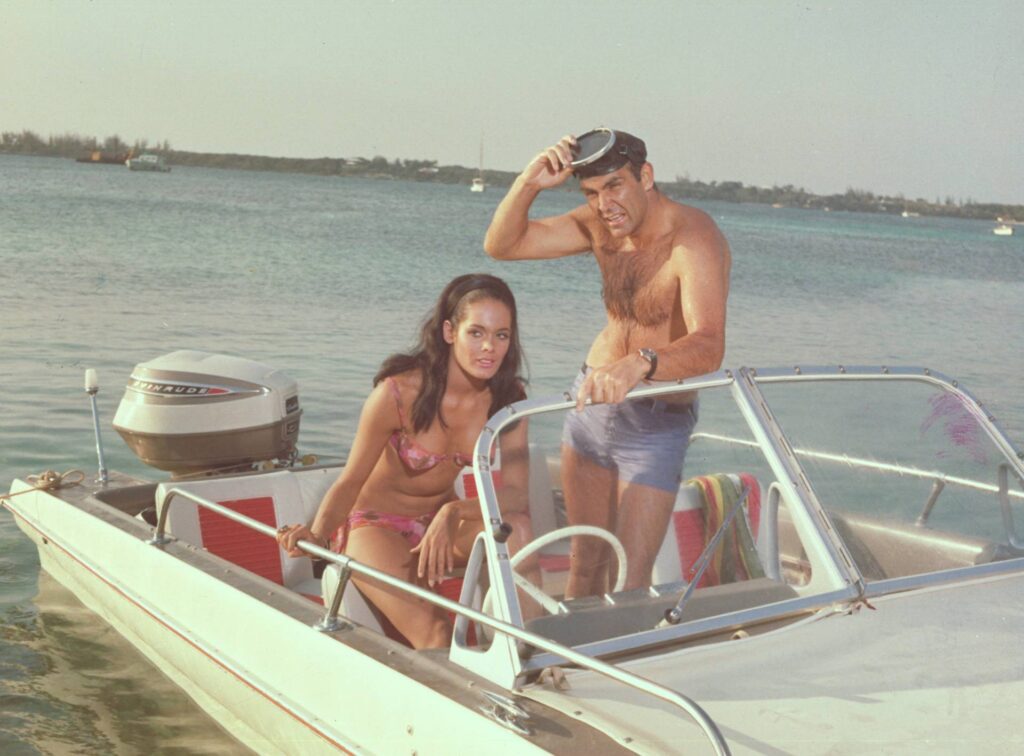
The Mission: 007 heads to the Bahamas to retrieve two nuclear warheads stolen by SPECTRE.

Locations: France, Nassau, Miami

Travel Tales: Shooting started at the Château d’Anet, west of Paris, for the pre-credit fight sequence, including Bond’s escape by jet pack. Provided by Bell-Textron, the jet pack only flew for 20 seconds at a time and, much to the team’s disappointment, required a helmet for the pilot for safety reasons. This meant a previously captured close-up of Sean Connery taking off without a helmet had to be reshot.

During the initial recce of Nassau, the production found a villa on Rock Point that would double for Largo’s villa, Palmyra. The property belonged to Livingston Sullivan and included two pools. For Largo’s shark pool, the Miami Seaquarium boat caught 15-16 live sharks from 7ft to 15ft and dropped them by crane into the seawater pool. 

During the last two weeks of production in Miami, a unit led by André de Toth shot the United States Coast Guard Auxiliary doing repeated aqua parachute drops over several days. As a thank-you, military adviser Charles Russhon arranged for a generous donation to the Coast Guard and threw them a considerable party at the Fontainebleau Hotel, previously seen in Goldfinger.

You Only Live Twice (1967)

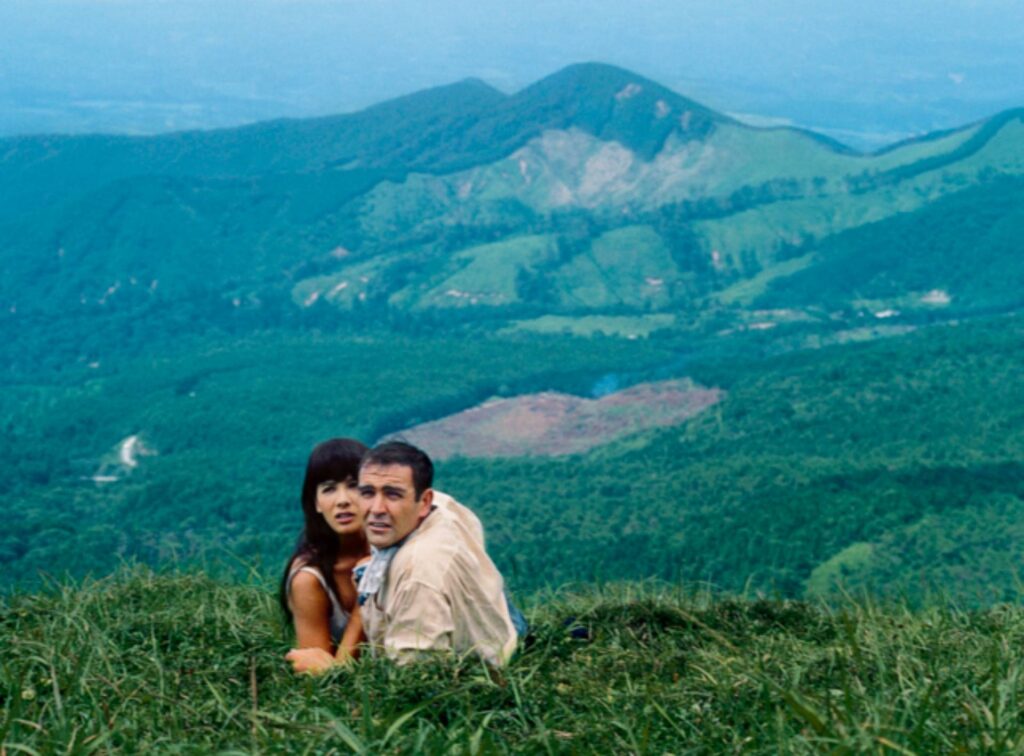
The Mission: Presumed dead, Bond journeys to Japan to investigate the hijacking of American and Russian spacecraft.

Locations: Hong Kong, Japan, Nassau, Spain

Travel Tales: Connery arrived in Tokyo on July 27 1967, and was consistently mobbed by fans. After a photographer took pictures of the star in the lavatory, the production hired 14 security guards — only for one of the guards to whip out a camera and start taking pictures.

Connery and the cast were flown halfway up Mount Shinmoe, a volcano, and taken the rest of the way by small helicopters. After Connery finished his scenes and left, mist and rain descended, forcing the remaining cast and crew to walk down, each carrying heavy equipment.

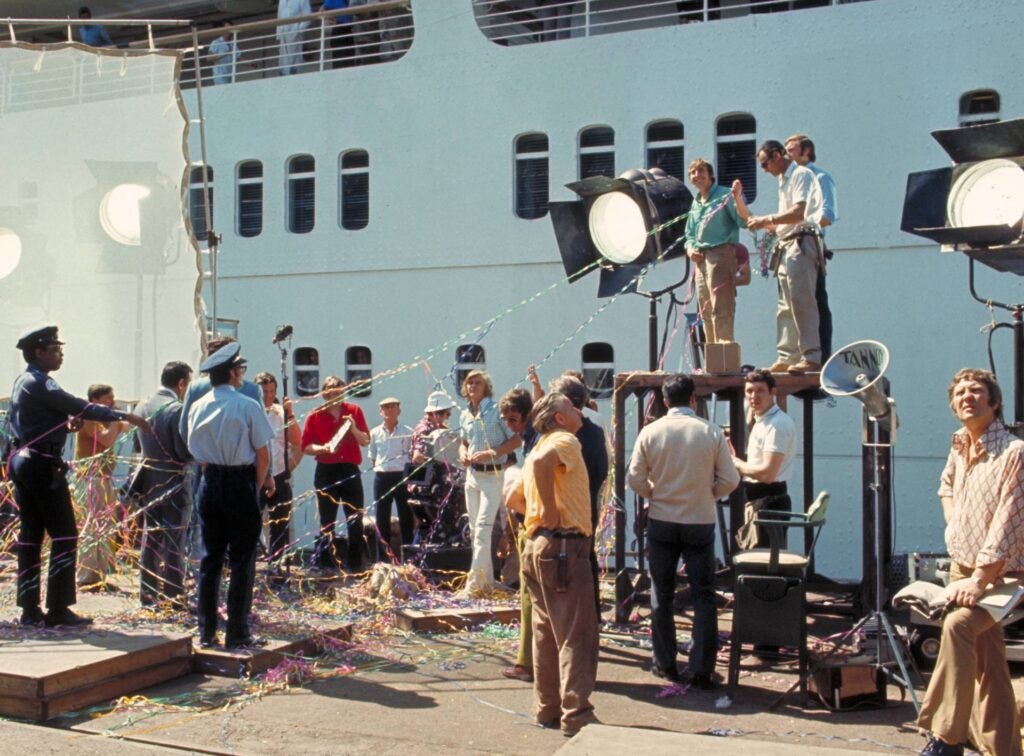
Kobe Docks, an area renowned for real-life gangsters, staged an epic chase across rooftops, culminating in 007 jumping from a great height to escape. Captured by four cameras, the stunt was performed by Bob Simmons, who leapt over one hundred feet onto boxes. Simmons was wearing red underpants — after his trousers split on impact, revealing a red patch, everyone watching thought he’d injured himself.

Diamonds Are Forever (1971)

The Mission: Bond travels to Amsterdam and Las Vegas on a mission to discover who is hoarding the world’s supply of diamonds.

Locations: Las Vegas, California, France, Amsterdam

Travel Tales: Principal photography began on April 5 1971, in the Nevada desert, doubling for South Africa. The first scene shot was the killing of Dr. Tynan (Henry Rowland) by Mr. Kidd (Putter Smith) and Mr. Wint (Bruce Glover) via a deadly scorpion. The first iteration saw the scorpion placed in Tynan’s mouth as per the novel and script; the second version saw the predatory arachnid dropped down Tynan’s back. The second option won out. 

When the action moved to Las Vegas, the big set-piece saw Bond being chased around Vegas streets by the police. Assisted by Cubby Broccoli’s relationship with Howard Hughes, the city opened its doors to the filmmakers, with Bond in a red 1971 Ford Mach 1 Mustang being chased by 13 stunt drivers.  

Bond’s escape from Willard White’s research laboratory in a moon buggy was shot at the Johns Manville Gypsum Plant. The buggy cost $10,000 to make, but the vehicle was too heavy to traverse the rocky ground, putting too much weight on the wheels. The vehicle switched to sturdier all-terrain Honda wheels.

The film’s climax on the oil drilling platform that Blofeld (Charles Gray) used as his base was staged at Oceanside, California. The massive set-piece, involving a helicopter attack and a large number of explosions, was essentially a one-take opportunity that could not be repeated. During a dry run, the explosions were accidentally set off, but luckily, head helicopter pilot Jim Gavin had the foresight to have his camera running. Many of the shots from the air come from Gavin’s quick thinking. 

Jack The Bulldog By Royal Doulton

First released in 2012, to mark his appearance in Skyfall, Jack the Bulldog 2026 Original Edition by Royal Doulton is one of M’s must-have desk accessories. Celebrating an iconic 1940s design, Jack is a symbol of British resilience and strength. This is a special chance to add the new Jack to your collection, now with a new Royal Doulton x James Bond reference stamp, ‘DD 007 JB’.

The Royal Doulton bulldog is made in bone china and glossy colour, and comes boxed. To mark his ongoing role in the Bond films, Jack has the reference number DD 007 JB printed on his base and comes within a gift box with a certificate of authenticity.

Shop here.

Aston Martin DB5 Model Car Collector Set

Introducing the James Bond Aston Martin DB5 Model Car Collector Set – 70th Anniversary Edition by Corgi, which brings together the three classic Corgi car models in a 1960s-style collector’s box and celebrates Corgi’s 70th year.

The set includes reissues of the gold DB5 261 from 1965, silver DB5 270 from 1968, and the 2025 edition. Each features accurately painted interior and exterior features, all displayed in a special retro lidded box with graphics taken from the original 1960s artwork.

Corgi is a leading manufacturer of high-quality, pre-built, diecast models. Each model is crafted with meticulous attention to detail, using the specifications of the original vehicle and constructed with precision-tooled diecast metal and plastic components. 

Available to pre-order, shipping September 2026.

Bond Underwater

Underwater sequences have long been a staple of the 007 series. From huge-scale battles to a thrilling set-piece of keelhauling to gut-wrenching emotional goodbyes, Bond’s adventures beneath the waves have delivered a wide range of drama and, in so doing, tested the filmmakers to the max. 

Thunderball (1965)

BTS (Beneath The Surface): The first and biggest 007 sub-aqua adventure. In the Bahamas to recover two nuclear warheads stolen by SPECTRE Operative Emilio Largo (Adolfo Celi), James Bond (Sean Connery) infiltrates a squad of SPECTRE divers sent to retrieve the missing missiles and plant them off the coast of Florida. Bond barely escapes an underwater skirmish and informs CIA agent Felix Leiter (Rik Van Nutter) of the warheads’ whereabouts. Leiter calls in a crack unit of US Navy frogmen who, along with Bond, parachute into the water and engage in a massive battle with Largo’s men. Bond takes out numerous SPECTRE divers, be it through high-tech wizardry or his bare hands, before leaving to chase Largo’s hydrofoil, the Disco Volante

BTS (Behind The Scenes): Directed by Ricou Browning, there were 18 underwater sequences comprising 83 scenes. For the big battle, the good guys wore orange, and the bad guys wore black to help audiences make the distinction. To up the danger factor, Browning had many sharks captured for the film and included them at every opportunity.

You Only Live Twice (1967)

BTS (Beneath The Surface): During a mission in Hong Kong, Bond (Sean Connery) is gunned down by two assailants and left for dead. A funeral at sea is arranged, and the casket is ceremoniously slid into the water. When it reaches the seabed, MI6 agents in scuba gear retrieve the casket and take it to a submerged submarine. “Request permission to come aboard, sir”, says a very much alive 007 after he is released from the coffin. Bond later enters Japan without detection by being fired from the submarine’s torpedo tube.

BTS (Behind The Scenes): The burial at sea was shot by the second unit, directed by Peter Hunt, in Gibraltar on board HMS Tenby.

The Spy Who Loved Me (1977)

BTS (Beneath The Surface): Now played by Roger Moore, Bond returned to the deep blue sea a decade later. Investigating marine industrialist Karl Stromberg (Curd Jürgens), the trail leads to Sardinia, where 007 and Russian agent Anya Amasova (Barbara Bach) are chased by Stromberg’s men around winding roads until Bond’s Lotus Esprit drives off a jetty and into the sea, transforming into a submersible vehicle. Coming under attack from Stromberg’s men, Q Dept trickery such as depth charges, surface-to-air missiles and black dye (think octopus ink) sees off the attackers both above and below the surface.

BTS (Behind The Scenes): The special effects unit, led by Derek Meddings, started work in Nassau in August 1976. Shot by Lamar Boren, the miniature Lotus was manipulated around by ultrathin wires. For the moment the Lotus goes underwater, the model was simply let go by a diver and captured as it floated down. 

For Your Eyes Only (1981)

BTS (Beneath The Surface): Bond’s mission this time is to find the missing ATAC (Automatic Targeting And Attack Communicator), a valuable offensive and defensive device desired by the Russians but hidden in the wreckage of the spy ship the St. George off the coast of Albania. 007 and companion Melina Havelock (Carole Bouquet) explore the ship wreck in a mini-submarine and, after some nifty bomb diffusing, retrieve the ATAC. 

The pair escape a run-in with a diver and a mini-sub but are captured on the surface by heroin smuggler Kristatos (Julian Glover) who takes the ATAC from them. The pair are towed behind Kristatos’ yacht, acting as bait for sharks and narrowly missing jagged coral. Bond is able to snap the line binding them, and they retreat to a scuba tank Melina left on the ocean floor. Kristatos exits, believing Bond and Melina to be dead.

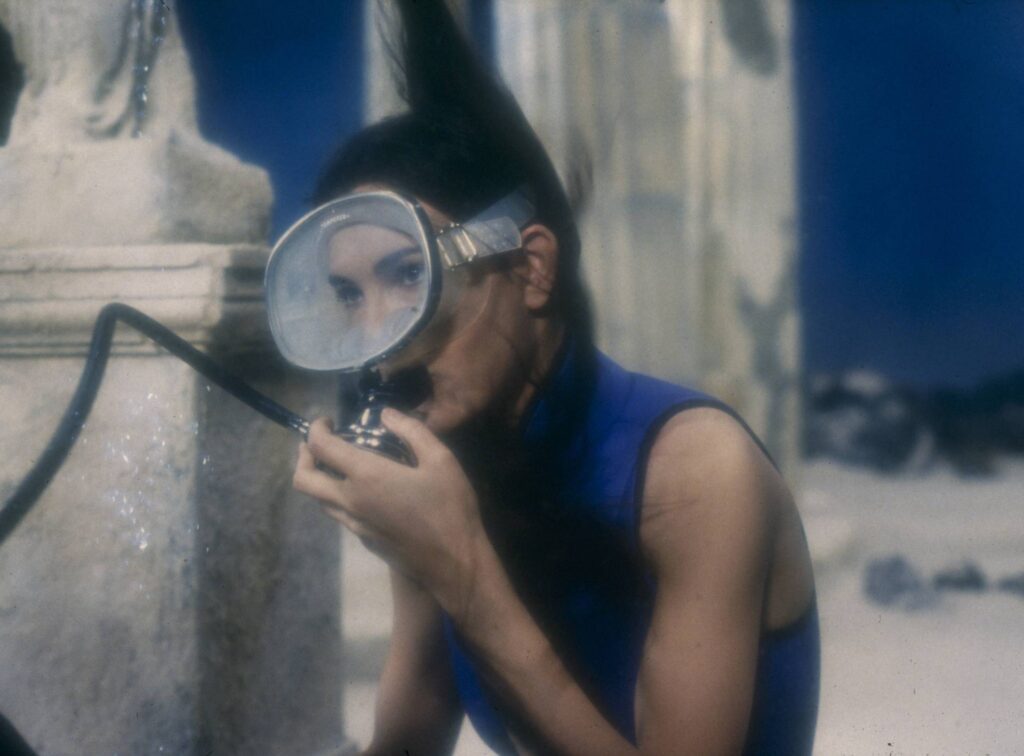
BTS (Behind The Scenes): The underwater sequences were shot in the Bahamas by an underwater unit led by Al Giddings. For close-ups of the actors, Carole Bouquet had an inner ear problem and couldn’t spend any time in the water, so her reaction shots were shot through the glass of a fish tank, with a wind machine to make her hair float. Bubbles were added later. 

A View To A Kill (1985)

BTS (Beneath The Surface): Bond (Roger Moore) goes underwater in two very different circumstances in A View To A Kill. The first puts an unconscious Bond in the back of a Rolls-Royce that is pushed into a lake by May Day (Grace Jones). Waking up, Bond escapes from the sinking car and survives underwater by cleverly breathing air from one of the car’s Michelin tyres.

The second sees 007 using scuba gear to explore the underwater pumping system in the San Francisco Bay. As the pumps are turned on, Bond thinks quickly and jams it into the pump propeller to avoid being chopped up.

BTS (Behind The Scenes): Producer Cubby Broccoli’s Rolls-Royce was used on dry land, but it is a double that is rolled into the water.

Licence To Kill (1989)

BTS (Beneath The Surface): Underwater action features almost from the get-go in Timothy Dalton’s second 007 adventure. In a daring underwater rescue, divers free drug dealer Franz Sanchez (Robert Davi) from an armoured van after it has been pushed off a bridge. The rest of the film is filled with sea-bound action, from Bond avoiding detection by swimming under a manta to a fight underwater with a quartet of divers, and 007 using a stolen speargun to grapple onto the pontoon of a seaplane. As it takes off, it pulls Bond to the surface, water-skiing without the skis. 

BTS (Behind The Scenes): The scenes involving Bond at sea were shot in Isla Mujeres, Cancún, directed by Ramón Bravo. The stunt of Bond water-skiing on the surface was performed by barefoot-skiing world champion Dave Reinhardt with close-ups of Timothy Dalton added later.

Tomorrow Never Dies (1997)

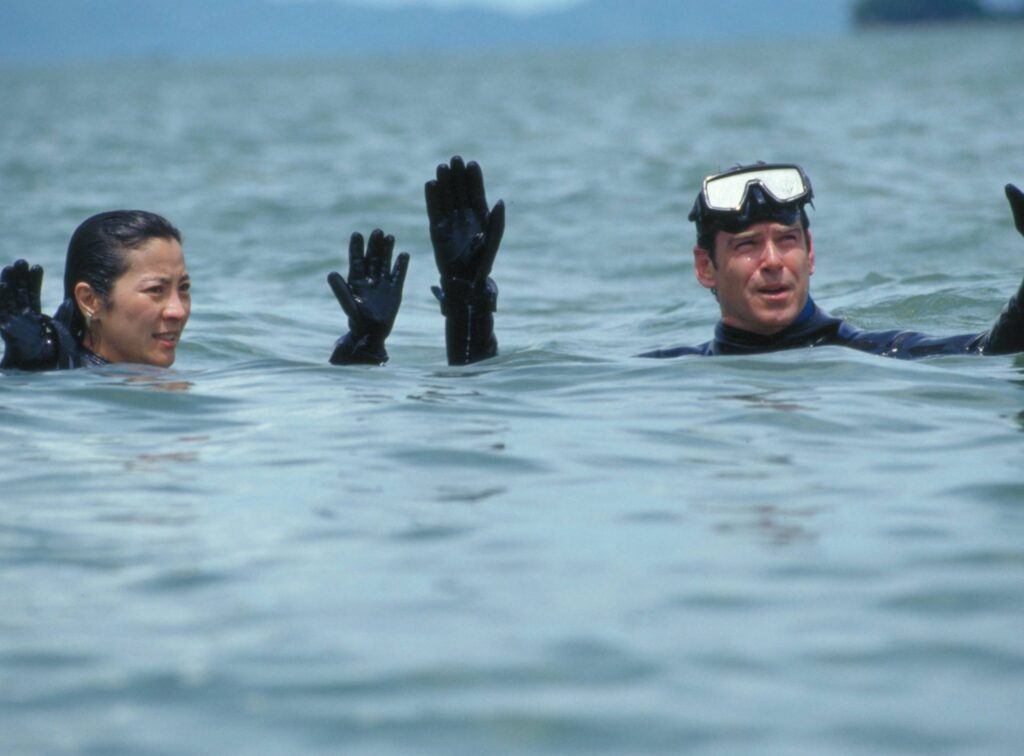
BTS (Beneath The Surface): After performing a death-defying HALO jump from a Fairchild C-123 aircraft high above Vietnamese waters, Bond (Pierce Brosnan) swims down to identify the sunken naval frigate, HMS Devonshire. 

Lighting a flare, he explores the flooded interior of the vessel, moving past dead sailors, and enters the missile room where he encounters Chinese agent Wai Lin (Michelle Yeoh). Soon, an underwater avalanche traps them in the sunken wreck and, removing their scuba gear, they swim through the torpedo tube to safety. 

BTS (Behind The Scenes): Pierce Brosnan and Michelle Yeoh filmed with the underwater unit at Pinewood’s 007 stage, the first time the stage was used for a Bond film since The Living Daylights.

Casino Royale (2006)

BTS (Beneath The Surface): After Vesper Lynd (Eva Green) betrays Bond (Daniel Craig) in Venice by keeping the winnings from Casino Royale, Bond tracks her down to a gutted Venetian villa undergoing restoration, supported by large flotation devices. Shooting at the men collecting the money, Bond ruptures the flotation bags, causing the building to sink. 

Meeting Bond’s eyes (“I’m sorry, James”), Vesper locks herself in the lift as it plummets into the water. 007 dives in and does his best to wrestle open the metal elevator gates. Vesper grabs his hands, and the couple spend a tender moment together. Bond forces his way in and brings her back to the surface, doing his best to resuscitate her — that she does not respond leaves Bond helpless and distraught.

BTS (Behind The Scenes): Once Daniel Craig took the mask off under the water and lost an air supply, the actor had no more than a minute to deliver the emotion of the scene. “You’re given a spot to look at,” recalled Craig. “You try and play love and anger but you might as well be acting to a brick wall.”

Hoyte van Hoytema on Shooting Spectre

“It’s a very rich playground for a cinematographer to play around in,” says Spectre cinematographer Hoyte van Hoytema about working in the 007 universe. “The producers are interested in creating something that is genuinely to be enjoyed on a big screen. It’s an adventure. You’re taken through different countries, through different environments. It’s very much art on a bigger palette.”

Van Hoytema had never worked with director Sam Mendes prior to Spectre. The pair formed an instant rapport.

“You start talking, you click, and feel that you can maybe do something interesting together,” he says. “If you look at all the films Sam did before, they were always amazingly shot which is not only thanks to hiring a great DP, but also having a very specific vision as a director plus an incredible sensitivity for visual language. So, when I started talking to him about Spectre, he was very much interested in talking about art, painting and light as an emotional vehicle to tell a story.”

A lifelong fan of the series, van Hoytema relished every moment of his 007 adventure. “Making a Bond film almost makes you feel like you’re in a Bond film,” he laughs. “You’re always energised. You get to a hotel, you go out to dinner somewhere, and then in the morning you’re out in the field. Your whole landscape has changed but it’s important because you’re also trying to give the audience that experience of the world.” 

Yet it wasn’t just stepping into Bond’s shoes that excited van Hoytema. It was also the freedom to experiment and create on the grandest scale, a remit that was passed down from the very top. “Michael and Barbara are two of my favourite producers of all time. They told me we’ll get you what you need, that is our job. But you have to come up with a spectacle. Very early on, we were instructed to not worry too much about the practical side of things. That is a very interesting place to start because Sam started to dream up these crazy shots. Very often you have producers that will ask you at a very early stage to be pragmatic because, if you’re not pragmatic, things might start to cost more. But Barbara and Michael’s assignment was very clear: dream it up, and then we figure out how we can do this.” And Spectre begins with perhaps the most ambitious, audacious opening to any 007 film ever….

MEXICO

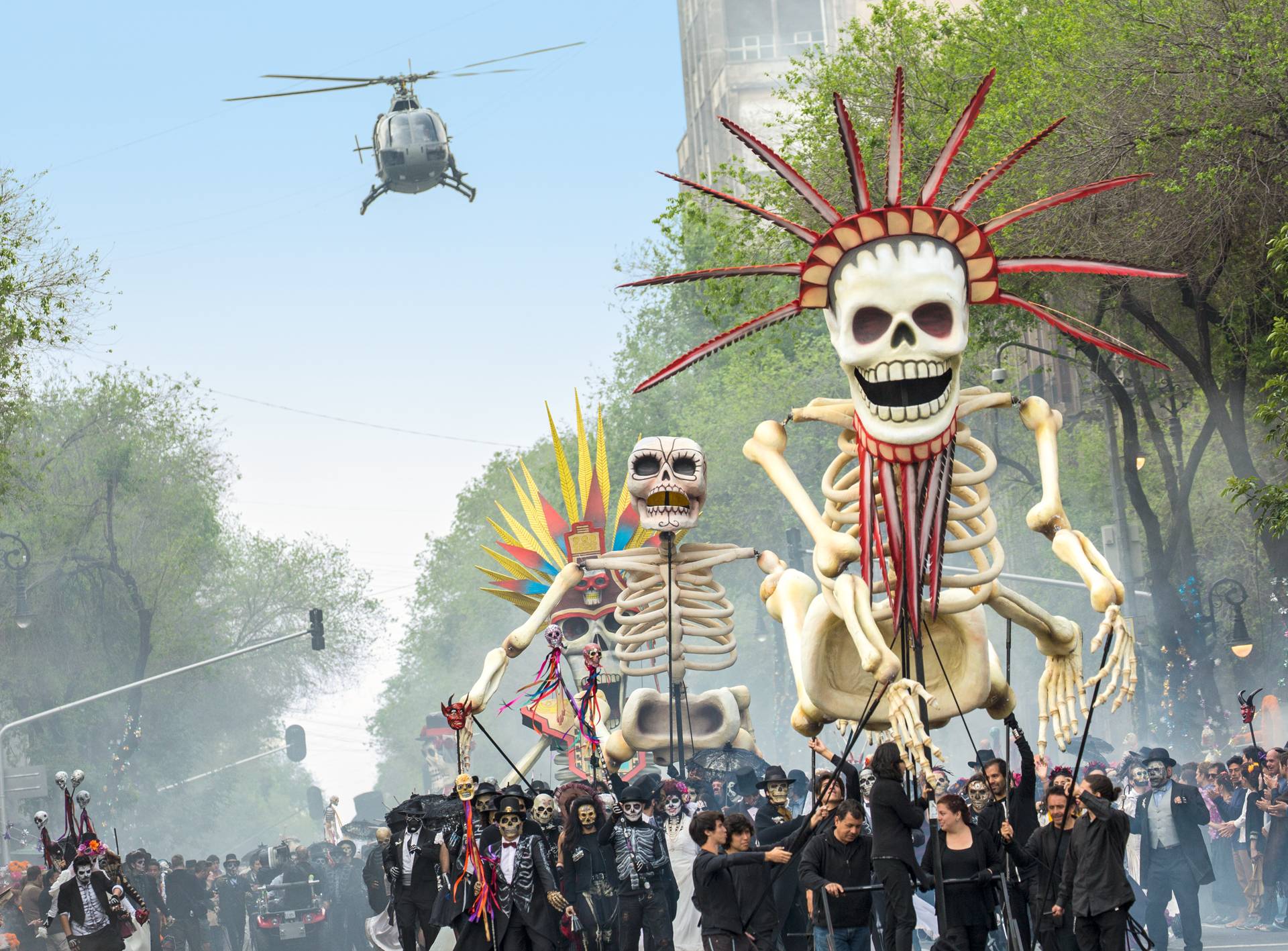
Spectre opens with James Bond (Daniel Craig) and Estrella (Stephanie Sigman) strolling through the Day of the Dead parade, a riot of sound and colour held annually in Mexico City. The first five minutes of the sequence are portrayed as one continuous tracking shot.

“The idea to do it in one shot was very much Sam’s. He thought it’d be very interesting to get into the film in a real-time experience. You’re with Bond step by step. There’s no clever editing that moves things forwards or backwards but you are getting to experience this amazing atmosphere in real time. I think it became a very exciting one-shot take.” 

In reality, the shot was a series of four shots meticulously planned out and edited together by Lee Smith to look like one seamless camera move.

“Once we were doing it, the solutions we came up with might look crazy or ridiculous, but step by step, we figured it out. There are some sneaky stitches (edits) in there. It was a total technical puzzle. It’s a sequence that is shot in Mexico City, but also in London. The camera starts in Mexico City, goes into a hotel lobby, then into an elevator and then we are Pinewood Studios. We go through Pinewood Studios, and then out into Mexico City again when Bond walks across the roof, and back into Pinewood at the end (for the exploding hotel). It required a lot of ingenious thinking from my grips. They came up with these incredible installations and ways to shoot it. My camera operator Lucas Bieland was pivotal in making this all work, so there were a lot of minds, a lot of thoughts and a lot of enthusiasm to bring this to life.”

ROME

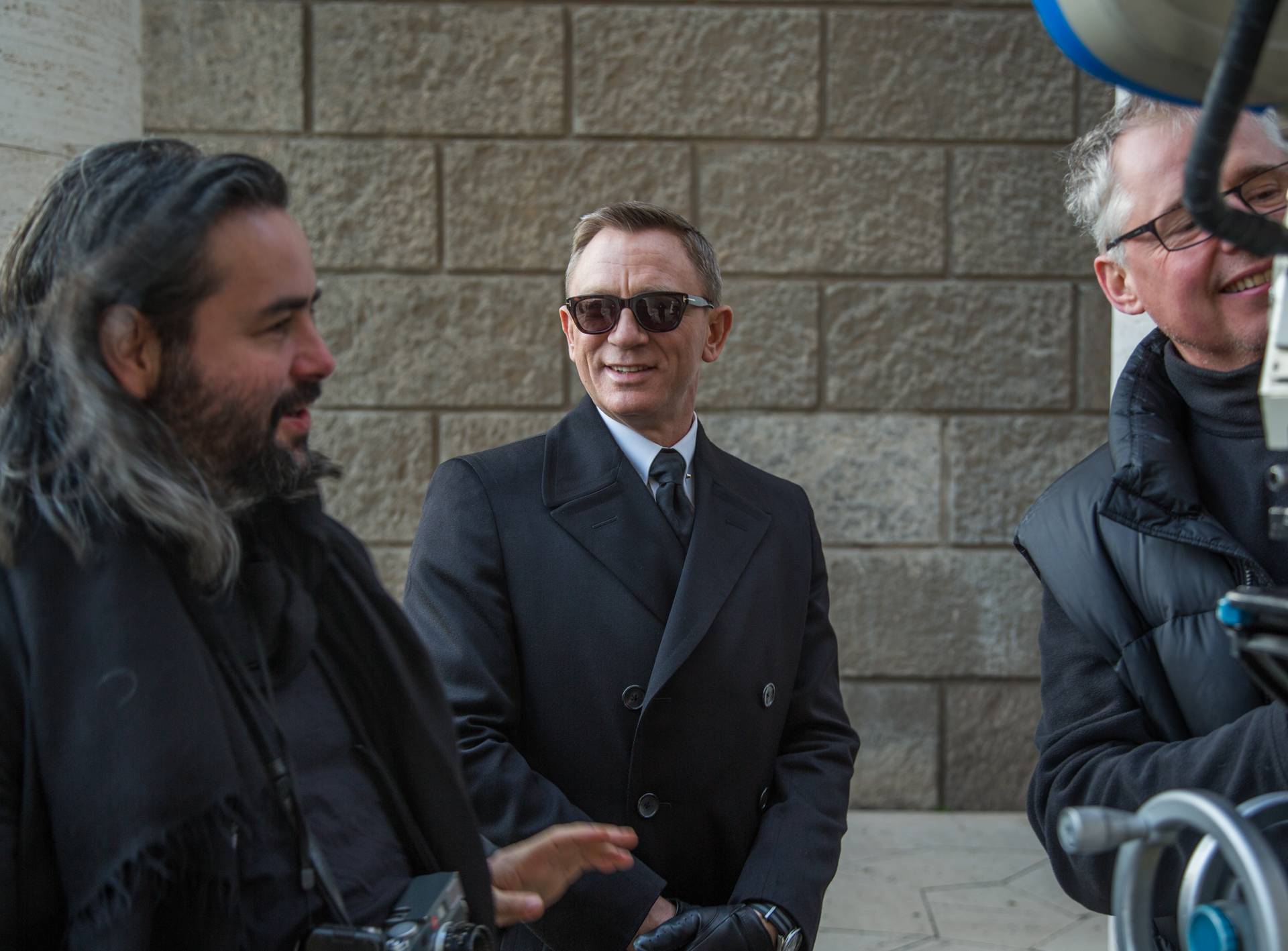
After Mexico, Bond heads to Rome, Italy and infiltrates a clandestine conference of a terrorist organisation run by Franz Oberhauser (Christoph Waltz), later revealed to be Ernst Stavro Blofeld, the head of SPECTRE. To heighten the mystery, van Hoytema cast the meeting in sinister shadow.

“It was very much part of the way we envisioned the classicism of Rome. The colours, the contrast, the darkness. But we also have that whole idea about Bond seeing Blofeld and Blofeld seeing Bond. It needed to be a somewhat theatrical reveal. He turns into the light and looks at him and Bond sees him for the first time. It’s a very important story point. So in order to get away with a reveal like that, you’re already pushed into a darker environment, a more sort of secretive meeting. It needed to feel like a cult.

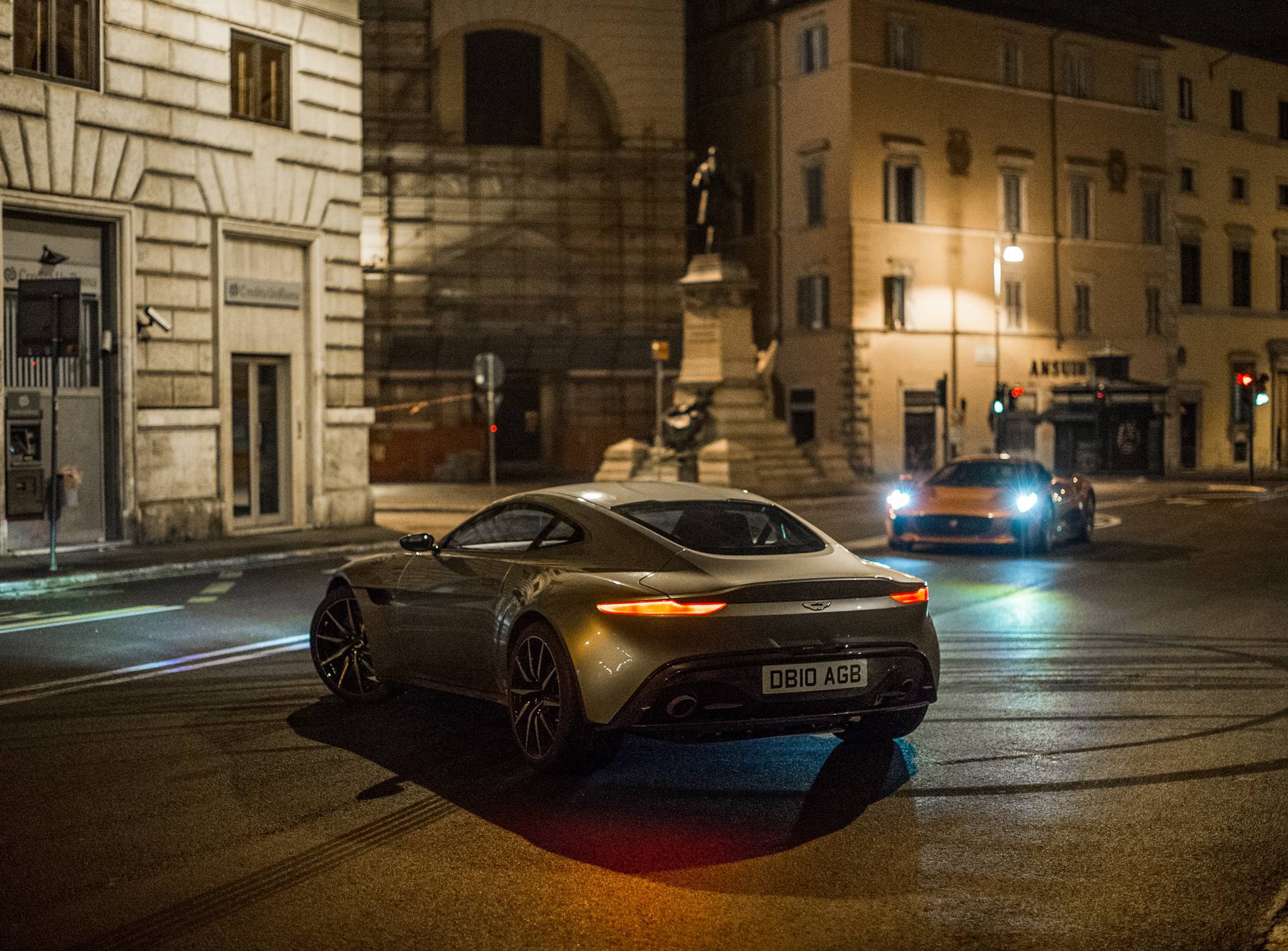
After Bond and Blofeld lock eyes, 007 flees in his modified Aston Martin DB10 and is pursued by Blofeld’s lead assassin Hinx (Dave Bautista) driving a Jaguar C-X75 through the nighttime streets of the Eternal City.

“We wanted Rome to be lush and golden. I remembered Rome from much earlier. I remember it as the streets looked so painterly, and those sodium lights made everything look orange and monochromatic. In a way, it’s a colour that’s very close to candlelight. Of course, when we came to Rome, the whole city is modernised, and there are these white LEDs everywhere. But we wanted to bring those streets a little bit back towards that sort of more orangey, more romantic feel I remembered. So, it gave it this painterly golden glow.”

“The car chase was a very difficult assignment because it was all over the city. Of course, it needs to feel like the Rome we had figured out. I had a second unit director of photography on that, Jalio Faber, who did an incredible job pushing through that look we needed out of it. I think the car chase, in spite of all the action, still has that full golden glow over it. That was a nice touch.”

AUSTRIA

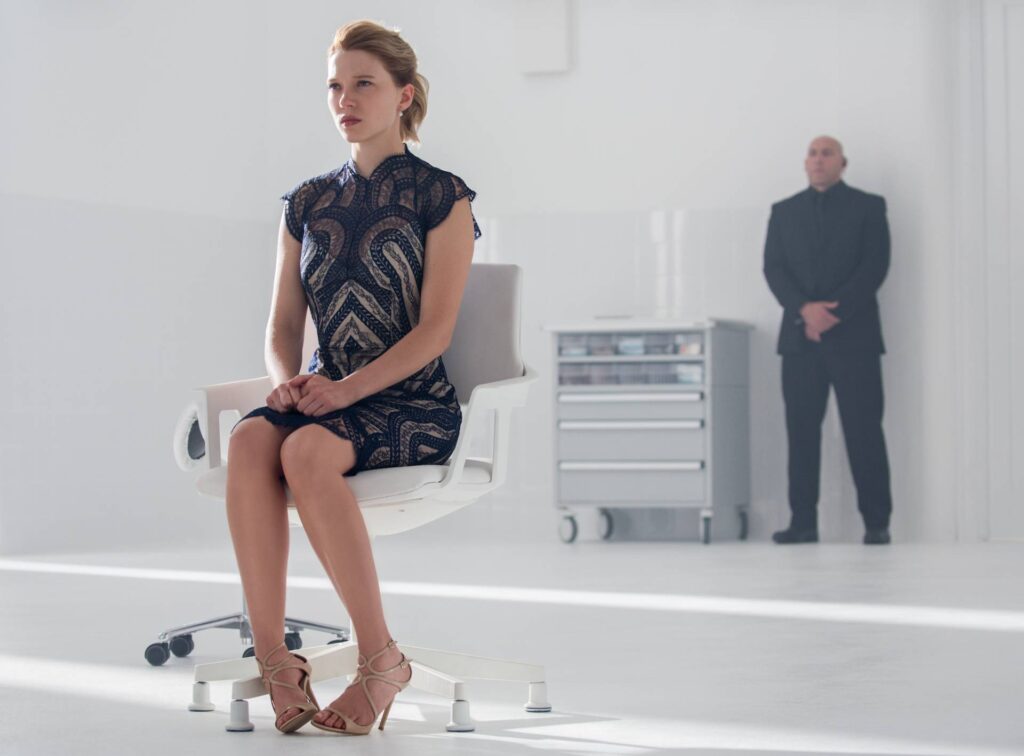
Bond’s mission takes him to Austria, where he joins forces with psychiatrist Madeleine Swann (Léa Seydoux) who works at the exclusive medical center The Hoffler Klinik. The exteriors of the clinic were shot on location at the ICE-Q restaurant at the top of the 3000-metre Gaislachkogl mountain in Sölden while the interior was created on The Richard Attenborough Stage at Pinewood Studios and posed a major challenge for van Hoytema. 

“It was one of the easiest and most difficult lighting setups ever for me. It’s a glass cubicle but Barbara again allowed us to dream big, so we figured out a way to make it look real. We didn’t want a blue screen, so we literally hung a mountainscape from the ceiling all the way down. We lit it from the back. It was a crazy big rig like a rock concert. But it meant we could film 360 degrees into a very credible environment, minimising the post-production we had to do. Sometimes you want to be on the set and figure out where to go, what to do. You want to play around and this really allowed us to find the right sort of perspectives through the building. I always believe the more realism you infuse on the spot where you shoot, the less people need to imagine and the more energy they can spend in adapting to the atmosphere and move around in it freely.” 

When the clinic comes under attack from Hinx and his crew, Madeleine is kidnapped and driven away. Bond gives chase in a plane, forcing the convoy to crash and spiriting Madeleine away to Tangier. The epic pursuit was captured mostly by the action unit, led by director Alexander Witt, but this didn’t stop van Hoytema from wishing he was in on the action.
“We always shoot parts of the big action sequences. In Austria, we had the second unit stay behind, this gigantic team of incredible people. Sometimes you can only do three shots a day because the shots are so complicated. If you have a plane on a wire coming down a very thin line of trees, three or four cars and explosions going off, you prep this for days and then you get one crack at the shots and then you decide if you reset or not. But that’s pretty much what you’ve been doing that shooting day. While on the first unit, you’ve got six pages of dialogue to get through on the actors’ clocks. There’s a whole different dynamic to that. I always feel there’s a missed chance with second unit. I always feel like, ‘Oh I want to stay and I want to do it’ but, unfortunately, that’s not the reality of the time you have to actually make a film.”

EN ROUTE TO TANGIER

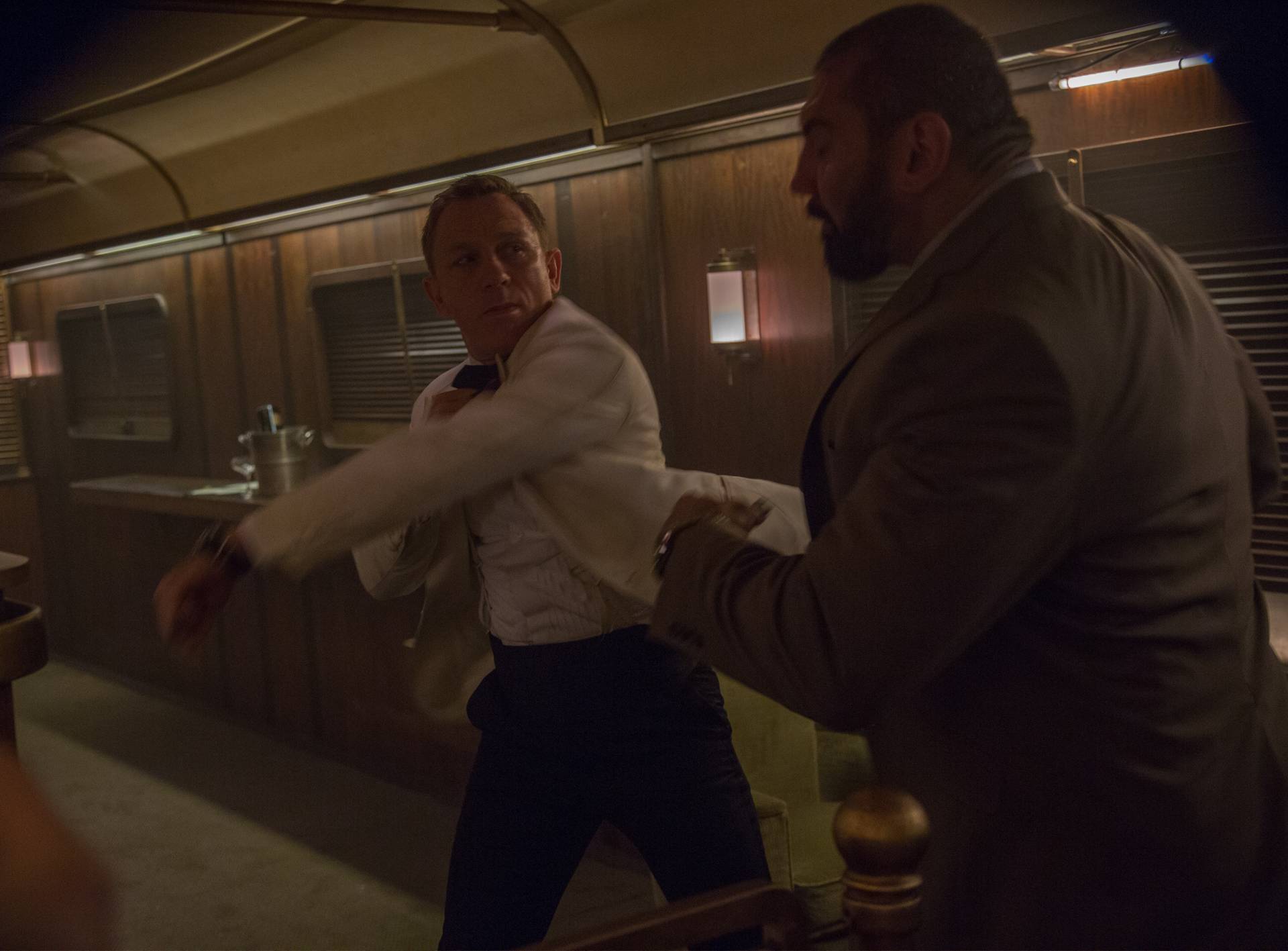
On a train bound for Morocco, Bond and Madeleine get to know each other over dinner, an intimate moment interrupted by Hinx who engages Bond in a brutal fistfight through different carriages.

“This was very laborious. The problem was in the beginning of shooting the scene, Daniel got hurt and that meant he couldn’t do the things he would normally do. So that changes your way of thinking a little bit. You start working with doubles, but it restricts your freedom and in order to make it feel organic, it becomes laborious. We also didn’t want to compromise the scene in any way because of what happened to Daniel. It just was a lot more work than we anticipated. This was one of these scenes where first unit and second unit became very closely integrated. I was doing first unit in London and we were shooting, shooting and shooting. Then after 12 hours of shooting, Sam and I would go to the second unit and be there for another six hours. There was a lot of that towards the end. We were getting tired.”

THE SAHARA

Bond and Madeleine arrive at Oberhauser’s base in the Sahara. Oberhauser quickly reveals his true colours (and identity), subjecting Bond to neurological torture, before 007 uses the Q-Dept explosive wristwatch to break free. Unlike the torture scene in Casino Royale which takes place in a dark, dank abandoned barge, this Spectre interrogation happens in a brightly lit, hazy, almost surgical room.

“I remember there was a difficult one because it’s an airy, light hospital room in the middle of a desert. It was important for the interiors to feel the Moroccan desert seeping through into that white room. [Production designer] Dennis Gassner conceptualised that room. I still wanted that feeling of scorching sun in there, almost blinding, almost a little dreamy. I just felt the interiors have to feel like the exterior deserts. Bond is awakening there and you really want to feel that you’re really in a different environment.”

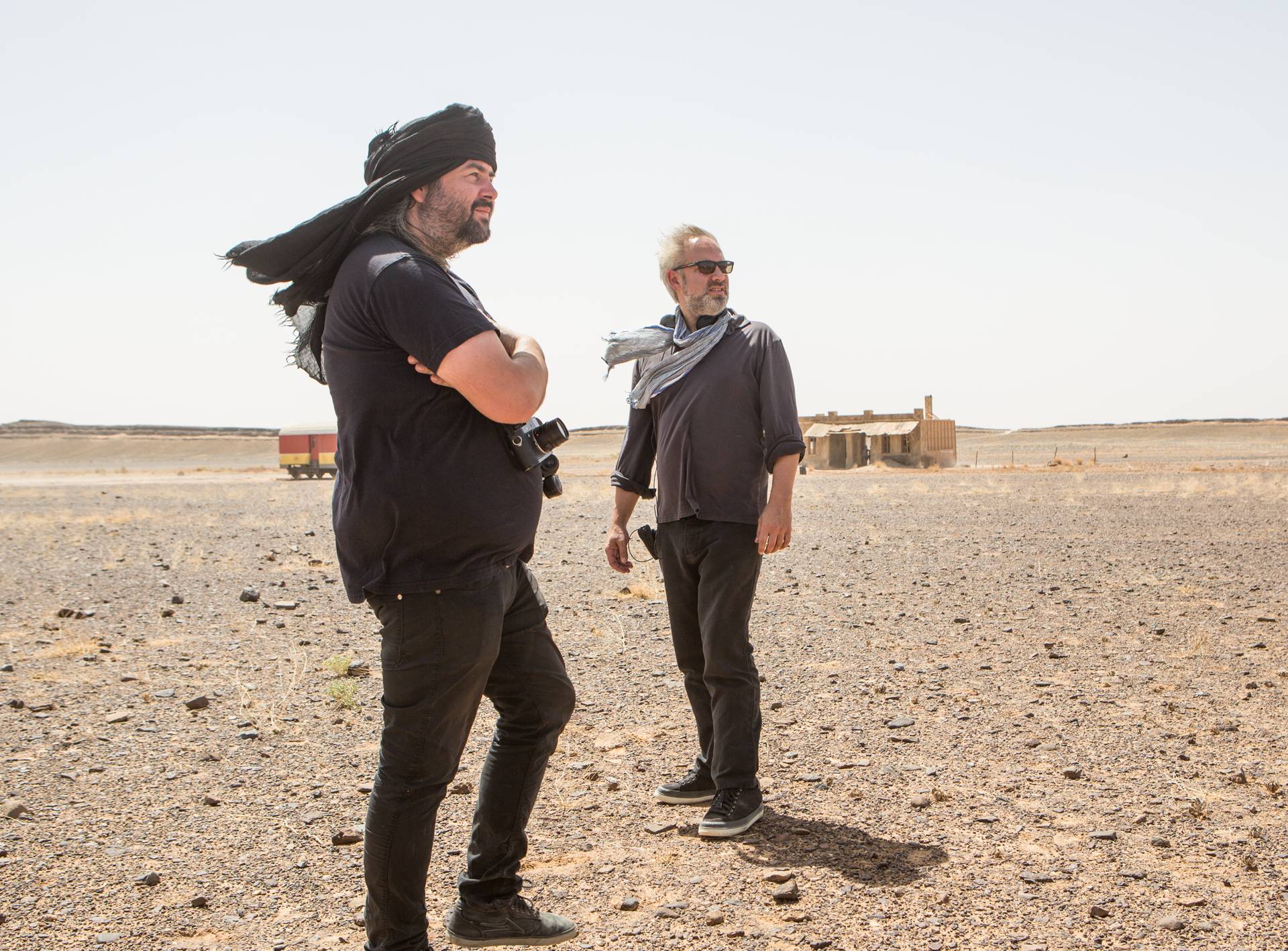
While the interiors of SPECTRE HQ were shot at Pinewood, the exteriors were created at Gara Medouar, a horseshoe-shaped geological formation near Sijilmasa in the Sahara desert.

“The exterior of the base was for the most part non-existent because it was CGI. We were basically shooting on paths that led to nowhere. All the time, we had to envision, ‘Okay, the headquarters will be here’. It requires lot of imagination in order to make that work in your head. We ended up building a lot inside Pinewood Studios.” 

In true 007 fashion, Bond escapes and destroys Blofeld’s lair in a huge explosion — special effects supervisor Chris Corbould employed 2,223 gallons of kerosene to fuel the huge blast. 

“The explosion was very interesting, because it was huge. It was the biggest explosion I’ve ever filmed. It actually made it into the Guinness Book of World Records. It was fricking exciting to do it. It was our last thing we did in Morocco, and it was like we went out with a bang.”

LONDON

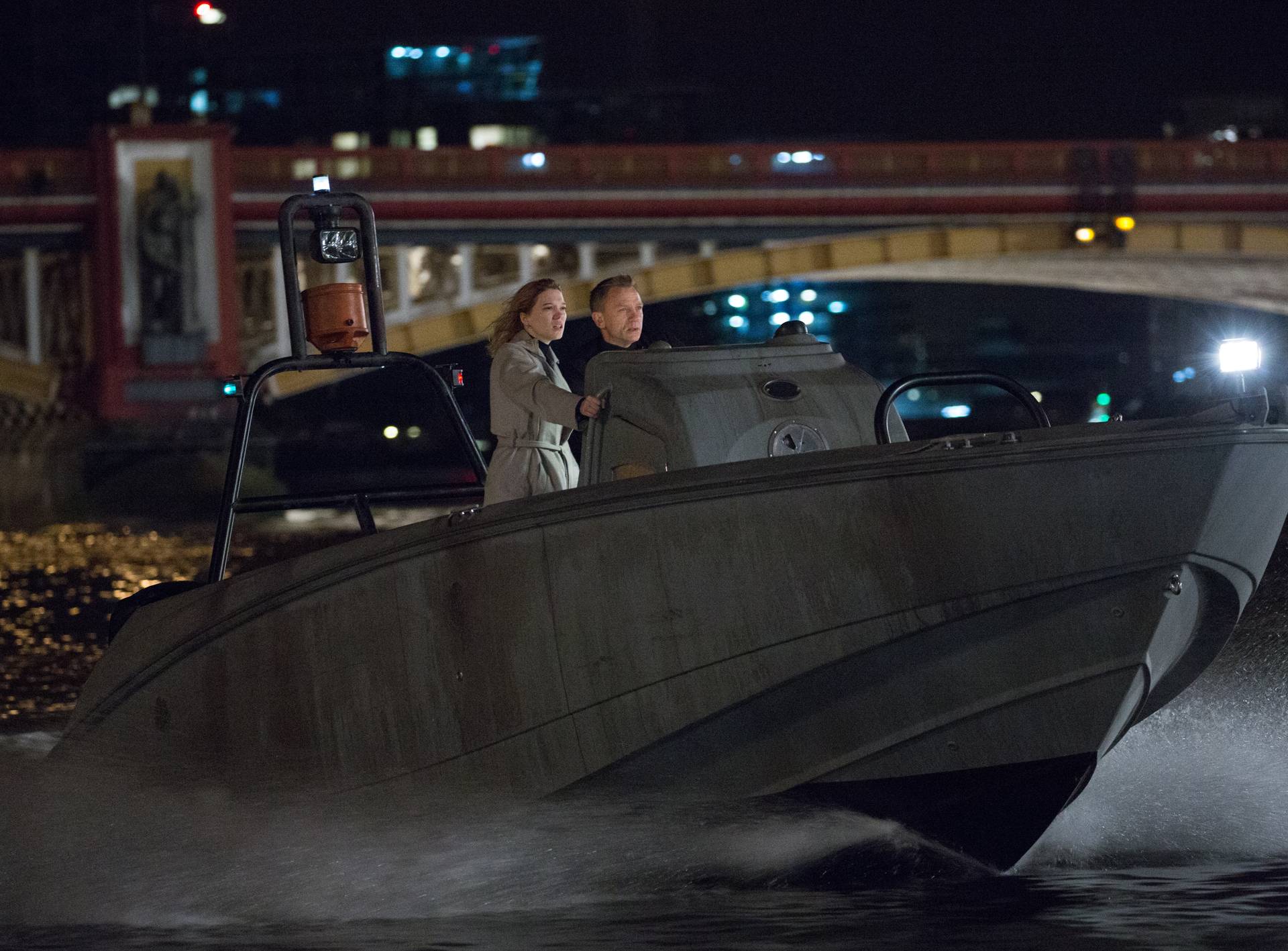
Bond returns to London to thwart Blofeld’s planned global surveillance system Nine Eyes. The climax involves Bond chasing Blofeld’s helicopter in a speedboat down the Thames, bringing the aircraft crashing down on Westminster Bridge. The production shut down a section of the river from Lambeth Bridge to Hungerford Bridge, giving van Hoytema the daunting technical prospect of lighting a huge area at night.

“I was very scared that we wouldn’t see the helicopter. It’s so much about this interaction between Bond and the helicopter at night. I was just so panicky that it would become a CG helicopter and then it would be illuminated with some sort of light that came from nowhere. And then, of course, we’re in London, the home base, and the city is laid out around you, so you want to see that. I started lighting the sh*t out of that whole area.

“I have an incredible gaffer, Dave Smith, who helped me conceptualise it. We started prepping that scene very early. We began by exploring the access to buildings and light sources. It’s interesting because, compared to Rome, London is portrayed as a much more modern city where the street lights are more neutral. It’s important in a sequence like that to feel the space around you, to feel the magnitude, and in order to feel that magnitude, you have to light it in order to make it exist. 

“There is one instance that I will never forget. Dave Smith and I went out in the centre of the Thames at magic hour and we sped all the way up to the front of Parliament. We had a dimmer board operator with an iPad with us, and we’re just floating in the middle of the Thames, and the sun is setting, getting darker. We had control over the lights around us in the city and, on some very pivotal buildings, we had some powerful lights on the roof that would just light up the night sky, so the helicopter would catch some sort of exposure there. And then we did it. It was one of the most exciting set-ups I’ve ever done.”

A DREAM UNLOCKED

Van Hoytema had grown up watching 007 movies (“It was always a big event, the music, the anticipation”) and was delighted that shooting Spectre lived up to his sky-high expectations.

“A James Bond film is a thing you want to have on your CV and once it’s on there, it will always be there. To me, it’s a beautiful memory, but it’s not only because it’s a nostalgic thing. I also love the idea that in this world, there are people out there like Michael and Barbara who believe in this old-school idea about what cinema could be and could mean to people. Every film is supposed to give people an experience that they take with them. To be part of that is absolutely a dream come true for me.”

James Bond: Sports Star

Among his many attributes James Bond is a master sportsman. Whether it is based on physical prowess, hand-eye coordination, instinct, strategic nous or teamwork, 007 has proved his mastery in a diverse range of disciplines. Below is a survey of his unique sporting escapades. Surely an Olympic gold is only a matter of time. 


Golf

As seen in Goldfinger (1964)

Bond travels to Royal St. George’s Golf Course to continue his investigation into German businessman and gold lover Auric Goldfinger. Posing as an old club member, 007 is paired with Goldfinger, who has encountered Bond previously in Miami. The stakes between Bond and Goldfinger start small — “Shall we make it a shilling a hole?” suggests Bond — but soon escalate when 007 drops a bar of lost Nazi gold on to the green, designed to pique Goldfinger’s curiosity.

Supposedly playing by the “strict rules of golf”, what follows is perhaps the most underhanded golf game in sports history. Tied with two holes to play, there is cheating on both sides — when Goldfinger’s ball goes missing, his caddy Oddjob drops a ball from his trouser leg; Bond stands on his opponent’s ball in the rough —until Bond cheekily triumphs by switching Slazenger balls so that his opponent has putted the wrong ball and must therefore forfeit the game.

Stock Car Racing

As seen in On Her Majesty’s Secret Service (1969)

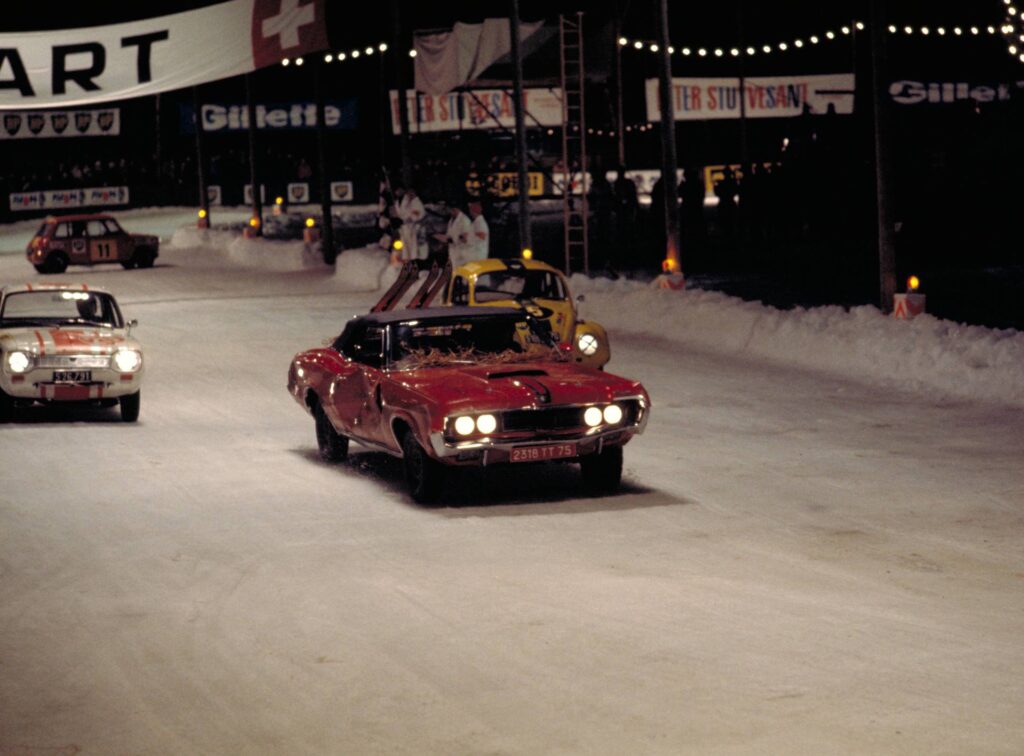
Escaping SPECTRE henchmen on skis, Bond (George Lazenby) takes refuge in the Swiss village of Stechelberg during the winter festival. He encounters his lover, Tracy di Vincenzo (Diana Rigg), who is in Switzerland searching for him.

Fleeing in her Mercury Cougar XCR7, Tracy (behind the wheel) and Bond evade the SPECTRE operatives by driving into a hazardous stock car race taking place on an ice-track, bumping into cars like dodgems at a fairground. “Looks like we’ve hit rush hour,” quips Bond. 

Karate

As seen in The Man With The Golden Gun (1974)

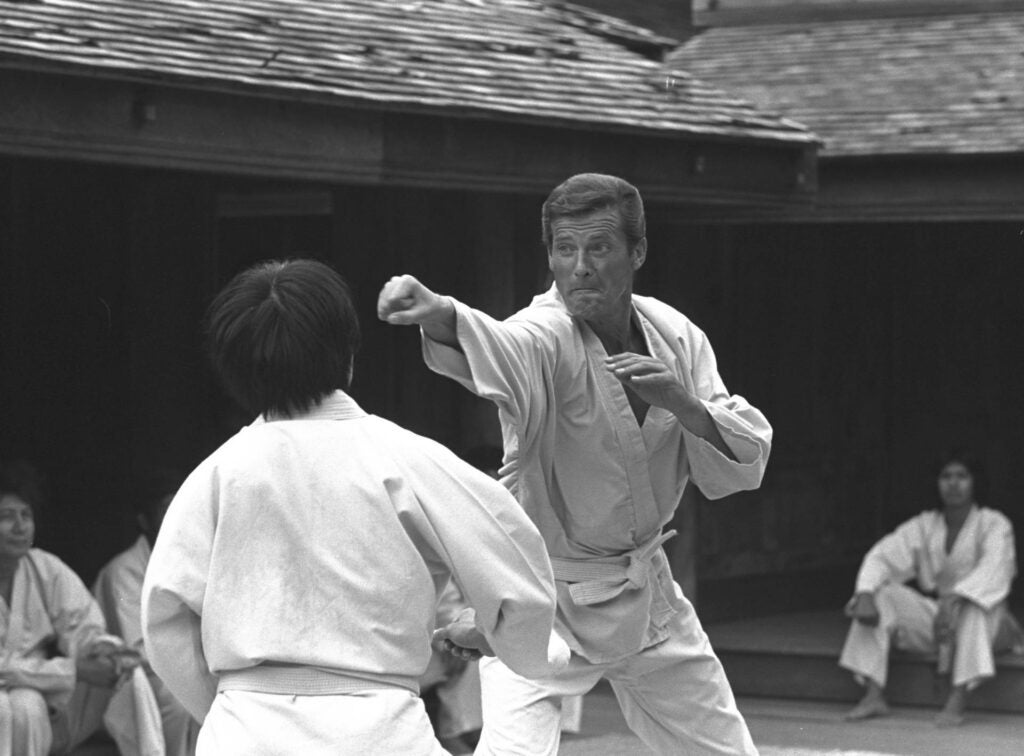
During his hunt for world-class assassin Scaramanga (Christopher Lee), Bond (Roger Moore) is captured and taken to the martial arts academy of Hai Fat (Richard Loo), a cohort of Scaramanga. Wearing a pale blue karate suit, Bond watches two students fight to the death and is implored to fight a skilled student. As is martial arts tradition, the pair bow at the start of the fight, Bond kicking his opponent unceremoniously in the face, knocking him unconscious.

The master of the school then instructs Chula (Chan Yiu Lam) to take on 007. After a very tentative bow, the fight begins, the pair matching each other blow for blow. Punching Chula out, Bond delivers a cursory bow and dives headfirst through a window to make his escape.


Shooting

As seen in Moonraker (1979)

Bond (Roger Moore) is on his way to the airport, but is invited to join a pheasant hunt by billionaire Hugo Drax (Michel Lonsdale) on his estate in California. “It’s a pity you leave us,” says Drax. “Such good sport.”  

During the shoot, Drax, a crack shot with a rifle, places a marksman hidden in a nearby tree to take out 007. Bond goes along with the ruse, and when a bird flies across his eyeline, Bond fires his shotgun, missing the pheasant but killing the sniper. “You missed, Mr Bond,” remarks Drax, to which Bond responds, “Did I? As you said… such good sport.”

Rock Climbing

As seen in For Your Eyes Only (1981)

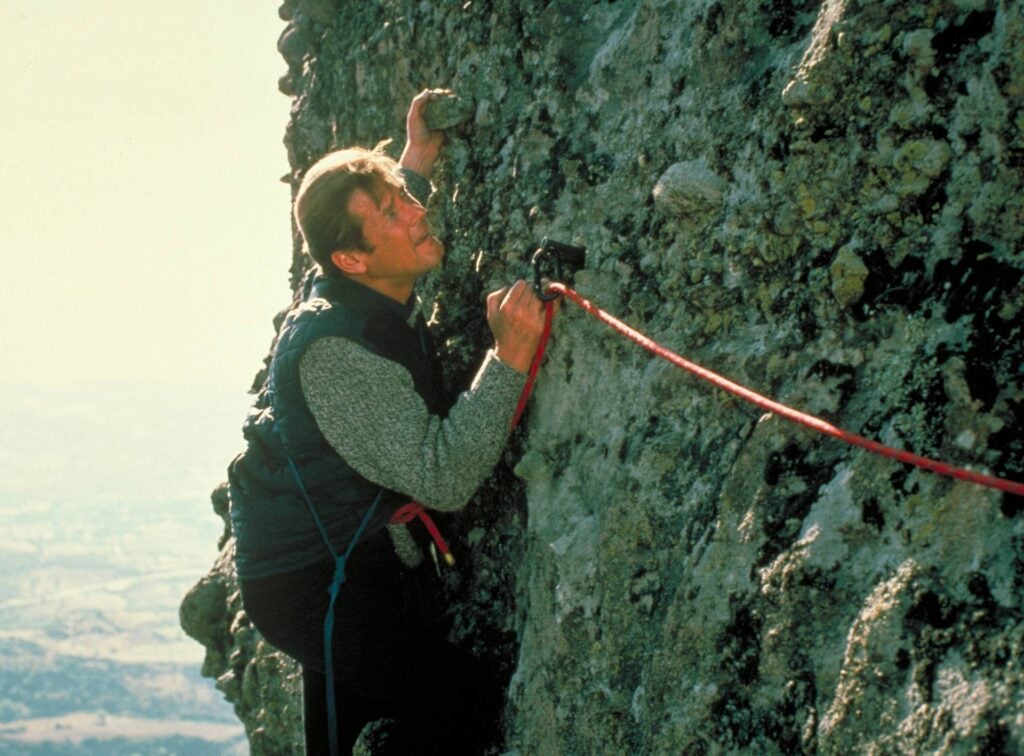
Bond has tracked heroin smuggler Kristatos (Julian Glover) to St. Cyril’s, a monastery in the northern mountains of Greece. Only accessible from the ground by a cabled basket, Bond realises he must scale the cliff to lower the basket down for the rest of his crew. 

Bond’s painstaking ascent is disrupted by a bird flying out of a nook, causing him to momentarily lose his grip, but he soon makes it to the top — only for henchman Apostis (Jack Klaff) to deliver a swift kick, sending 007 back over the edge and dangling from a great height. With classic 007 ingenuity, Bond uses his boot laces to help lever himself up, only for Apostis to start dislodging the carabiner hooks holding the ropes suspending Bond. Just as Apostis loosens the final hook, Bond manages to kill him by throwing a spike, sending him plummeting to the ground.


Tennis

As seen in: Octopussy (1983)

Investigating suave Afghan prince Kamal Khan (Louis Jordan), Bond (Roger Moore) teams up with British secret service intelligence operative Vijay (played by professional tennis player Vijay Amritraj). Vijay works as a professional tennis coach at Khan’s sports club, a talent that comes in handy when he is called on to help 007 escape Khan’s henchman in a motorised rickshaw.

During a chase down a bust street, Vijay fends off the heavies by swiping at them with his tennis racquet, the crowd enraptured by his handiwork like a centre court final.


Horse Racing

As seen in: A View To A Kill (1985)

Roger Moore’s final 007 adventure is rooted in the world of horse racing. Discovering Bond’s true identity, industrialist and horse owner Max Zorin (Christopher Walken) compels the secret agent to take part in a steeplechase to the death. 

As Bond sets off, Zorin plays dirty by booby trapping the course, be it raising the fences or having his goons whip 007 with riding crops. With Bond in the lead, Zorin activates steroids inside 007’s ride, forcing the horse off course. Bond sees salvation in his assistant, Sir Godfrey Tibbett (Patrick Macnee), driving his Rolls-Royce, only to discover his manservant has been killed by deadly assassin, May Day (Grace Jones).

Skiing

As seen in The World Is Not Enough (1999)

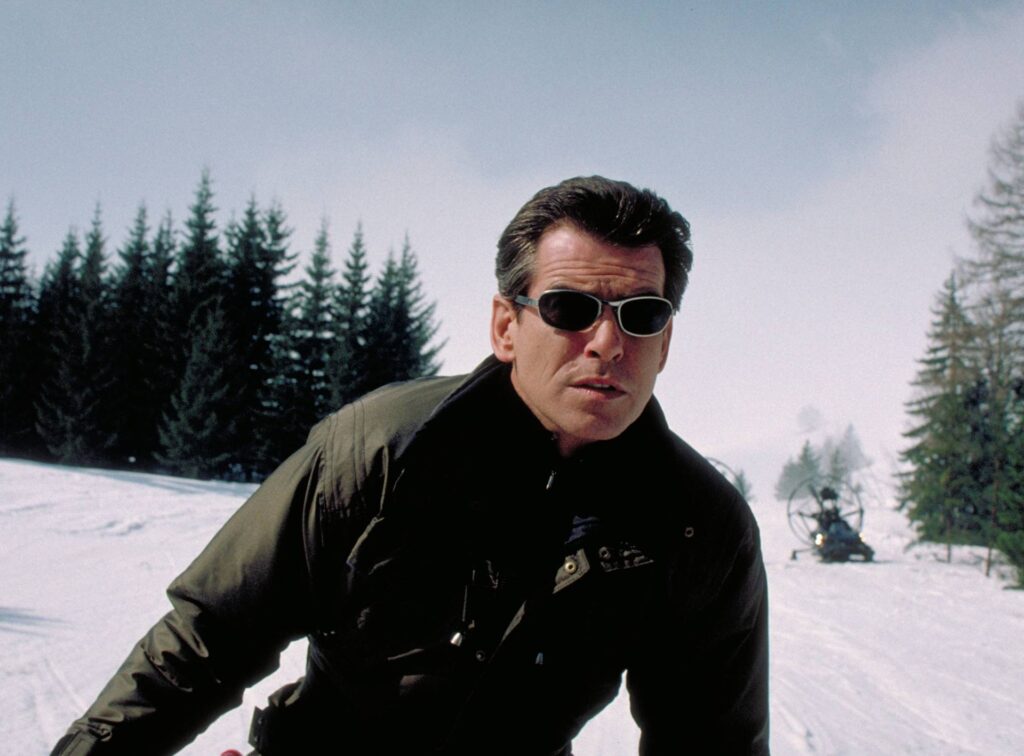
From On Her Majesty’s Secret Service to The Spy Who Loved Me to For Your Eyes Only, Bond has proved himself to be a championship skier. Assigned to protect M (Judi Dench)’s family friend Elektra King (Sophie Marceau) in Azerbaijan, 007 (Pierce Brosnan) accompanies King to survey her oil pipeline, the pair enjoying a joyous ski down the Caucasus mountains (“You ski very well, Mr Bond,” King tells him).

Out of the clear blue sky, assassins piloting four parahawks — skidoos suspended from parachutes — circle for the kill. Sending Elektra down a gully, Bond leads them into the trees — but not before the killers start dropping grenades. After one of the vehicles gets caught in the trees, two parahawks land, disengage their parachutes, and chase 007 on the slopes, the first being caught in the blast of a grenade, the second flying off a cliff after Bond does an emergency skid, quipping, “See you back at the lodge.” 

To 007’s surprise and chagrin, the parahawk sprouts another parachute and re-enters the fight. Bond thinks quickly and, during a death-defying leap, punctures the parahawk with his ski pole, causing the vehicle to go out of control and crash into the remaining parahawk. 

Fencing 

As seen in: Die Another Day (2002)

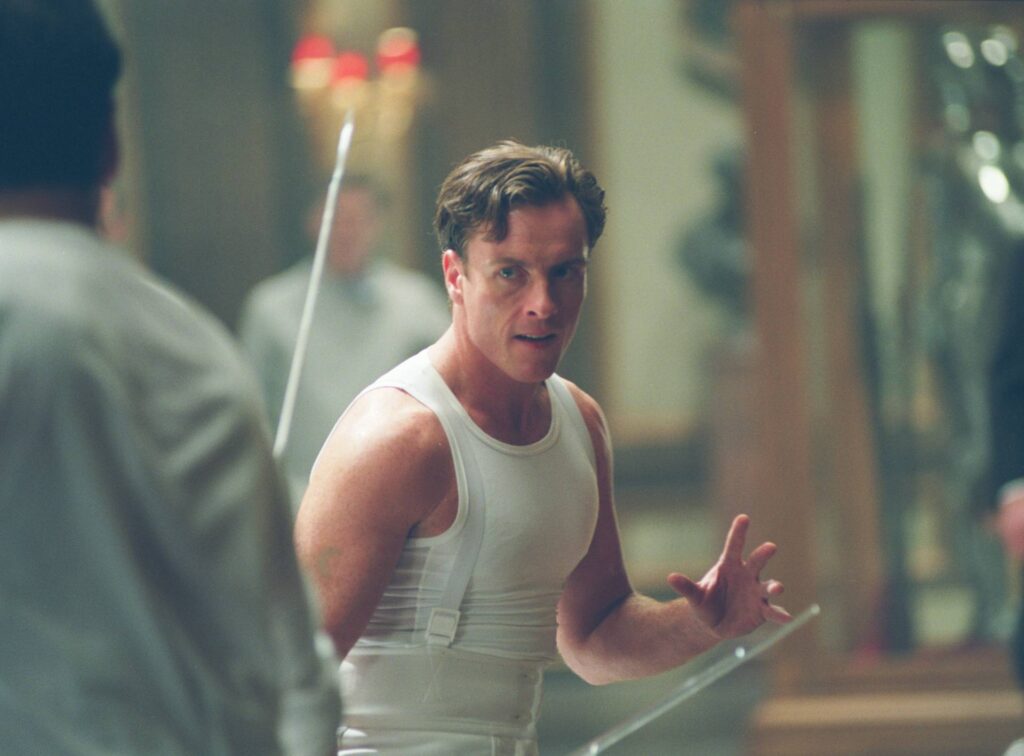
Returning to the UK from Cuba, Bond picks up the trail of diamond magnate Gustav Graves (Toby Stephens) at an exclusive fencing academy in London. He banters with fencing instructor Verity (Madonna), who introduces him to Miranda Frost (Rosamund Pike), Graves’ publicist and Verity’s protégé, “the finest blade in the club”. They soon join Graves, who challenges Bond to a wager: a duel at £1000 a point.  At this point, Verity steps away: “No thanks, I don’t like cock fights.”

After Graves wins the initial best-of-three hits, Bond increases the stakes by introducing one of Graves’ blood diamonds into the wager. After Bond cuts Graves’ hand, the latter ups the ante by swapping fencing swords for cutlasses, the winner being the first to draw blood from the torso. What follows is a ferocious fight, both men swapping weapons, as they destroy the beautiful décor of the stately club. Moving outdoors, Bond cuts Graves in the stomach, throwing him into a fountain. As Graves gets up to retaliate, Miranda intervenes, and the two men reluctantly shake hands. 

Meet Madeleine Swann

Madeleine Swann, perfectly played by Léa Seydoux, is perhaps the most complex, compelling and longest-lasting love in Bond’s life. The daughter of high-ranking SPECTRE operative Mr White (Jesper Christensen), Madeleine renounced her father and his lifestyle, going into hiding, working for Médecins Sans Frontières and then as a psychiatrist at the Hoffler Klinik near Sölden in the Austrian Alps. A traumatic event in her childhood — being attacked by terrorist Lyutsifer Safin (Rami Malek), who murdered her mother — gave her a lifetime fear and hatred of violence and weapons. A strong, rebellious, resourceful woman, she is initially a safe and useful ally for Bond but soon becomes so much more.  

Is this really what you want? Living in the shadows? Hunting, being hunted? Always alone?

Spectre (2015)

Madeleine first encounters Bond at the snowbound Hoffler Klinik following the suicide of Mr White. She is captured by SPECTRE assassin Mr Hinx (Dave Bautista), but is immediately freed by 007, who flies his plane into Hinx’s convoy. Making their escape, Madeleine leads Bond to the hotel L’Americain in Morocco — she steadfastly warns Bond against making any romantic advances — where her father has left a bundle of info that leads them to the nerve centre SPECTRE. On the train journey to the SPECTRE hideout (“You shouldn’t stare,” Madeleine tells Bond. “Well, you shouldn’t look like that,” he replies), the pair are ambushed by Hinx. Madeleine, despite her loathing of weaponry, fires several rounds from Bond’s gun. She misses, but it’s enough for Bond to gain the upper hand, allowing him to attach barrels to Hinx via rope and see him dragged off the train. She subsequently stays the night with Bond in his cabin.

Arriving at a deserted railway station, Bond and Madeleine are transported by Rolls-Royce to SPECTRE’s clandestine facility in the Sahara Desert. The pair are greeted by Franz Oberhauser (Christoph Waltz), the man who looked after Bond just after he’d been orphaned. Torturing Bond in a neurosurgical chair, Oberhauser reveals he now goes by the name Ernst Stavro Blofeld, changing his name from one in his mother’s bloodline after faking his death three decades previously. With the help of an exploding watch, Bond and Madeleine escape, destroying SPECTRE HQ and head to London. 

Back in London, Madeleine tells Bond she no longer wants to be part of his life but is drawn into his auspices after she is kidnapped by SPECTRE. She is kidnapped by Blofeld’s men and taken to the derelict MI6 building, destroyed by Silva (Javier Bardem), and held captive. With the building rigged to explode, Bond locates her, the pair escaping by speedboat, then taking down Blofeld in a helicopter, who is arrested.

The following morning, Bond and Madeleine leave in 007’s Aston Martin for a new life.

“We Have All The Time In The World”

No Time To Die (2021)

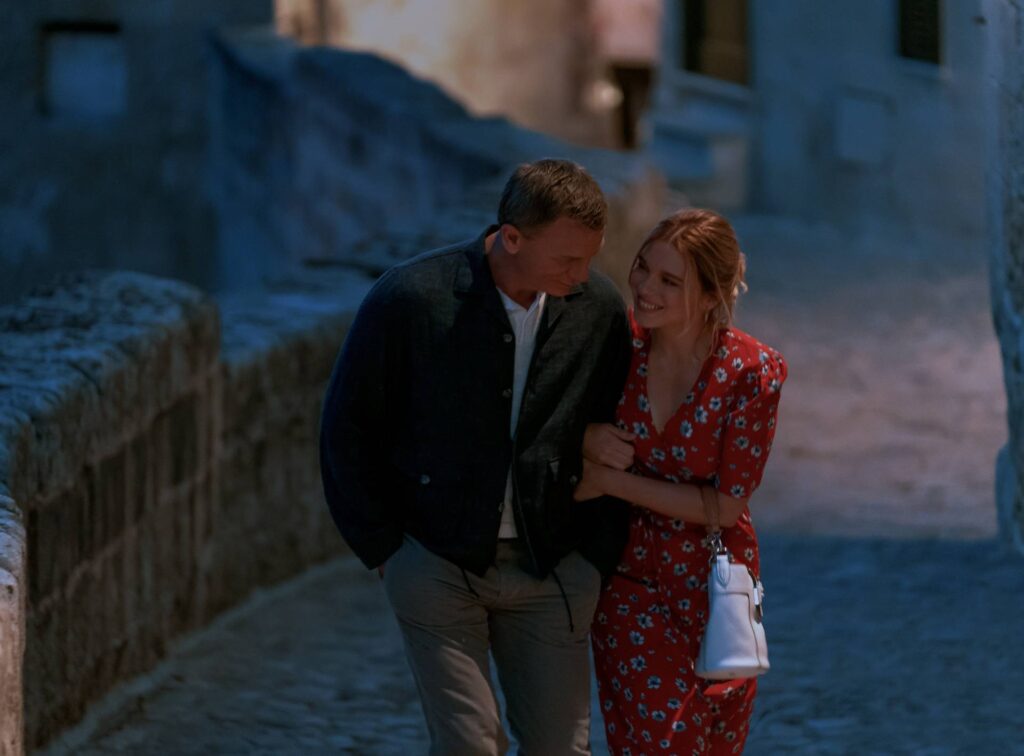
Bond and Madeleine are travelling through Matera, Spain, on a day when the town is letting go of their secrets by writing them down and burning them. Bond quizzes Madeleine on her secrets. “I’ll tell you mine when you visit Vesper’s grave.” Bond visits his former lover’s grave and is nearly blown up by SPECTRE. Evading his assailants, Bond returns to his hotel and accuses Madeleine of setting him up. After the pair come under attack, making their getaway, he sends her away by train, saying he will never see her again — unaware she is carrying his child. 

Swann comes back into 007’s orbit five years later. Under the orders of Safin, she is instructed to kill Blofeld by wearing nanotech biological Heracles while he is imprisoned at Belmarsh prison. While she initially refuses to shake Bond’s hand, she inadvertently touches Bond, transferring the virus to 007, who kills Blofeld by strangling him, but not before the agent learns Madeleine didn’t betray him in Matera.

Bond tracks Madeleine to her home in Norway — the site of her childhood encounter with Safin — and the pair begin to open up (Madeleine: “I understand you’re not built to trust people”; Bond: “Neither are you.”). As they move in for a kiss, they are interrupted by Swann’s five-year-old daughter, Mathilde (Lisa-Dorah Sonnet), Madeleine steadfastly denying the child is Bond’s (despite the strong resemblance). The makeshift family unit is interrupted by Safin’s henchman. After a furious car chase, Bond hides Madeleine and Mathilde in a bunker, where, despite killing several of Safin’s henchmen, she is captured.

Madeleine and Mathilde are taken to Safin’s hideout on Poison Island, where Madeleine repeatedly implores Mathilde not to touch the toxic plants. Ordered to drink a tainted cup of tea that will make her blind, she throws the drink into Safin’s henchman Primo (Dali Benssalah)’s eye and makes her escape. Catching up with Bond, who is mounting a rescue mission, she and Mathilde escape in a lifeboat — but not before she shares a passionate kiss with James, who promises to join her soon.

Bond kills Safin and opens the island’s missile silos, allowing the warship HMS Dragon to destroy the island. In a heartbreaking farewell, Bond radios Madeleine, who has been escorted off the island by Nomi (Lashana Lynch), to say goodbye and declare his love for her and Mathilde. Madeleine admits that, with Safin dead, her problems are behind her and she can now live a happy life. Madeleine bids Bond a tearful farewell and confirms that Mathilde is his daughter, Bond admitting he knew all along. 

Later, Madeleine drives Mathilde to Matera, telling her daughter. “I’m going to tell you a story about a man. His name was Bond, James Bond.”

Inside The Living Daylights

Following the departure of Roger Moore as James Bond after A View To A Kill, producers Albert R. Broccoli and Michael G. Wilson decided to ally the search for a new Bond with a new direction for the series. Looking to imbue the character and film with a tougher, harder edge, The Living Daylights, directed by John Glen, took inspiration from the real-life story of a KGB officer who defected to the CIA for a short time in 1985, then re-defected to the Soviet Union, rooting the drama in real-life geopolitics while still delivering on classic 007 action and adventure. This is the behind-the-scenes story of the 15th Bond film.


  1. A NEW DIRECTION 

The first idea for Bond 15 was an origin story exploring the character’s roots. The story started in 1972 with Bond as a young lieutenant in the Navy who, to avoid a court martial, undertakes a mission in Singapore for MI6 to kill warlord General Kwang. It was ultimately decided that the series shouldn’t look backwards, and the next treatment was inspired by the 1962 Ian Fleming short story The Living Daylights, with Bond sent to protect a defecting army officer and refusing to shoot the cellist sniper (Maryam d’Abo’s Kara Milovy in the finished film). “We then had to make a two-hour movie of this,” said screenwriter Richard Maibaum.

  1. DALTON. TIMOTHY DALTON

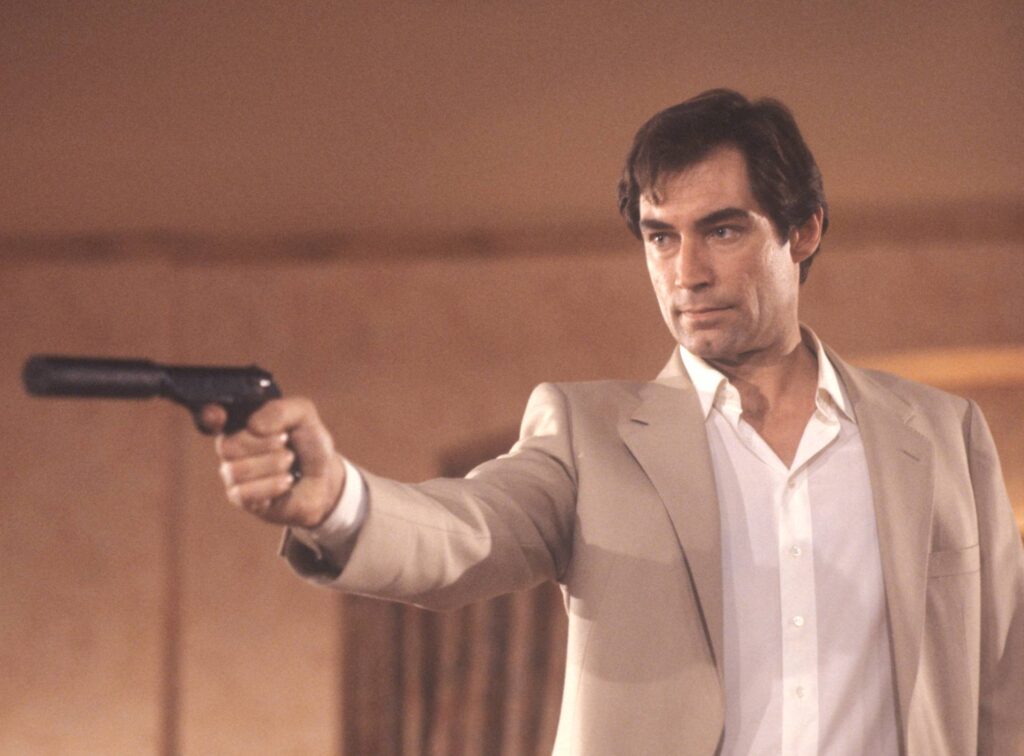
Casting for the new Bond began in earnest in January 1986. After actors including New Zealander Sam Neill, Brits Michael Praed and Mark Greenstreet, Australian James Healey, Frenchman Lambert Wilson, and Irishman Pierce Brosnan (his time would come) were tested, the team went back to an actor who had been considered 20 years previously. The RADA-trained Timothy Dalton had been approached in the late sixties following The Lion In Winter, but the actor turned the role down, believing he was too young. Dalton refused the role again when it looked like Moore would leave following Moonraker, but when Broccoli came calling for The Living Daylights, the actor was more in sync with the role.

“When we met Timothy in 1986, we saw during the intervening years he had added poise, experience and self-assurance,” said Cubby Broccoli. “He was excited by the idea. He saw Bond as being more serious, just as ballsy as Connery’s 007, but carrying his own personal imprint. He wanted to play the character closer to the way Fleming wrote it — which suited me.”

After signing on the dotted line, Dalton re-read all the Fleming novels to immerse himself deeply in the character.

“For me, he clearly lives in the moment,” said Dalton about Bond. “He’s always on the edge of his own death, everything is heightened.”


  1. ROCKING GIBRALTAR

The Living Daylights opens with Bond on manoeuvres in Gibraltar, a training exercise that goes wrong when an assassin kills a 00 agent. The sequence was Dalton’s induction into the world of 007 spectacle, but the filmmakers felt confident in his ability to be physical. “Tim’s very good at action,” said Glen. “He was a good mover, and he was very keen to do as much of his own stunt work as possible.” The pre-credit sequence culminates with Bond jumping on the killer’s Landrover speeding around narrow roads. Dalton flew in to do close-ups on top of the moving Jeep, so Broccoli sent second unit director Arthur Wooster a message: don’t damage him!

“He was keen and threw himself around,” laughed Wooster. “My old heart was going crazy and I couldn’t get rid of him quick enough — I was terrified.”


  1. THE RETURN OF AN OLD FAVOURITE

Bond teams up with Kara in Bratislava, and the pair flees to Vienna. For a car chase around a frozen lake in Czechoslovakia, The Living Daylights saw the return of an old favourite — the Aston Martin, here upgraded to the Volante model, kitted out with an array of Q dept gadgets including laser beam cutters, automatic missiles, rockets, studded tyres and skis for driving on ice. Shooting in Weissensee, Austria, the unit used three real cars and a number of doubles for moments it flies through the air, leaps over a dam and falls down a snowbank.

“It was a dangerous chase because when we first arrived, the lake was just freezing over,” said stunt coordinator Paul Weston. “When we walked out on it, you could see the fish beneath you, as it hadn’t gone white yet. It was like standing on a sheet of glass.” 

  1. SAY CELLO WAVE GOODBYE

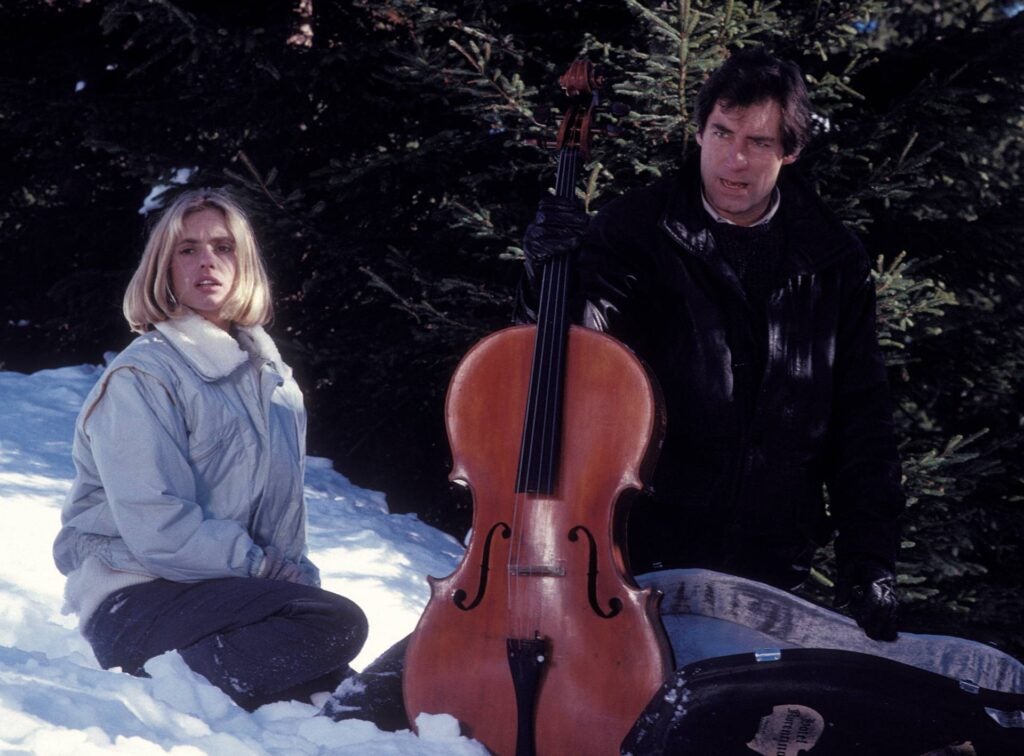
After Bond is forced to destroy the Aston Martin, he finds a more unorthodox mode of transport — Kara’s cello case. The idea came from Glen during a writing session at MGM. 

“I said to Cubby, Dick and Michael, ‘I’ve got this idea to use the cello case as an escape vehicle where Maryam can sit on one side and Tim can sit on the other side, and go down the mountain,” said Glen. “Cubby pulled a face and Dick thought it was the worst idea he’d ever heard. I borrowed a cello case to demonstrate it was possible. Then they were convinced.”

The cello case was made out of fibreglass and was fitted with skis underneath and handles on the side, allowing Dalton to control the direction. While stunt performers Herman Sporer and Ida Huber doubled as Bond and Kara in long shots, Dalton and d’Abo spent three days shooting the sequence, which was not without its challenges.

“On one side was the ravine and down at the bottom was the camera crew,” recalled d’Abo. “Timothy weighed more than I did, so it was off balance and they put firecrackers underneath the snow to look as though we were being shot at — which I had a real phobia about.”

For the sequence’s finale, Bond throws Kara’s cello over the barrier at the checkpoint. Glen tried the moment with stuntmen, and it didn’t look right. “Tim said he wanted to have a go at it,” recalled Glen. “He tried and did it perfectly it one take.”

  1. MAGIC CARPET RIDE

Bond travels to Morocco to kill the power-hungry General Pushkin (John Rhys-Davies) taking him to where he is hiding with arms/drug dealer Whitaker (Joe Don Baker) and his hired killer, Necros (Andreas Wisniewski). After 007 assassinates Pushkin, he is chased across the rooftops by the Moroccan police. Timothy Dalton arrived in Tangier in October 1986 to shoot the sequence that included a nifty gag in which Bond evades his pursuers via a ‘magic carpet ride’. 

“We had planned to have Bond escaping across the rooftops, grabbing a carpet, throwing it over some wires that he sits on as it slides down like a magic carpet,” recalled Glen. “And it worked reasonably well, in fact, but the scene got a little over-long, and it was one of the tough decisions we made during the edit.”


  1. UP IN THE AIR

The climax of The Living Daylights takes place high above Afghanistan as Bond and Necros fight on a cargo net full of packages of heroin hanging from the back of a Hercules aircraft. Shot during the rainy season, meaning the sequence had to be captured in short snatches, the fight, doubled by stuntmen B.J. Worth as Bond and Jake Lombard as Necros, was made more difficult by the winds buffeting the cargo net, slamming it against the fuselage.

“After I had kicked Jake off the net, I started to crawl up the net but now with very little weight on it, the net started to go wild, flopping about very violently,” recalled Worth. “I wasn’t sure what to do as it was so unexpected. Eventually, I just had to let go, jump off the net, and use my hidden parachute – which was a first for me.”

The sequence was completed by close-ups of Dalton and Wisniewski captured against a painted backdrop at Pinewood, augmented by miniature mountaintops. The effect recreated action at 15,000 feet with the actors being just six feet off the ground. 


  1. MISSION ACCOMPLISHED

By the time filming had finished on February 13, Glen had shot around 389,530 feet of film. With a theme composed by Norwegian band a-ha and John Barry (who, for his last Bond film, fittingly has a cameo in the film as a conductor), The Living Daylights opened in the UK on June 30 and a month later in the US on July 31. The film earned $51,185, 000 at the US box office and $191,200,000, firmly establishing Timothy Dalton as the right choice for 007.

“I think Timothy was wonderful in The Living Daylights,” said John Glen. “The script suited him, he portrayed all the smouldering qualities we were trying to introduce at that time, and he was equally good in the love and action scenes. I thought it was a remarkable debut considering he was thrown in the deep end.”