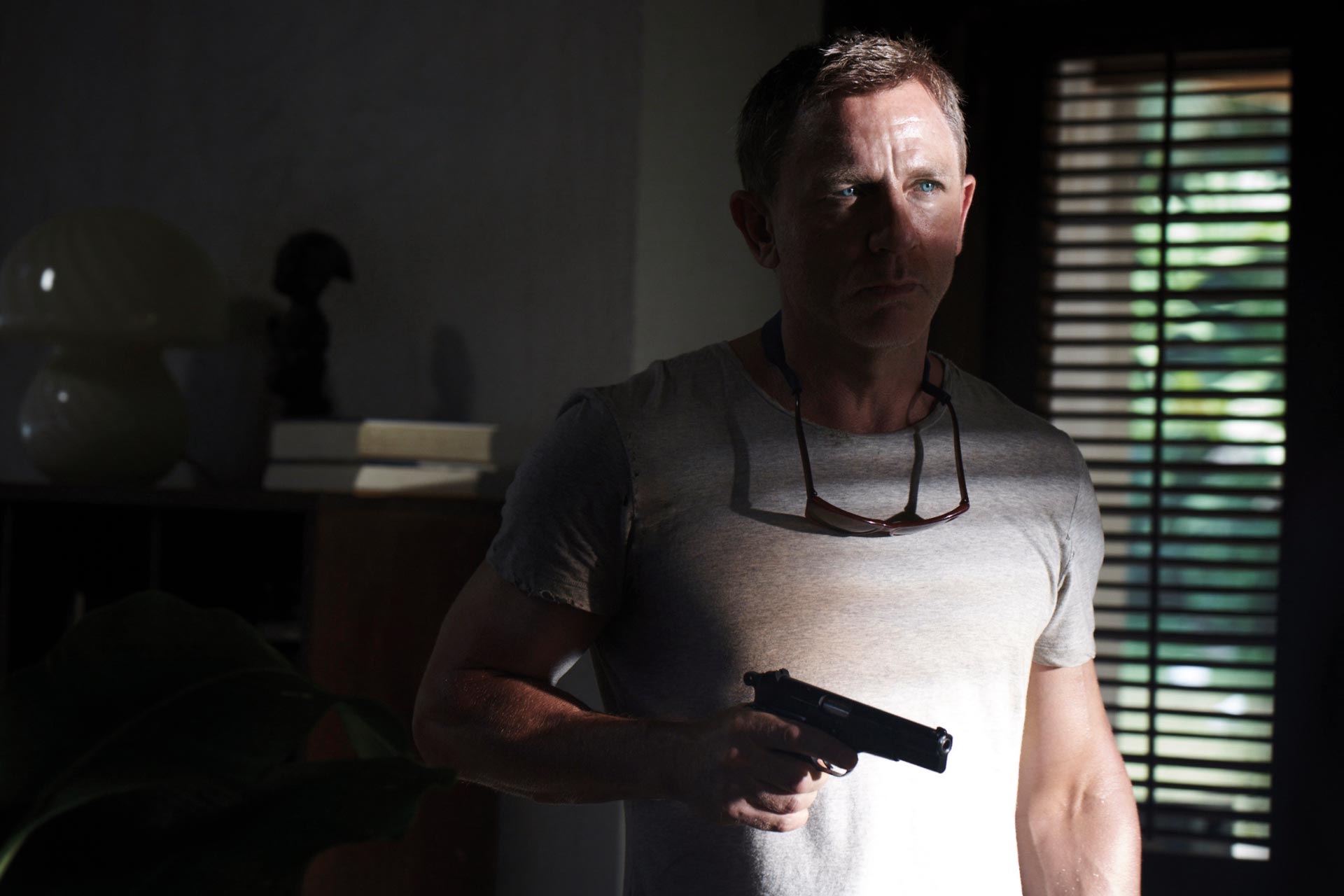
The Loves Of James Bond

As a jet-setting secret agent, James Bond has been surrounded by women, some fleeting dalliances, others more lasting. To mark Valentine’s Day, let’s take a look at the complex, compelling relationships of 007: his first true love, the mother of his child, and the woman he married.

Tracy di Vicenzo

Played by: Diana Rigg

As seen in: On Her Majesty’s Secret Service

The Back Story: Contessa Teresa ‘Tracy’ di Vicenzo is the only daughter of Marc Ange Draco (Gabriele Ferzetti), the head of Europe’s biggest crime syndicate, Union Corse. Perhaps as an act of rebellion against her father’s wealth and status, Tracy lived life in the fast lane, causing her father to withdraw her allowance. An ill-fated marriage gave her the title of Countess. She prefers the name Tracy to Teresa, saying, “I am not a saint.”

The Love Story: Bond (George Lazenby) first meets Tracy at her lowest ebb, saving her from attempted suicide, wading into the sea in Portugal. Tracy speeds away in her Red Cougar but Bond catches up with her at Hotel Palacio Estoril’s casino, where he bails her out of a bad bet. Bond returns to his suite to be held at gunpoint by Tracy with his own Walther PPK. Bond disarms and seduces her but, in the morning, Tracy leaves Bond in bed, repaying her gambling debt in full. 

The act of saving Tracy’s life puts 007 on the radar of Draco, who kidnaps Bond and offers him information on SPECTRE leader Ernst Stavro Blofeld (Telly Savalas) in return for marrying his daughter. Still, Bond starts courting Tracy. Once Tracy learns of 007’s arrangement with her father, she breaks off the relationship, heartbroken. Bond reveals that his feelings were sincere, and the pair slowly fall in love.

The Height of Passion: Tracking Bond down in Switzerland, Tracy helps 007 escape in a frantic car chase on ice. The couple takes refuge from a blizzard in a remote barn, where Bond not only professes his love for Tracy but proposes marriage. She accepts.

Love Language: “I love you. I know I’ll never find another woman like you. Will you marry me?”

The Long Goodbye: Having defeated Blofeld at Piz Gloria, Bond and Tracy marry at Draco’s estate. The pair set off on honeymoon in 007’s Aston Martin festooned with flowers. As Bond pulls over to remove the garlands, Blofeld and his number two, Irma Blunt (Ilse Steppat), pull up and shower the car with bullets. Tracy is killed, leaving a bereft, disbelieving Bond to mutter, “We have all the time in the world.”
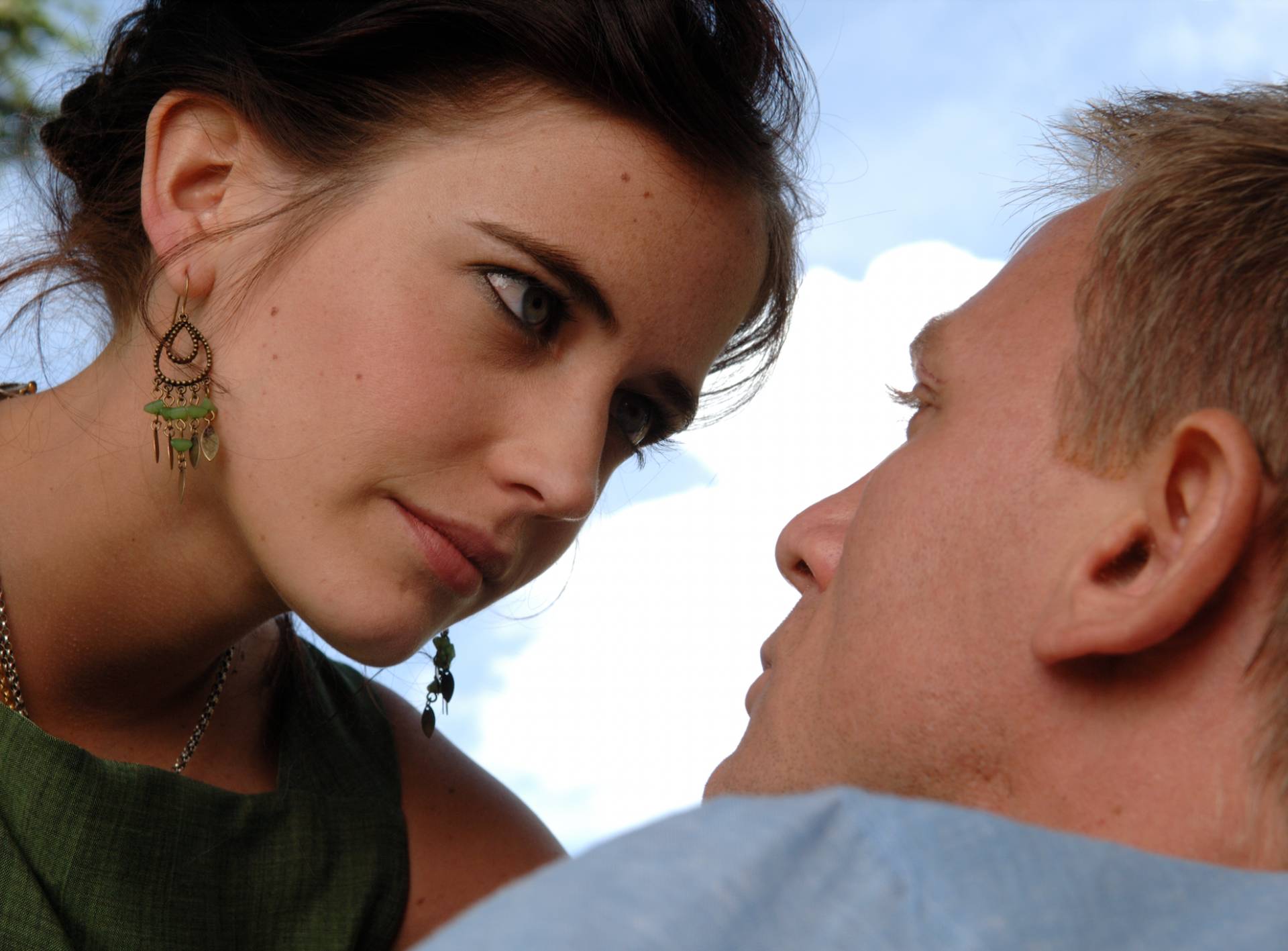
Vesper Lynd

Played by: Eva Green

As seen in: Casino Royale 

The Back Story: Vesper Lynd works for the Financial Action Task Force of Her Majesty’s Treasury and has a deep understanding of illicit banking practices. Unknown to Bond (Daniel Craig), Vesper was in a clandestine relationship with French-Algerian QUANTUM operative Yusef Kabira (Simon Kassianides), who had been held hostage by his bosses, forcing Vesper to betray 007.

The Love Story: Bond first meets Vesper in a dining car on a train bound for Montenegro, their smart, flirtatious banter signalling an instant attraction. She has been assigned to bankroll 007 in a high-stakes game of Texas Hold ‘Em at Casino Royale, with the aim of engaging Le Chiffre (Mads Mikkelsen), a banker who finances international terrorism.

As the game begins at Casino Royale, Vesper reluctantly poses as Bond’s trophy girlfriend and refuses to stake him in the game as he begins to lose money. She aids Bond in a titanic struggle with Ugandan Warlord Steven Obanno (Isaach de Bankolé) but the tussle leaves her shaken, Bond comforting her later in their hotel shower, both fully clothed, a moment of intimacy that draws the pair closer together. 

She then saves Bond’s life after he drinks a drugged shaken-not-stirred vodka martini (a drink Bond dubs a Vesper) by plugging in a defibrillator that saves his life at the last moment. After winning the poker game, Bond chases after a kidnapped Vesper, swerving to miss her in his Aston Martin as she is left tied-up in the middle of the road.

The Height of Passion: While recuperating in hospital, Bond and Vesper admit their love for each other, causing Bond to resign and head for a romantic break in Venice. 

Love Language: “I have no armour left. You’ve stripped it from me. Whatever is left of me – whatever is left of me – whatever I am – I’m yours.” 

The Long Goodbye: After Vesper embezzles the Casino Royale winnings to save Kabira, Bond gives chase to try to stop her from handing over the money. Vesper is thrown in an elevator and, as the antiquated Venetian building begins to sink in the melee, locks herself in. Bond does his best to save her, finally getting her out of the sunken lift but unable to revive her through CPR.

As a final act of love, Vesper leaves her phone for Bond to discover a vital clue to infiltrating QUANTUM. It also starts a trail that leads him to the next and possibly biggest love of 007’s life.
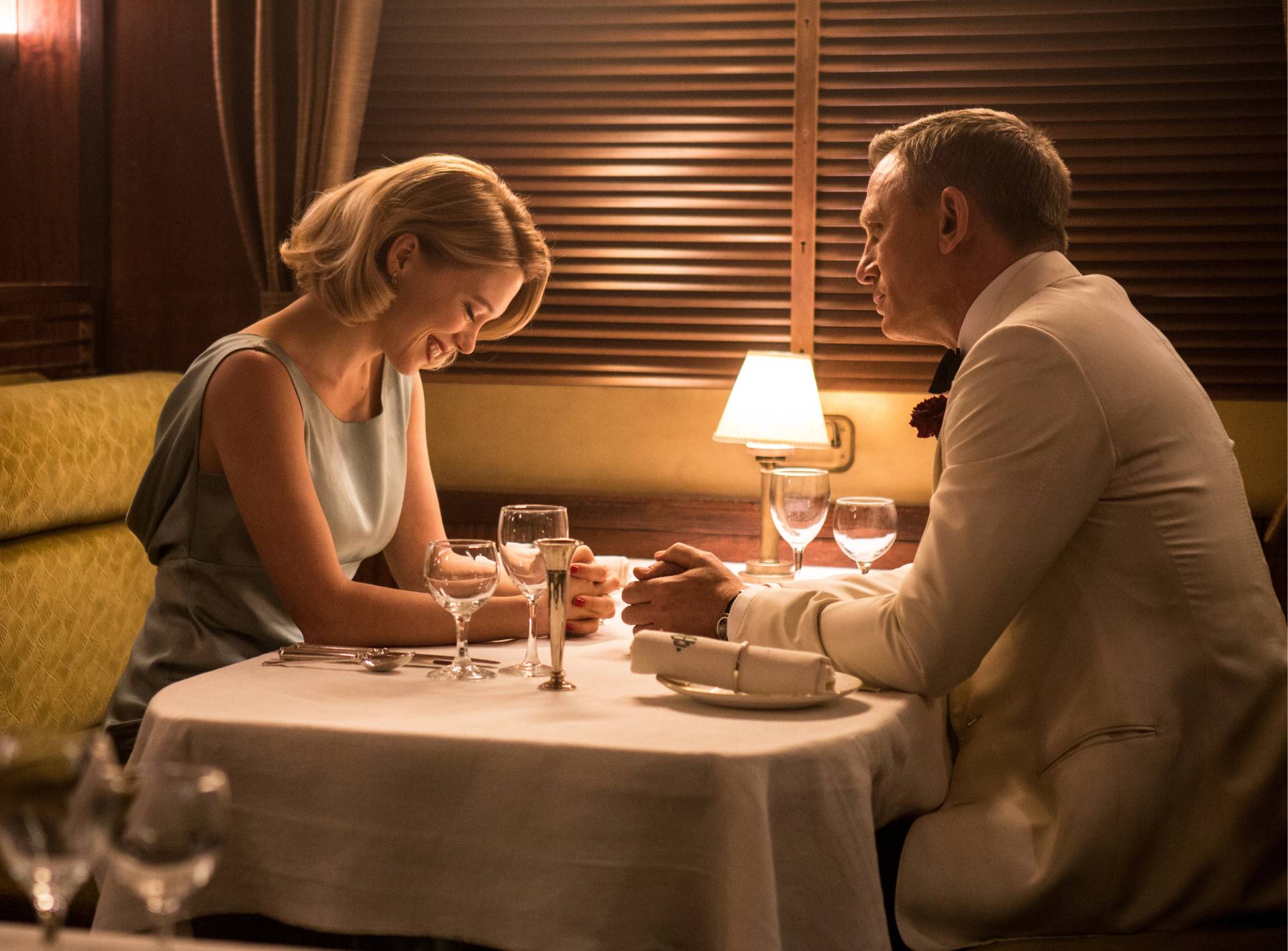
Madeleine Swann

Played by: Léa Seydoux

As seen in: Spectre, No Time To Die

The Back Story: The daughter of high-ranking SPECTRE member Mr. White (Jesper Christensen), Madeleine renounced her father and his lifestyle, going into hiding, working for Médecins Sans Frontières, and then as a psychiatrist at the Hoffler Klinik near Sölden in the Austrian Alps. A traumatic event in her childhood — being attacked by terrorist Lyutsifer Safin (Rami Malek), who murdered her mother — gave her a lifelong fear and hatred of violence and weapons.

The Love Story: Following the suicide of Mr. White, Bond seeks out Madeleine at the Hoffler Klinik. She leads him to the L’Americain Hotel in Morocco, where White has left a secret stash of information that leads them to the nerve centre of SPECTRE and Ernst Stavro Blofeld (Christoph Waltz) in the middle of the desert. With the help of an exploding watch, Bond and Madeleine escape, destroying SPECTRE HQ and head to London. Madeleine is kidnapped by SPECTRE but Bond rescues her, the pair escaping by speedboat, then taking down Blofeld in a helicopter. The following morning, Bond and Madeleine leave in 007’s Aston Martin for a new life.

In No Time To Die, Bond and Madeleine are travelling through Matera, Italy. The couple comes under attack from SPECTRE, Bond believing Madeleine has set him up. He sends her away by train, unaware she is carrying his child. Swann comes back into 007’s orbit five years later when, under the orders of Safin, she is instructed to kill Blofeld via nanotech biological weapon, Heracles, while he is imprisoned at Belmarsh prison. Her hand inadvertently touches Bond’s, transferring the Heracles virus to 007, who kills Blofeld but not before the agent learns Madeleine didn’t betray him in Matera.

The Height of Passion: Bond tracks Madeleine to her home in Norway — the site of her childhood run-in with Safin — and the pair begin to open up (Madeleine: “I understand you’re not built to trust people”; Bond: “Neither are you.”) As they move in for a kiss, they are interrupted by Swann’s five-year-old daughter Mathilde (Lisa-Dorah Sonnet), Madeleine denying the child is Bond’s. The makeshift family unit is interrupted by Safin’s henchman. After a furious car chase, Bond hides Madeleine and Mathilde but they are captured by Safin.

Love Language: “We have all the time in the world.”

The Long Goodbye: Madeleine and Matilda are taken to Safin’s hideout on Poison Island, where Bond mounts a rescue mission and kills Safin, opening the island’s missile silos allowing the warship HMS Dragon to destroy the island. In a heart-breaking farewell, Bond radios Madeleine, who has been escorted off the island by Nomi (Lashana Lynch), to say goodbye and declare his love for her and Mathilde. Bond dies as the missiles strike the island but not before Madeleine confirms that Mathilde is his daughter, Bond admitting he knew all along.

Later, Madeleine drives Matilda to Matera, telling her daughter. “I’m going to tell you a story about a man. His name was Bond, James Bond.”
The Macallan Diamonds Are Forever 55th Anniversary Release

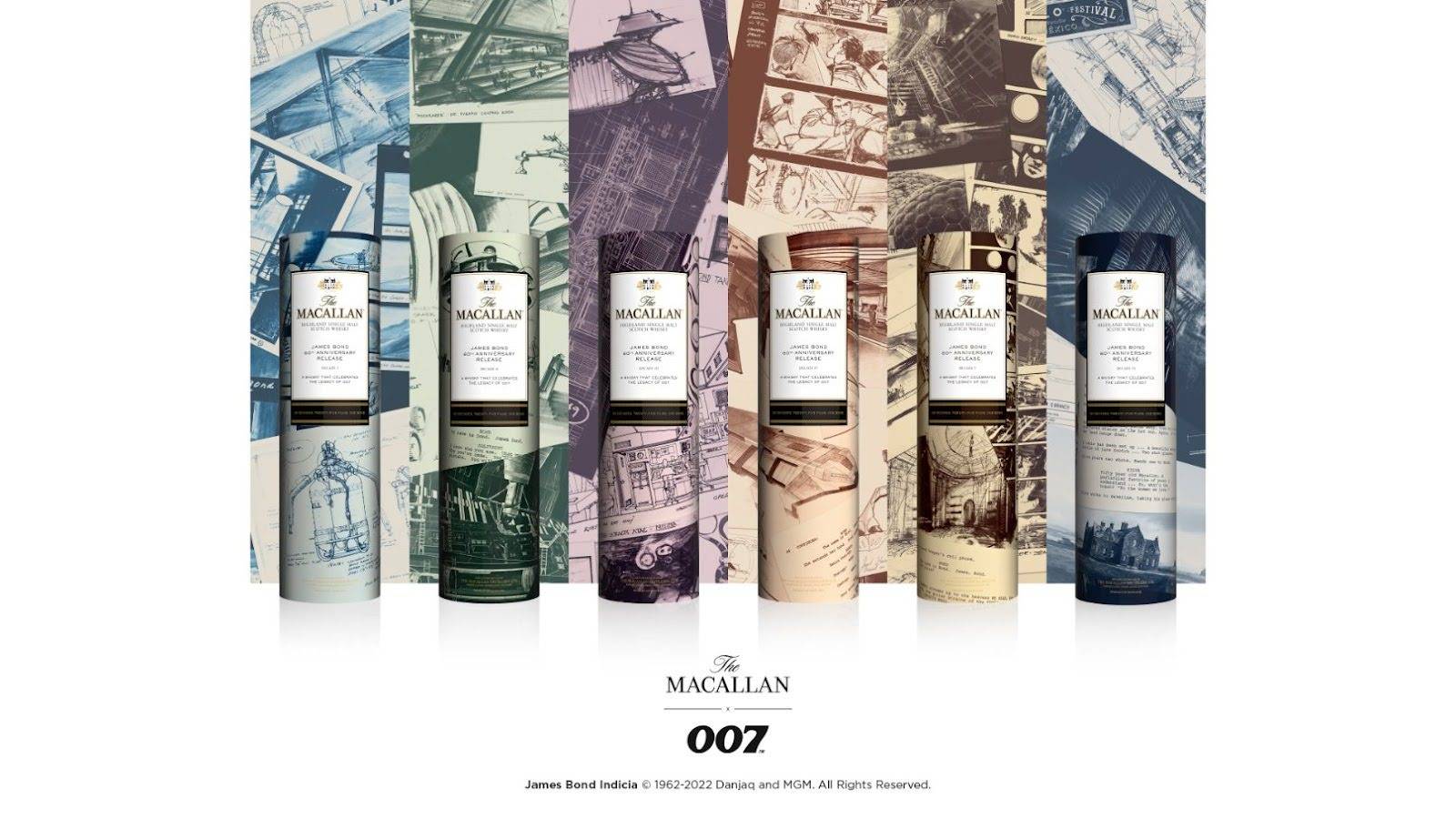
The Macallan Diamonds Are Forever 55th Anniversary limited edition release is a new single malt Scotch whisky, marking 55 years since the film was released in cinemas, in 1971.

Following The Macallan James Bond 60th Anniversary Release (2022), this continues the creative collaboration between the two brands. Crafted by Whisky Maker Russell Greig, the release draws from the Diamonds Are Forever plot, including Bond’s knowledge of sherry and red wine.

This release was distilled in 2-007 and matured for 18 years. Bespoke hybrid casks – crafted from sherry seasoned European and American oak – are complemented with the inclusion of casks made from American oak which previously held red wine.

The 007 Store is running a ballot for the chance to order a bottle. The ballot is open from 5th – 19th March 2026 for UK customers only. Ballot winners will be selected at random and contacted directly. You can enter the ballot here.

For Your Eyes Only Citroën 2CV Model Car Kit

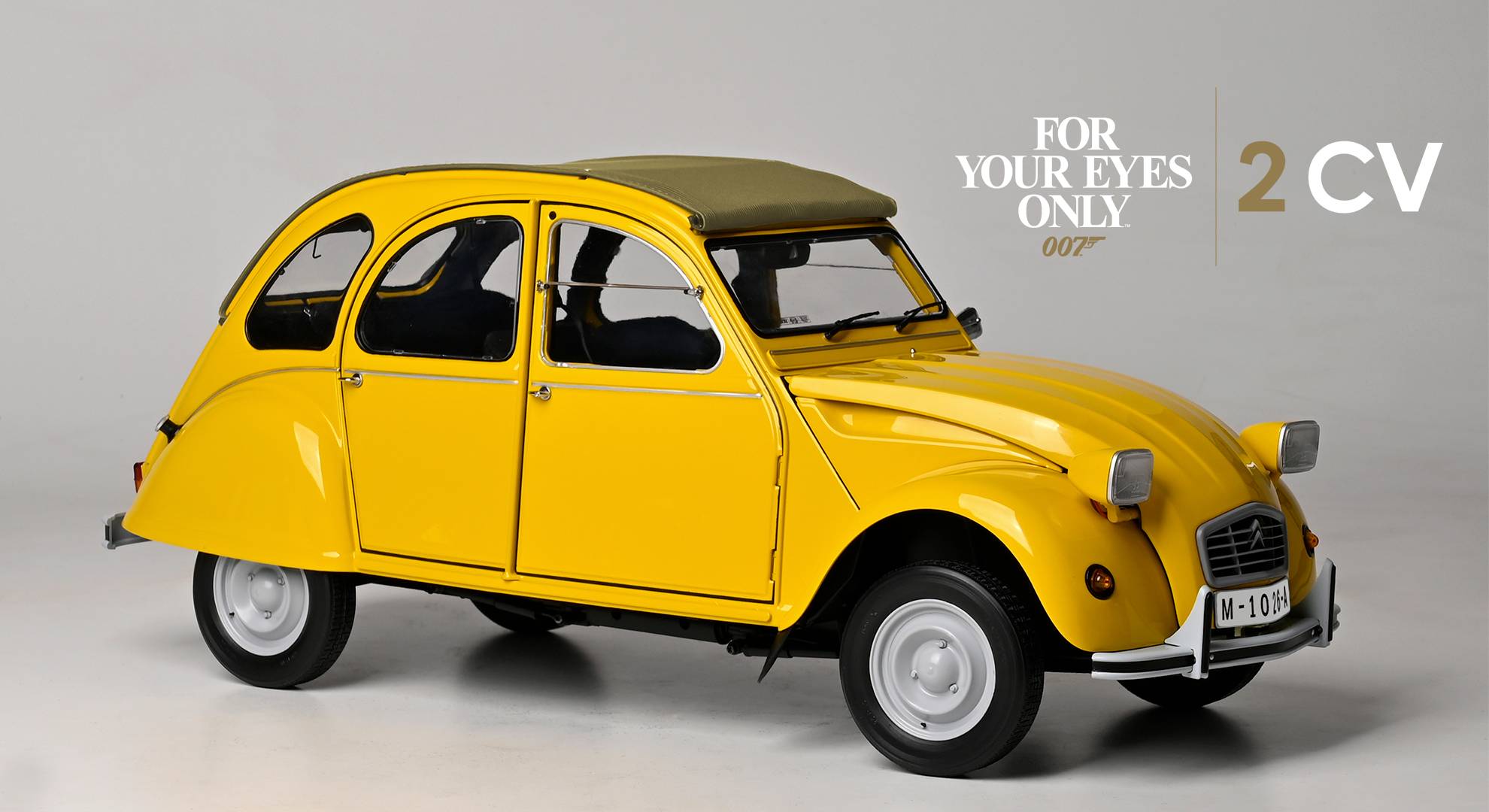
Agora Models brings you a build your own numbered edition 1:8 scale model of the iconic sunshine yellow 2CV from For Your Eyes Only

The two-cylinder Citroën described by its manufacturer, Pierre-Jules Boulanger, as “a chaise longue under an umbrella” provided the perfect machine for Roger Moore’s 007 to demonstrate his skills behind the wheel. 

This 1:8 scale model kit has been designed using 3D laser scanning technology of an original car together with film footage. All the individual parts come pre-painted allowing you to create a museum-quality big-scale model, and you can customise the model to be pristine or damaged as all the elements are included as standard. The Collector’s Edition comes with a For Your Eyes Only display case to show and protect your model, and a numbered certificate of authenticity. 

Available at 007store.com, and is priced between £1499 and £1999.

The World Is Not Enough — In Pictures

Beginning principal photography on January 17th 1999, The World Is Not Enough became Pierce Brosnan’s third outing as James Bond following GoldenEye and Tomorrow Never Dies. Directed by Michael Apted, the plot sees 007 assigned to protect M (Judi Dench)’s family friend Elektra King (Sophie Marceau) following the murder of her father by the terrorist Renard (Robert Carlyle). The film mixed trademark 007 action — a high speed boat chase along the Thames, a thrilling ski sequence with a twist — with a grounded political backdrop and psychological complexity in the relationships between the characters. Here is the making of the movie told through stunning behind the scenes images. 

ROOTED IN REALITY 

THE SHOT: The World Is Not Enough takes James Bond to Azerbaijan to survey the oil empire of Elektra King. Brosnan is featured in a publicity shot with Bond’s BMW Z8 inside Bibi-Heybat oil field near Baku. 

BTS: The oil field backdrop to the story came from co-producer Barbara Broccoli, who saw a recorded edition of US TV show Nightline on a flight, which detailed the economic value of oil pipelines, and the issues in getting the oil out of Azerbaijan due to hostile neighbouring states. True to the series, the country offered a range of eye-catching locales from desert oil fields to the snow-capped Caucasus Mountains.

ROCK AROUND THE DOCK 

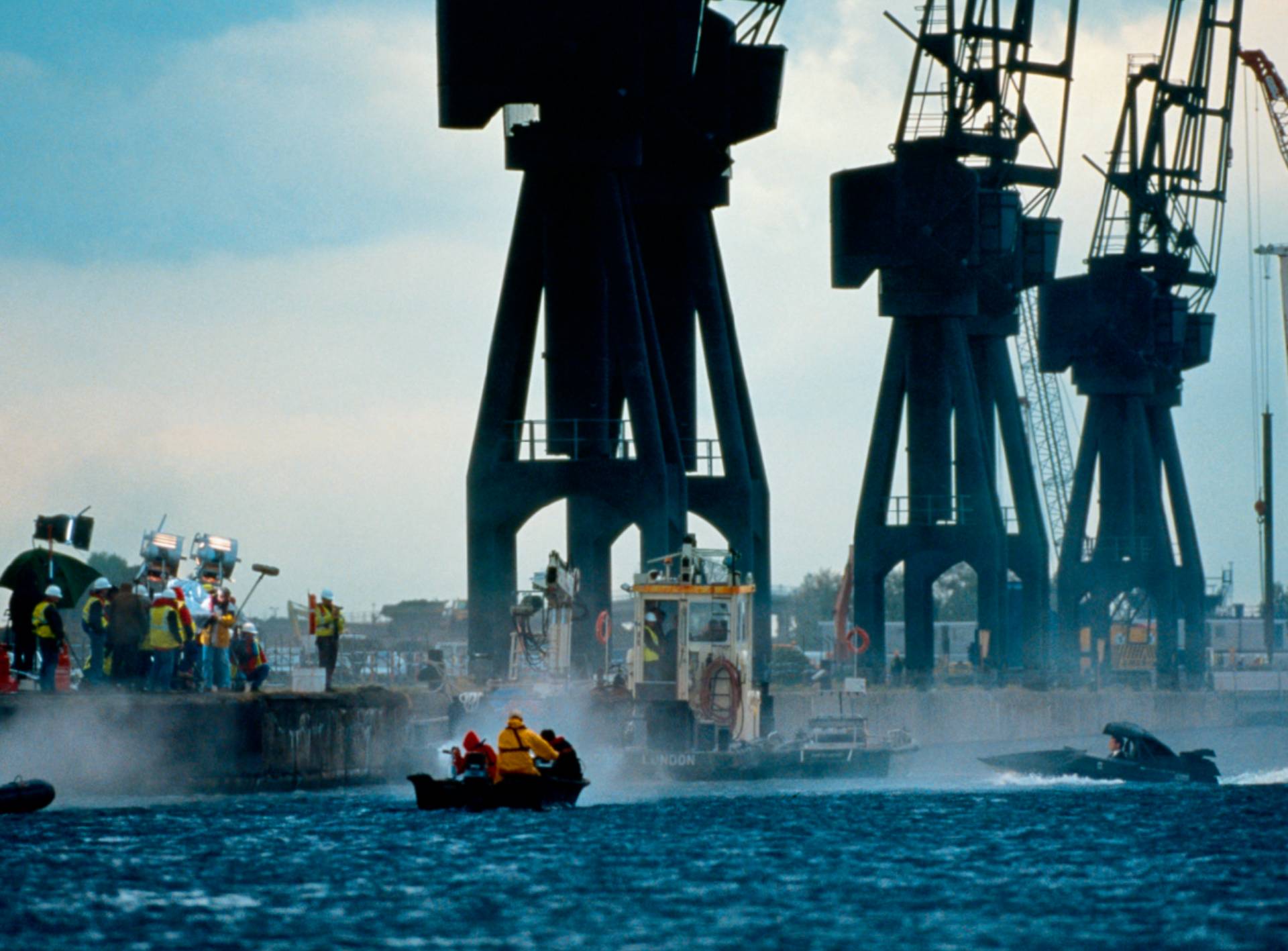
The Shot: Following an explosion at MI6 HQ, Bond jumps in a work-in-progress Q dept boat and chases an assassin (Maria Grazia Cucinotta) down the Thames, finally destroying her boat at the Millennium Dome. Directed by action unit director Vic Armstrong, this shot sees the Q Boat speeding along the Thames near the cranes at Royal Victoria Dock.

BTS: The sequence sees Bond take a detour from the Thames through Tobacco Wharf, a fish market and a restaurant. Staging the sequence in the heart of the city was a logistical and bureaucratic nightmare but, as director Michael Apted recalls, “everybody is in love with Bond and everybody wants to co-operate.”

SKIDOO OR DIE

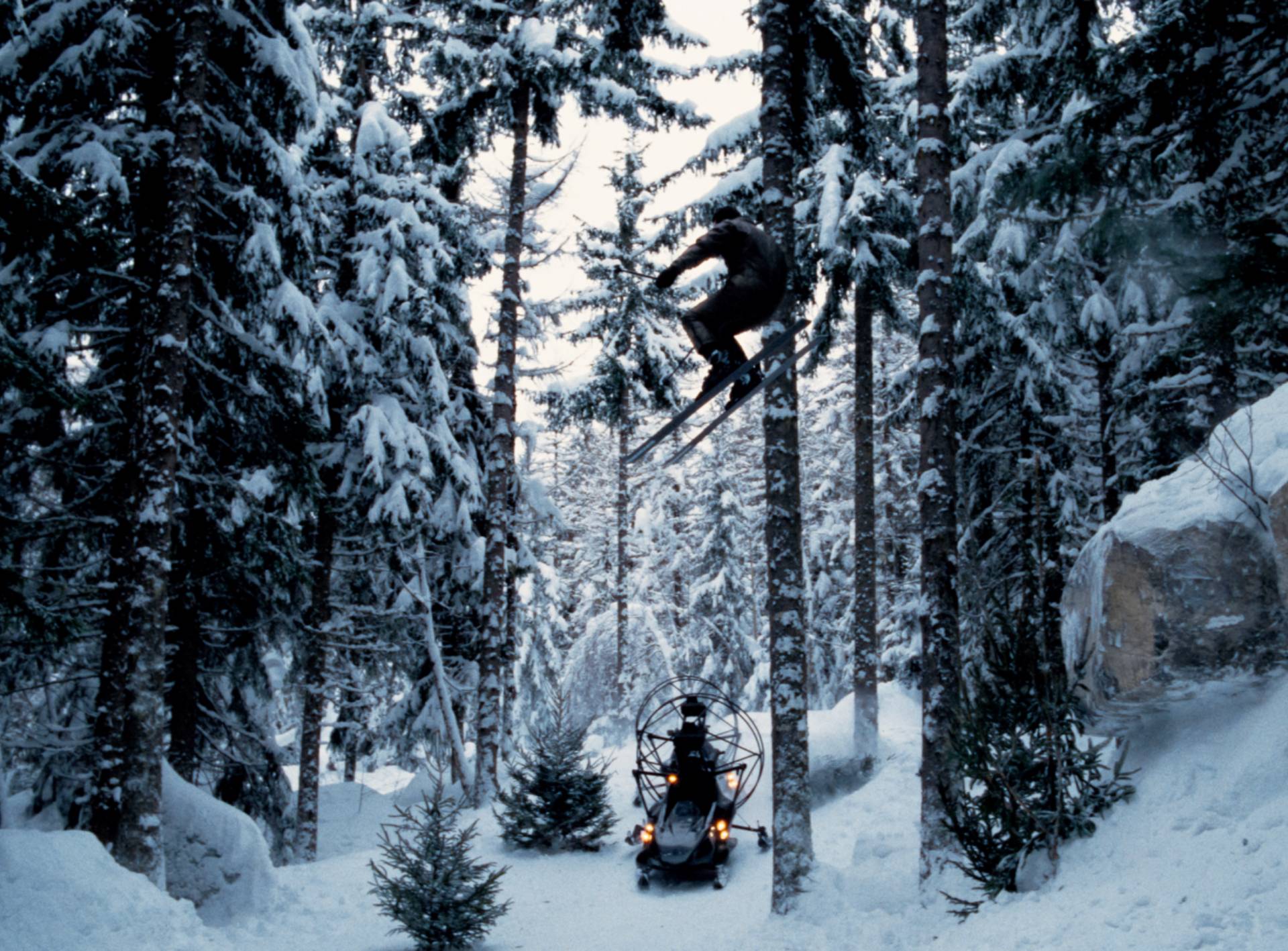
The shot: In the Caucasus Mountains, Bond and Elektra travel on skis to survey the King Industries pipeline. The pair come under attack by a band of assassins piloting parahawks (skidoos suspended from parachutes), which Bond manages to evade by causing them to crash into the landscape or each other. While expert skiers Stephane Dan, Yan Andre and Camille Jacroux doubled for Bond, the team also employed dummies to capture the sequence safely. 

BTS: The sequence is set in Azerbaijan but was actually shot in alpine woodlands in Chamonix, France. The set-piece was shot in four weeks by a 170 strong crew with the cameras tested in the British Airways refrigerator at Heathrow airport to make sure the equipment would work in freezing conditions.

SHE’S ELEKTRA 

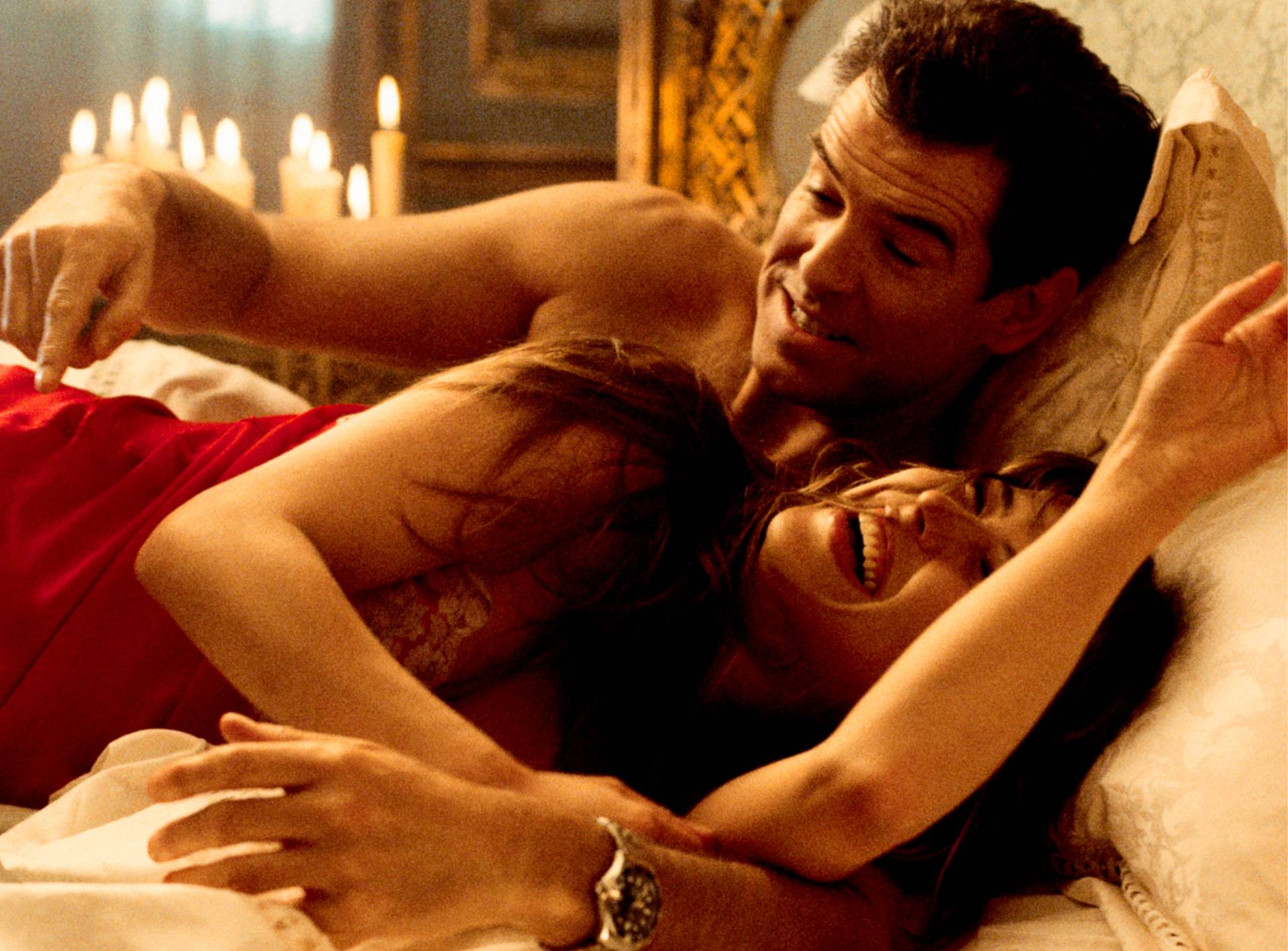
The Shot:  Captured on the villa bedroom set on Pinewood’s C Stage, Pierce Brosnan and Sophie Marceau share a lighter moment rehearsing an intimate scene between Bond and Elektra. 

BTS: “She’s a complex character because she has different faces,” said Marceau about Elektra. “She has a great power, because she owns the pipelines. She’s coming from a great family, so you have this image of a ‘boss woman.’ I think there’s a lot of softness and femininity about her as well, because otherwise Bond wouldn’t fall in love with her.”

CUNNING AS A FOX 

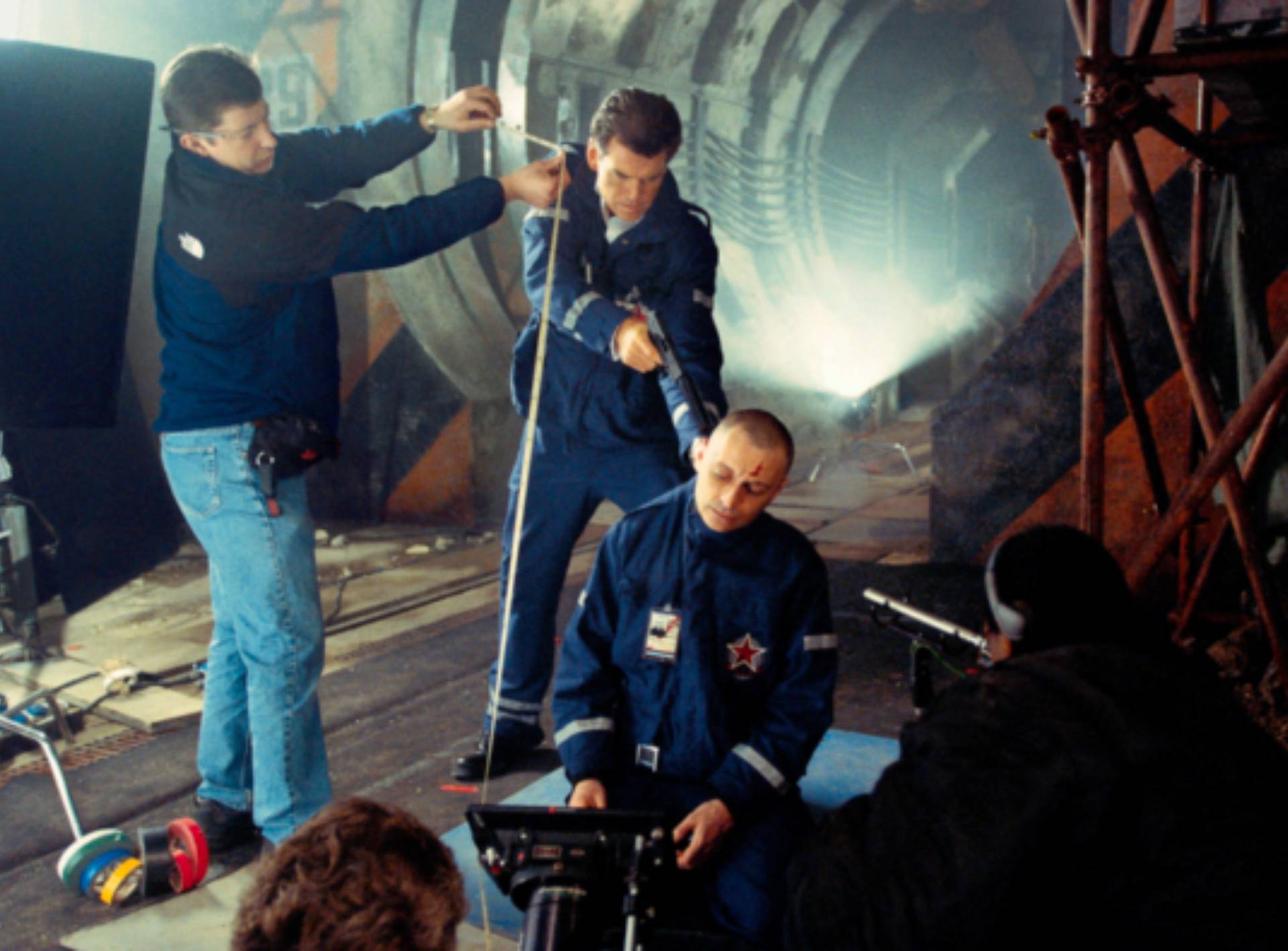
The shot: On the trail of Renard, a terrorist who is actually in league with Elektra King, Bond travels to a decrepit Kazakhstan underground nuclear weapons facility where warheads are dismantled. Here, the crew shoots the scene where 007 briefly captures and interrogates Renard who is stealing an active nuclear warhead.

BTS: “I wasn’t expecting it to be such a realistic portrayal of a terrorist,” said co-screenwriter Robert Wade. “The realism is because it’s Robert Carlyle, who’s very good at getting into the psychology of the outsider. I think that gave us a better terrorist than we could have hoped for.” Incidentally, Renard is the French word for ‘fox’.

KEEPING UP WITH THE JONES 

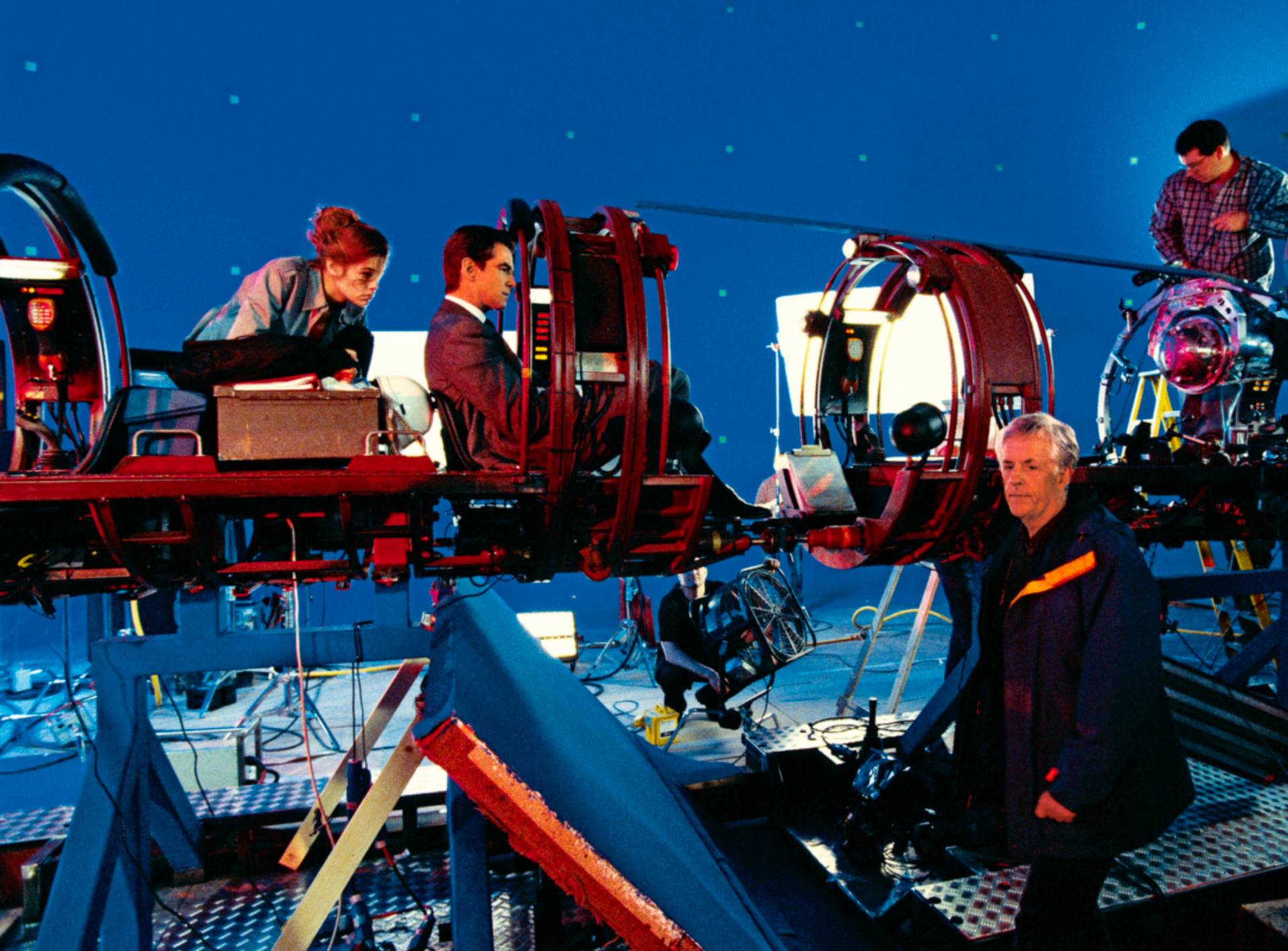
The shot: Renard plants a stolen warhead onto an inspection cart inside the pipeline with the aim of blowing it up, Here the crew shoot Bond and nuclear scientist Dr. Christmas Jones (Denise Richards) against bluescreen, speeding down the pipeline in another rig so the scientist can defuse the warhead. At the last minute, Bond suggests to let the explosive charge detonate giving the illusion the pair have died in the blast.

BTS:  Christmas Jones was named by screenwriters Neal Purvis and Robert Wade after Christmas Humphreys, the prosecutor in the Derek Bentley Case, which the pair had dramatised in their screenplay for Let Him Have It. She was initially conceived as Polynesian, an insurance investigator working for Lloyd’s of London’s South Seas Bureau on the same trail as Bond. The character’s profession was changed at the behest of the studio United Artists who had just greenlit The Thomas Crown Affair with Rene Russo as an insurance investigator opposite Pierce Brosnan’s master thief. Jones briefly became a bounty hunter before becoming a nuclear physicist working for the International Decommissioning Agency.

CAVIAR & CARNAGE 

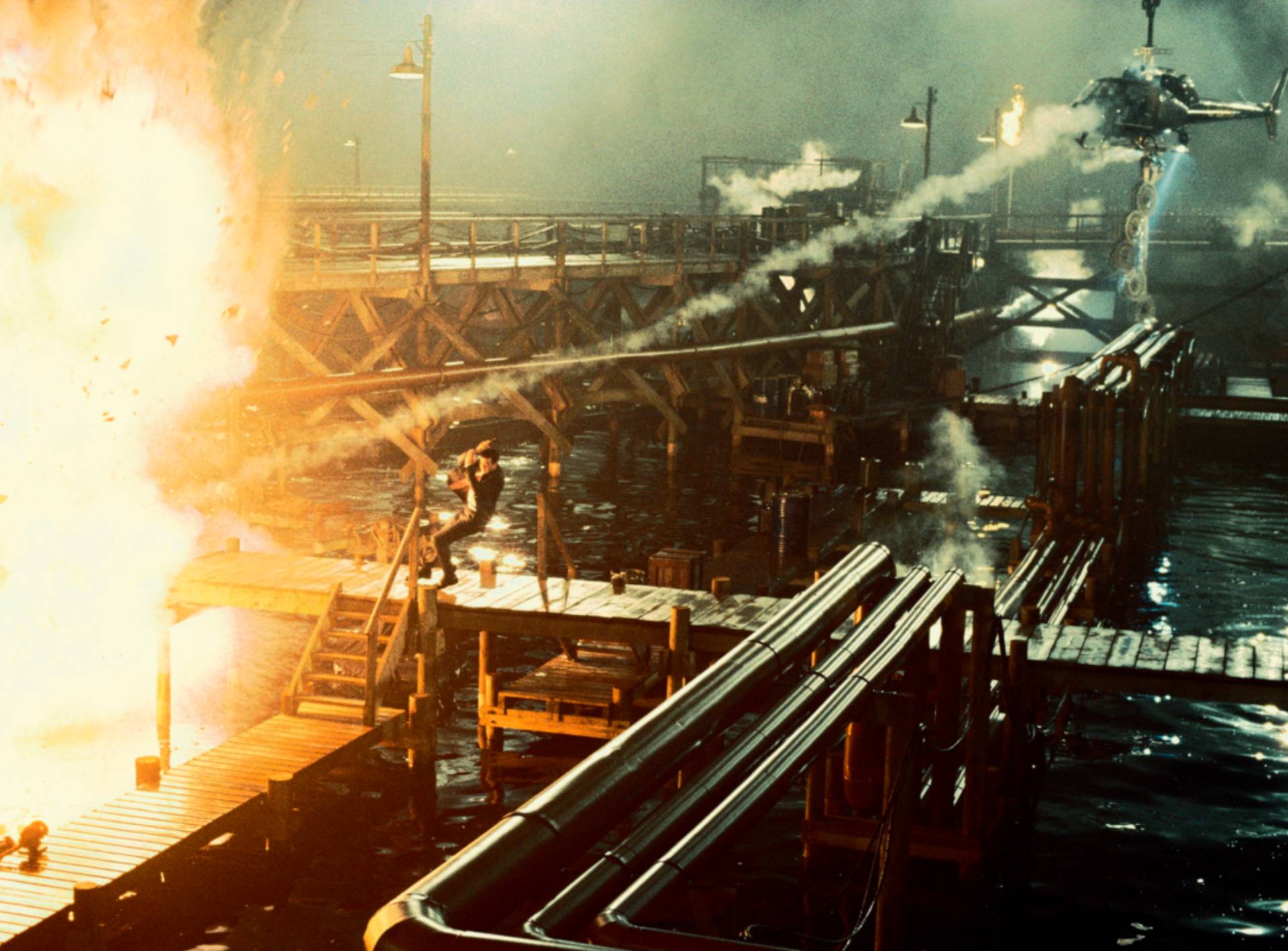
The Shot: Bond revisits his old rival Valentin Zukovsky (Robbie Coltrane) at his Caviar Fishery in Baku. The pair come under attack by Elektra King’s helicopters which are brandishing suspended circular saw blades. Bond destroys the choppers from missiles fired from his BMW then zip wires across the fishery, destroying the second helicopter by igniting leaking gas with a flare gun.

BTS: The buzz-saw helicopters were originally conceived to appear in GoldenEye. Zukovsky’s caviar factory was created on Pinewood’s paddock tank, which was doubled in size to accommodate the set. The scene was shot at night to help conceal the tank, adorned with several thousand fibre optics providing a glimmering backdrop. Designed by production designer Peter Lamont and constructed mainly out of timber (including 300 discarded telegraph poles), the intricate set was dubbed the ‘City of Walkways’. The scene was also enhanced with model work and CGI.

A LIGHTNING ROD 

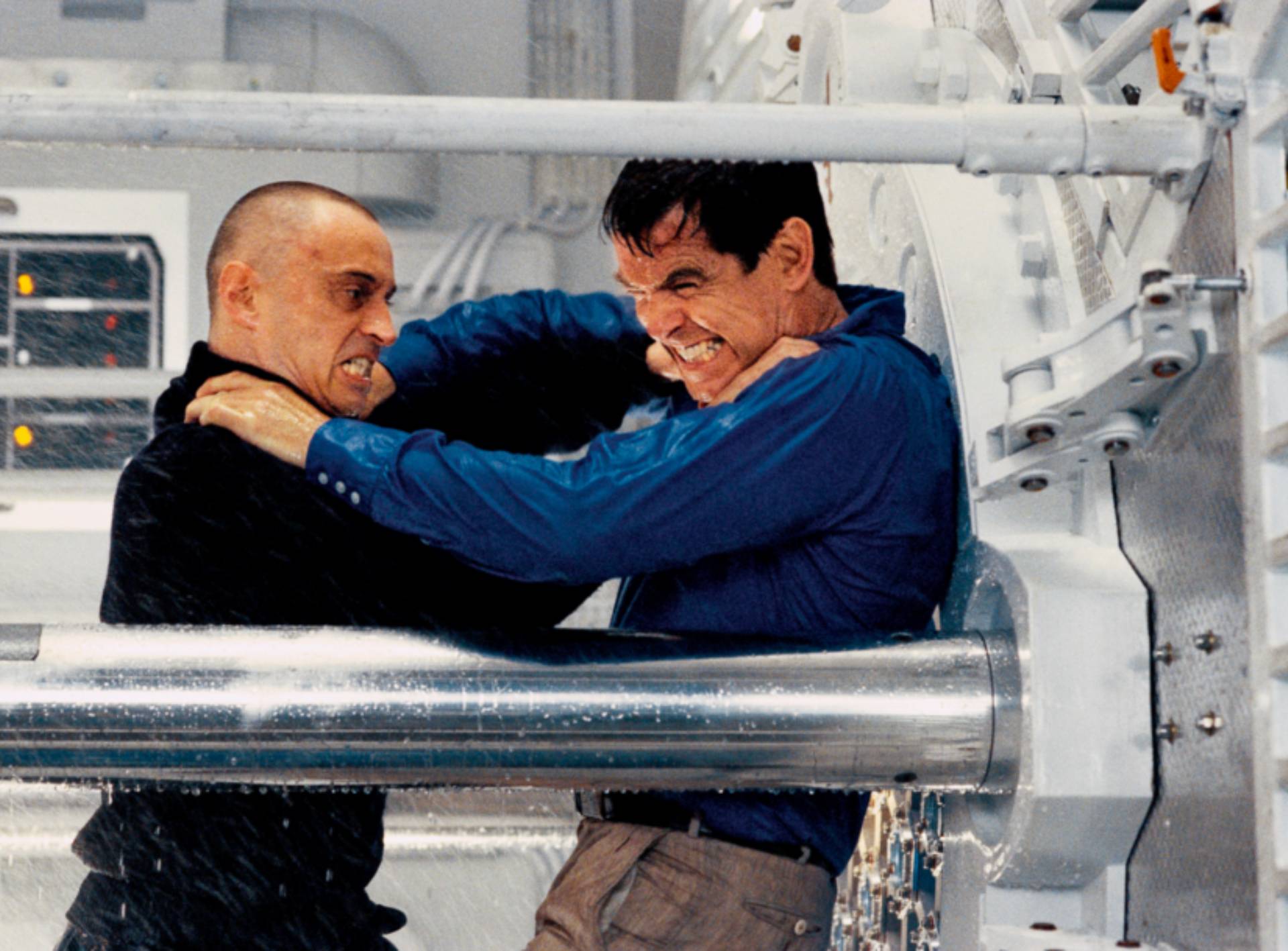
The Shot: Barely getting on board Renard’s stolen submarine before it dives, Bond’s attempts to get the vessel to the surface see it capsize and hit rock bottom causing a breach in the hull. As the sub starts to fill with water, Bond finds Renard inserting the plutonium into the reactor. A titanic tussle ensues, which ends when Bond activates the emergency ejection of the rod, which blasts directly into Renard. 

BTS: The submarine’s reactor room was built on A stage at Pinewood. The set was flooded by building whole set on a rig and lowering it into the tank. The exterior shots of the submarine were filmed with a 45-foot model over a five-week period one mile offshore from the Clarion Resort, New Providence in the Bahamas.

A TERRIFIC TEASER 

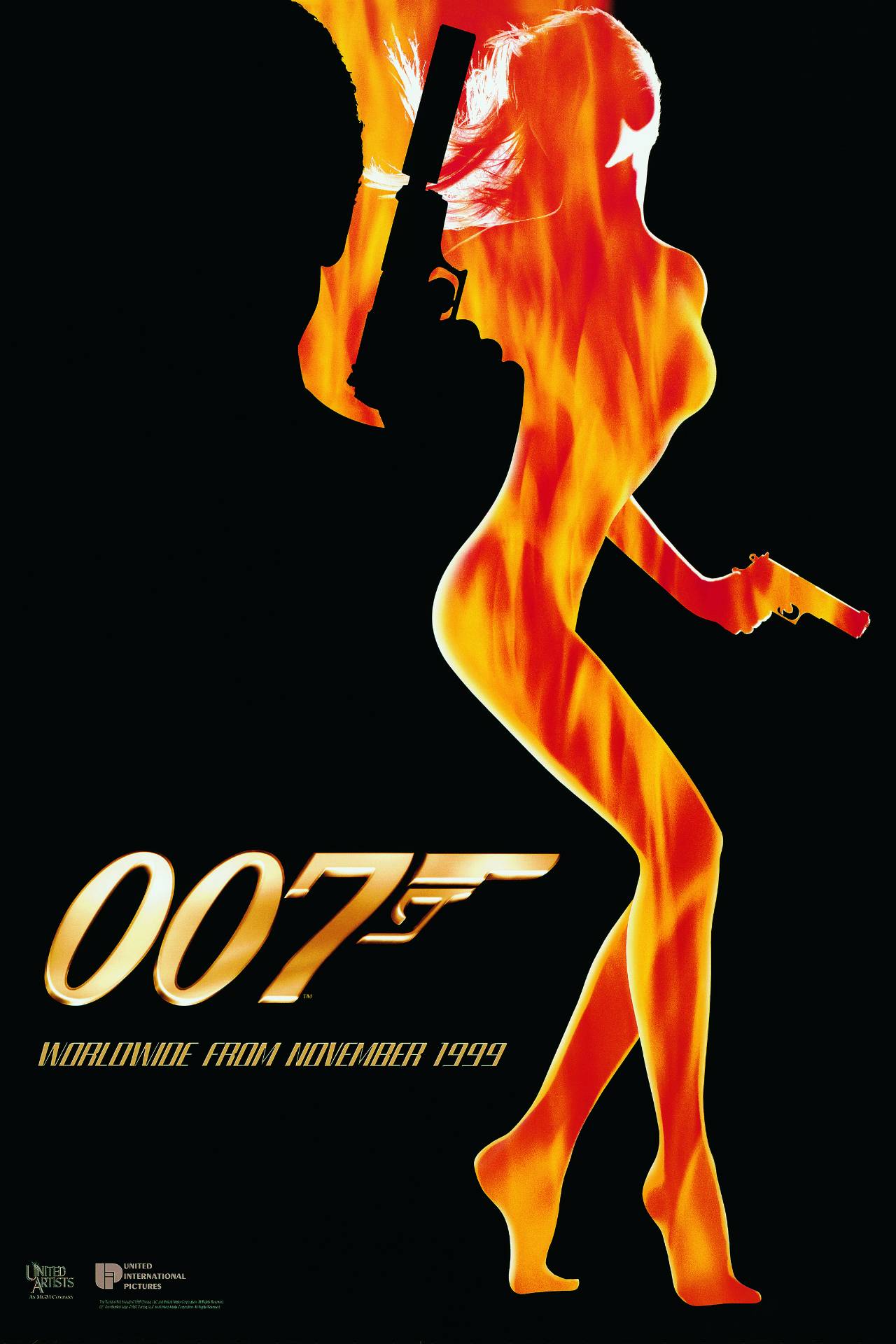
The shot: Designed by Diane Reynolds, the advance poster artwork played with classic Bond imagery, mirroring the iconic main title designs of Maurice Binder. The film premiered in Westwood, California on November 8 1999, eventually grossing over $350 million. 

BTS: In early drafts, the film was titled ‘Elektra’. The final title is a translation of the Latin phrase ‘Orbis non Sufficit.’ The name is Bond’s family motto and comes from On Her Majesty’s Secret Service

Model Behaviour

The adventures of James Bond are often larger than life but this often means starting small. Over its 25-film history, the series has used cutting-edge model work to create iconic vehicles, action and locales that would have been impossible to stage in the real world. Led by visual effects masters such as Derek Meddings, John Richardson and Chris Corbould, the 007 model units have applied attention to detail, artistry and imagination to make the fantastical seem simultaneously breathtaking and convincing. Here we pay tribute to some of the greatest miniatures in Bond’s history. 


The Avro Vulcan Bomber

As seen in: Thunderball (1965)

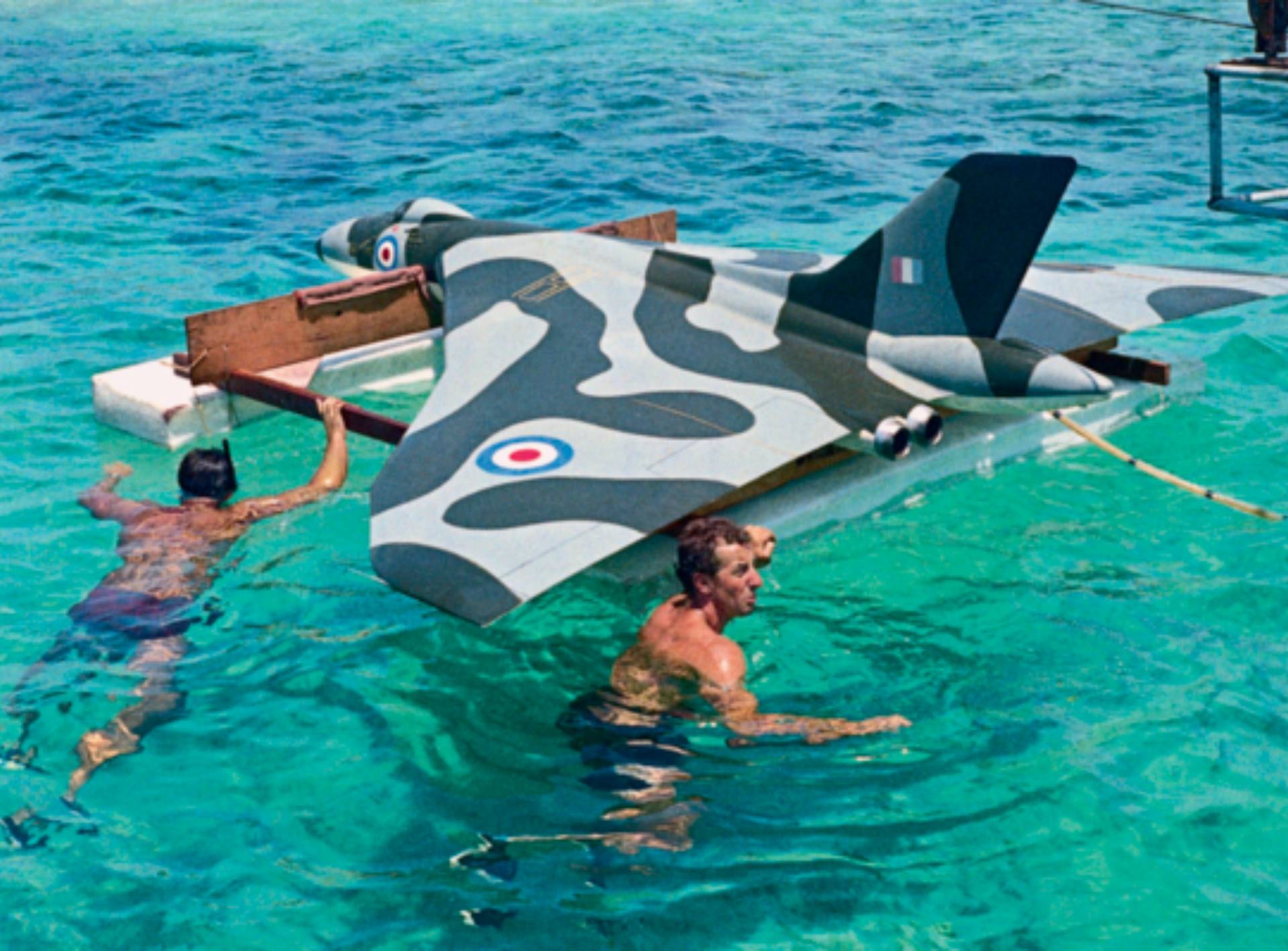
The miniature: A RAF-V-Force bomber carrying two atomic bombs is stolen by SPECTRE henchman Angelo Palazzi (Paul Stassino). The aircraft subsequently lands in the middle of the ocean near the Bahamas and is left on the seabed. 

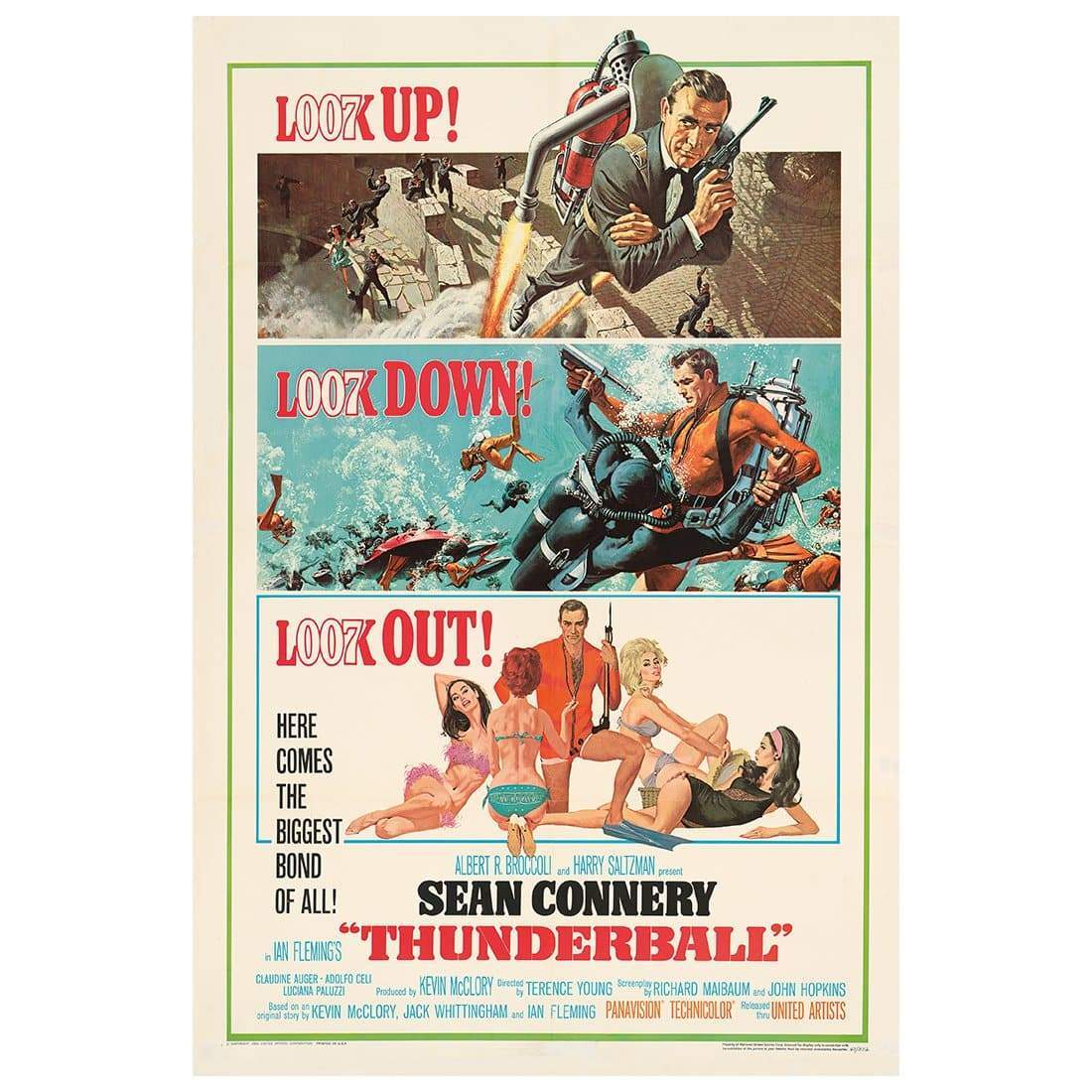
The magic:  A 13 ft model was built for the Vulcan landing on the water. The miniature was suspended under a skate which was rolled down wires between two towers. A second model was created for the Vulcan drifting down to the seabed — the shot was made hazardous by ever-present sharks circling the waters. The dicing with danger was worthwhile. Thunderball won an Academy Award for special effects, the first 007 film to win an Oscar.  

Bird 1

As seen in: You Only Live Twice (1967)

The miniature: Launched from Ernst Stavro Blofeld (Donald Pleasence)’s base hidden in a volcano, Bird 1 is a multi-stage rocket and space vehicle used to ensnare enemy spacecraft, capturing American and Soviet astronauts to manipulate a war between the two superpowers.

The magic:  The model work shoot on You Only Live Twice was started on January 12, 1967 at Pinewood and took eight weeks to complete. The models of the SPECTRE, American and Russian spacecraft were shot separately against black velvet and optically composited into the various shots.


The Lotus Esprit

As seen in: The Spy Who Loved Me (1977) 

The miniature: A white sports car that transformed into a submarine, fitted with Q Dept trickery such as depth charges, surface-to-air missiles and black dye (think Octopus ink) to blind underwater assailants.

The magic:  The special effects unit, led by Derek Meddings, started work in Nassau in August 1976. Shot by Lamar Boren, the miniature Lotus was moved around by ultra-thin wires. For the moment the Lotus goes underwater, the model was simply let go by a diver and captured as it floated down — the shot was repeated until the model descended at the correct angle. As well as the Lotus, the unit also created Karl Stromberg’s super tanker, the Liparus and his submersible base Atlantis.


Moonraker Space Shuttle

As seen in: Moonraker (1979)

The miniature: Launched from a secret Amazonian compound owned by billionaire industrialist Hugo Drax (Michael Lonsdale), the reusable spacecraft was used to ferry Drax’s master race to his space station. 

The magic:  The team were given access to Edwards Air Force base where the real shuttle was being fitted out with ceramic tiles. Based on actual shuttle designs, the largest shuttle model was 5 ft in length. Rather than front projection or the bluescreen techniques of Star Wars, Meddings decided to shoot elements on the same piece of film by shooting, rewinding the film, then filming different elements (a space shuttle, a starfield, the Earth). Filming of shuttles docking with Drax’s Space Station employed 48 passes on one piece of negative.

The take-off of the shuttles proved dangerous as magnesium flares were used to double the flame of the rocket thrusters. “We had to keep the shuttle on the move because the minute we stopped, there was a chance the magnesium flares would make the shuttles catch fire,” said Meddings.


The Latin American Hangar

As seen in: Octopussy (1983)

The miniature; As the film begins, Bond (Roger Moore)’s mission is to blow up a Latin American aeronautical supply base run by Colonel Toro (Ken Norris). 007 manoeuvres a lightweight single-seat jet into the bustling hangar, using the ground-to-air missiles on his tail to blow the building to smithereens. 

The magic: While the jet flying through the hangar was achieved through old school know-how — a plane mounted on a pole and driven by a car inside the hangar — the explosion could only be pulled off in miniature, the hangar recreated in a 1/8th scale model. 

“All of the sheets of corrugated tin that were on the hangar were made of plastic, fixed on individually, so that when the hangar blew, they’d all come off one-by-one,” said visual effects supervisor John Richardson. “Then we built a little model airfield around it, put the camera in a crane from Bond’s point of view, and shot it at about 120 frames per second. We put a series of explosions inside, so that it got bigger as it blew up. Quite an interesting bang, I thought.”

Janus Satellite Control Centre

As seen in: GoldenEye (1995)

The miniature: A secret satellite control and tracking centre located in Cuba. The huge communications disc is built into the ground and flooded while not in use, making it impossible to spot from the air or satellites. 

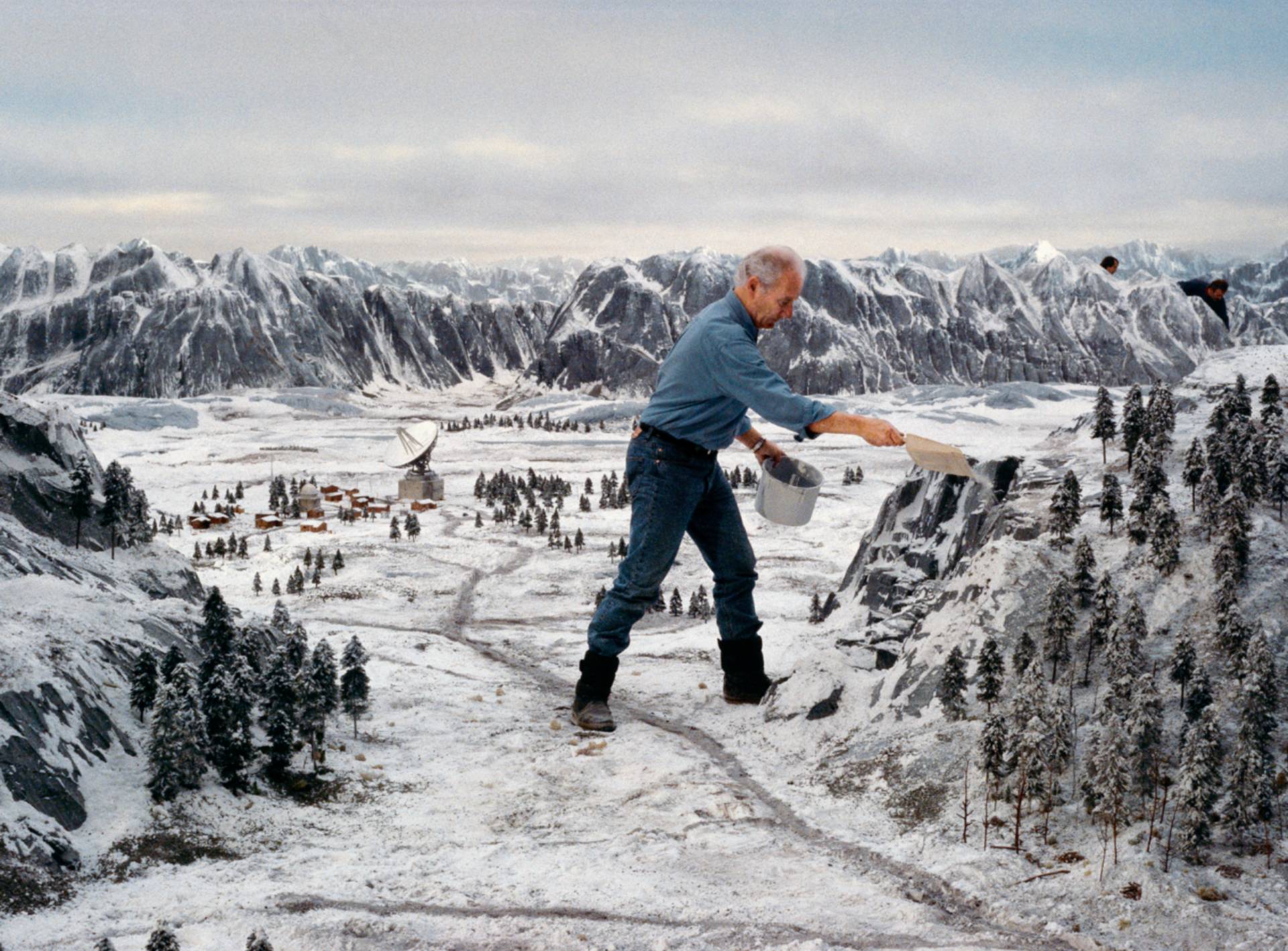
The magic: Inspired by the world’s largest spherical radar-radio telescope in Arecibo, Puerto Rico, a miniature model was created on the back lot of Leavesden. “The giant antenna and its rig had to rise out of a lake,” said special effects cameraman Paul Wilson. “The lake then had to empty to reveal the huge reflector dish. In reality it measures some 1000 ft across which itself was no mean task — the water having disappeared down a gigantic ‘plughole’ at the bottom of the antenna.” The gigantic size of the dish meant the 1/10 scale model measured 50ft across, the landscape surrounding the miniature running to 100ft across. GoldenEye proved to be the last film of special effects maestro Derek Meddings. 


Stealth Ship 

As seen in: Tomorrow Never Dies (1997)

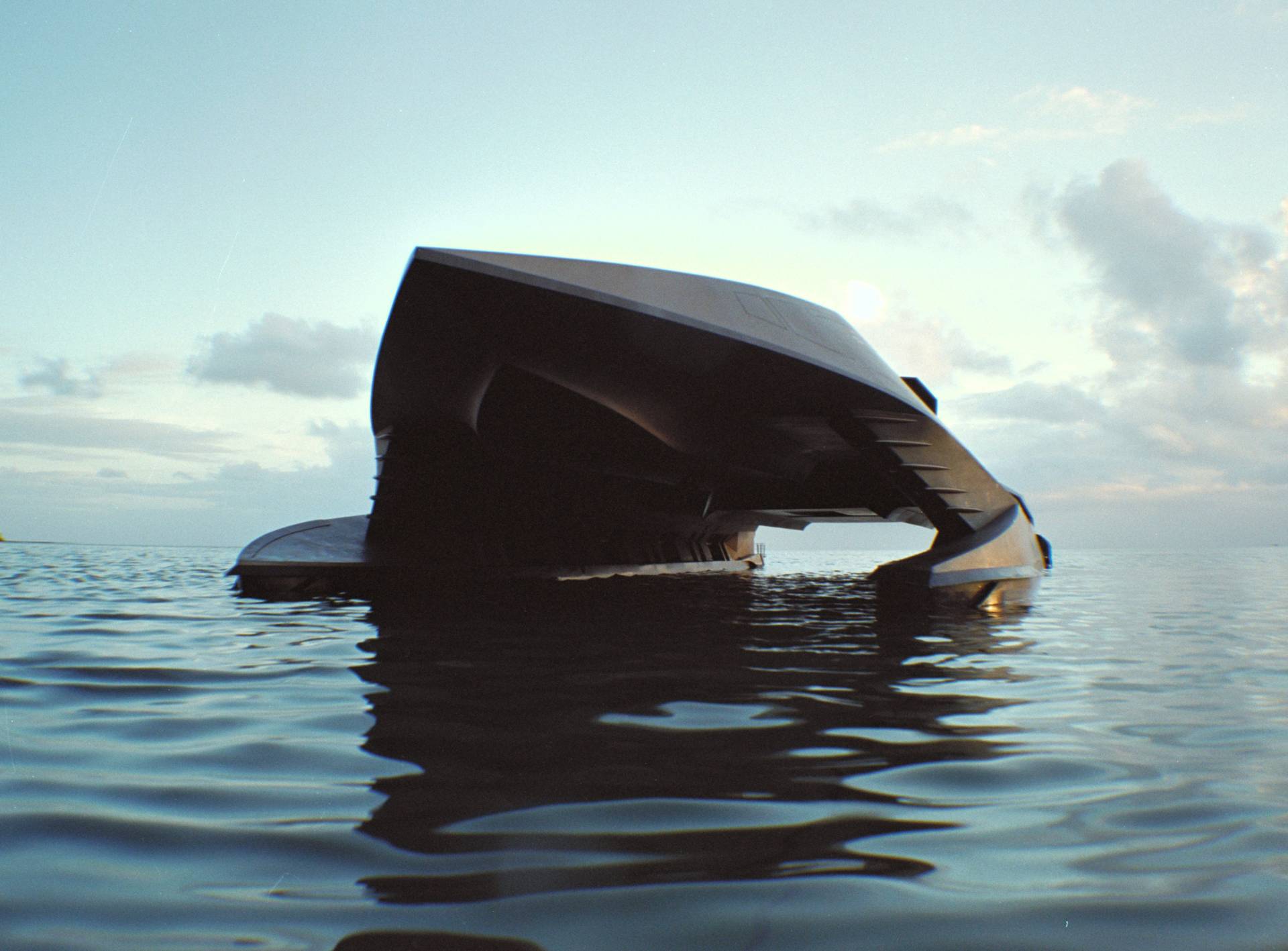
The miniature: A covert radar and sonar-resistant catamaran-style ship constructed by media baron Eliot Carver (Jonathan Pryce) in league with the People’s Republic of China. The vessel was instrumental in Carver’s plan to orchestrate a war between Britain and China. 

The magic:  The model work on Tomorrow Never Dies was shot over 39 days in Baja, Mexico using the same water tank as James Cameron’s Titanic. The stealth boat model was 30 ft long, weighed approximately three and a half tonnes and was photographed against miniature recreations of Phuket islands. The unit also created a model frigate measuring 55ft long that stood in for three different ships. “There was a sinking rig under the surface that controlled the ship and its angle,” recalled visual effects supervisor John Richardson. “Buoyancy tanks in the back of the ship controlled the rate the ship sank and how much water was let in. The bow of the ship tipped up, as it would do in real life, and we used the rig to let it slip beneath the waves.”

The Venetian Villa

As seen in: Casino Royale (2006)

The miniature:  Bond (Daniel Craig) chases Vesper Lynd (Eva Green) through the streets of Venice, Lynd ducking into a villa under renovation. As a gunfight ensues, 007 shoots and punctures the flotation bags that hold the building above water level, causing the house to sink, with Vesper locked inside an old elevator.

The magic:  A model of the villa was created at Pinewood in the studio’s 800,000-gallon outdoor Paddock Tank. The villa miniature was mounted on a gimbal powered by hydraulics, which tilted 15 degrees in four directions. “The miniature was about 26 feet tall,” said visual effects supervisor Chris Corbould. “It was a pretty big miniature, all controlled by computerised hydraulics. We could program it and repeat it ad infinitum.” The model was shot against bluescreen to allow CG elements to be added in, including spray, smoke and flying birds. 

The Snowy Spectacle Of Spectre

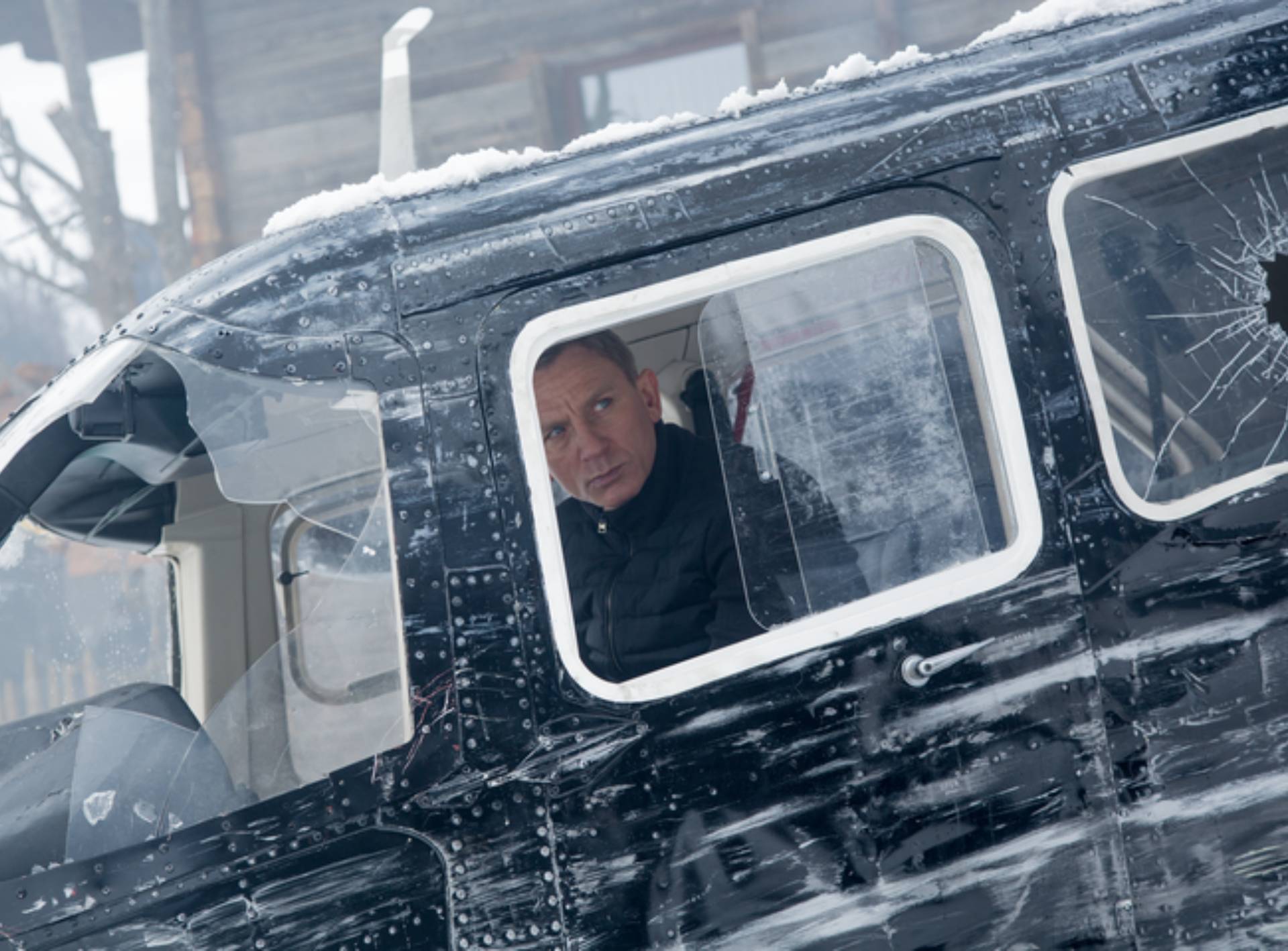
Within all the globetrotting adventures in Spectre — Mexico, Rome, Tangier, London — the Alpine sequences in Austria remain among the most exciting. Searching for Madeleine Swann (Léa Seydoux), the daughter of Mr. White (Jesper Christensen), James Bond (Daniel Craig) tracks her down working as a psychologist in the secluded Hoffler Klinik in Altaussee. When she is kidnapped by SPECTRE operative Hinx (Dave Bautista), Bond gives chase in a Britten-Norman BN-2 Islander monoplane, crashing into the Range Rover convoy and rescuing an irate Madeleine.

The sequence was a throwback to classic 007 snowbound sequences in On Her Majesty’s Secret Service and The Spy Who Loved Me but with a unique twist — unlike George Lazenby or Roger Moore, Daniel Craig was a reluctant skier, forcing the filmmakers to get creative.

“The issue was trying to find a way to be part of the snow sequence without putting him [Craig] on skis,” observed director Sam Mendes. “For a while it was a skidoo sequence but then we had the idea of the plane and that took over.”

The job of realising the snowy spectacle fell to second unit director Alexander Witt, who had previously worked on Casino Royale and Skyfall. Before Witt’s second unit got to work, the main unit shot Hinx kidnapping Swann.

“The altitude was so high and oxygen levels were so low that the scene was a lot trickier than it appears on film,” remembered Bautista.

The crew spent a further two days shooting Bond emerging from the plane wreckage and rescuing Swann. It was here that Witt’s team took over, spending a further five weeks shooting Bond’s plane in pursuit of Hinx’s convoy. Key to the aesthetic was Witt recreating the visual schema established by the main unit.

“Hoyte (Van Hoytema, cinematographer) gave a particular look for each country,” explained Witt. “For Austria we tried to do everything in the shade, so that it has a black-and-white look. The problem was that we had too much sun. We would shoot in the morning when it was overcast, then rehearse in the middle of the day when it was sunny, then maybe get some shots in the evening just after the sun went down.”

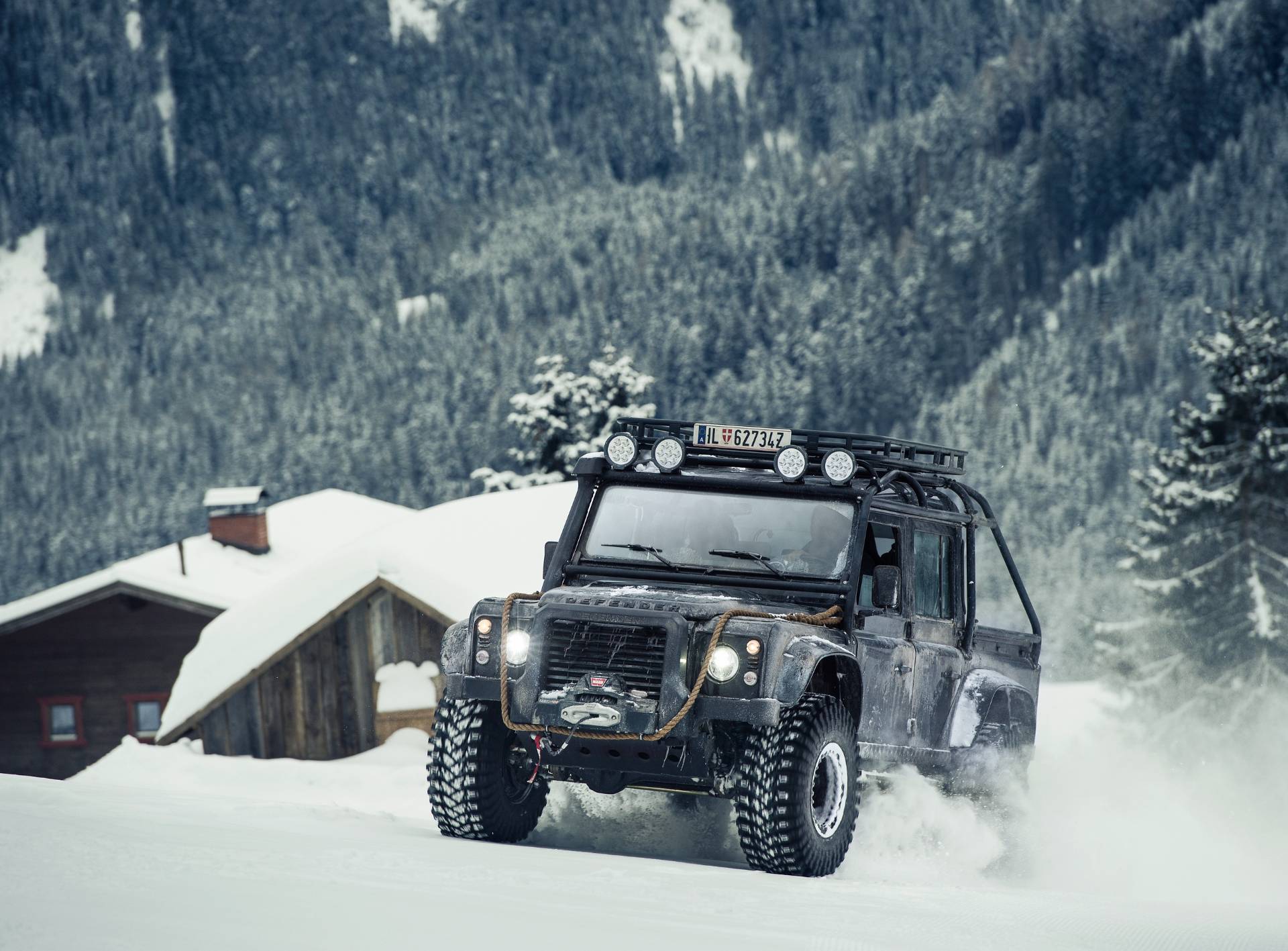
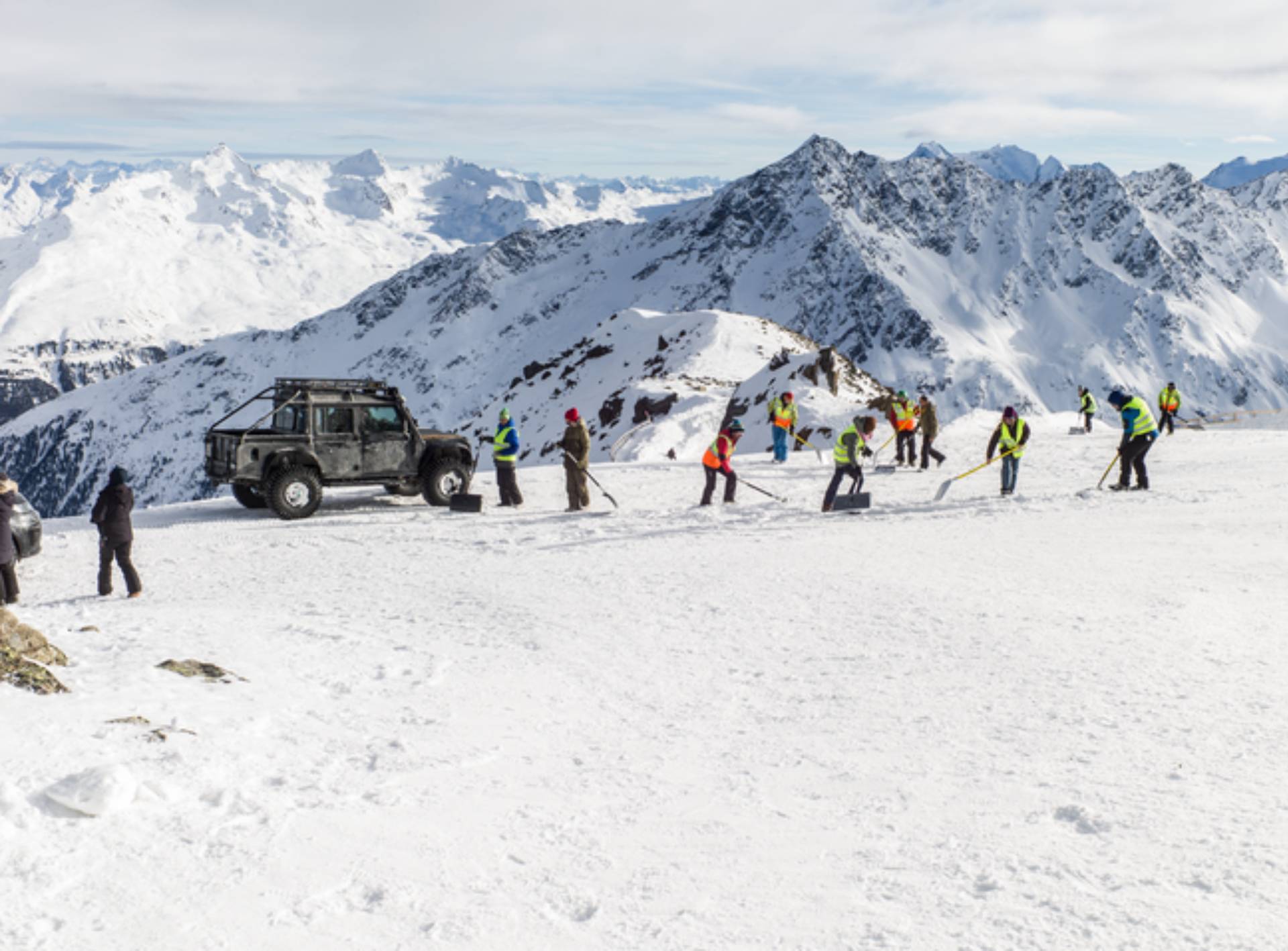
To shoot Bond’s plane following the cars along a treacherous mountain road, the unit moved to the Rettenbach Glacier, where once again the weather played havoc with the shoot.

“In the morning the roads would be ice, it’d warm up by 10-6 degrees, and in the afternoon it’d go cold again,” said stunt coordinator Gary Powell. “We could do a run down, drive back up again, and the road could have turned to ice. We could go again, but we had to make sure there were studs in the tires, and we modified our driving.”

At a key point in the action, Hinx’s motorcade is speeding along a forest track when Bond heads directly toward them, daring the antagonists to flinch. To accomplish this in a safe, controlled manner, special effects supervisor Chris Corbould employed a similar method to the one used on Thunderball to land the miniature Vulcan smoothly on the water but on a much larger scale: a full-sized plane was suspended from a wire running between two giant cranes set at either end of the roadway. But, for Spectre, Corbould received some digital assistance to remove the various rigs and wires.

In all, Corbould and his special effects team used eight different planes for different sections of the chase; two for flying, two for work on the rig and another four, which were just shells that concealed hidden skidoos that could be used for the aircraft tobogganing down the mountainside, through a barn and careering into the convoy. It’s a fitting finale to a spectacular sequence.

The Snowbound Set-Pieces Of On Her Majesty’s Secret Service

The most Christmassy James Bond film to date, On Her Majesty’s Secret Service (1969), directed by Peter Hunt, spends most of its running time in stunning Alpine locations. 

Introducing George Lazenby as 007, the plot sees Bond travel to Switzerland to foil Blofeld’s (Telly Savalas) plan to blackmail world powers by using brainwashed women to act as his covert agents of biological warfare. The story became a spectacular showcase for alpine action, a series of sequences that stretched the cast and crew to the limit.

“I was supposed to be up there for three weeks and I stayed for three months,” remembered ski cameraman Willy Bogner, “so it was a great adventure.”

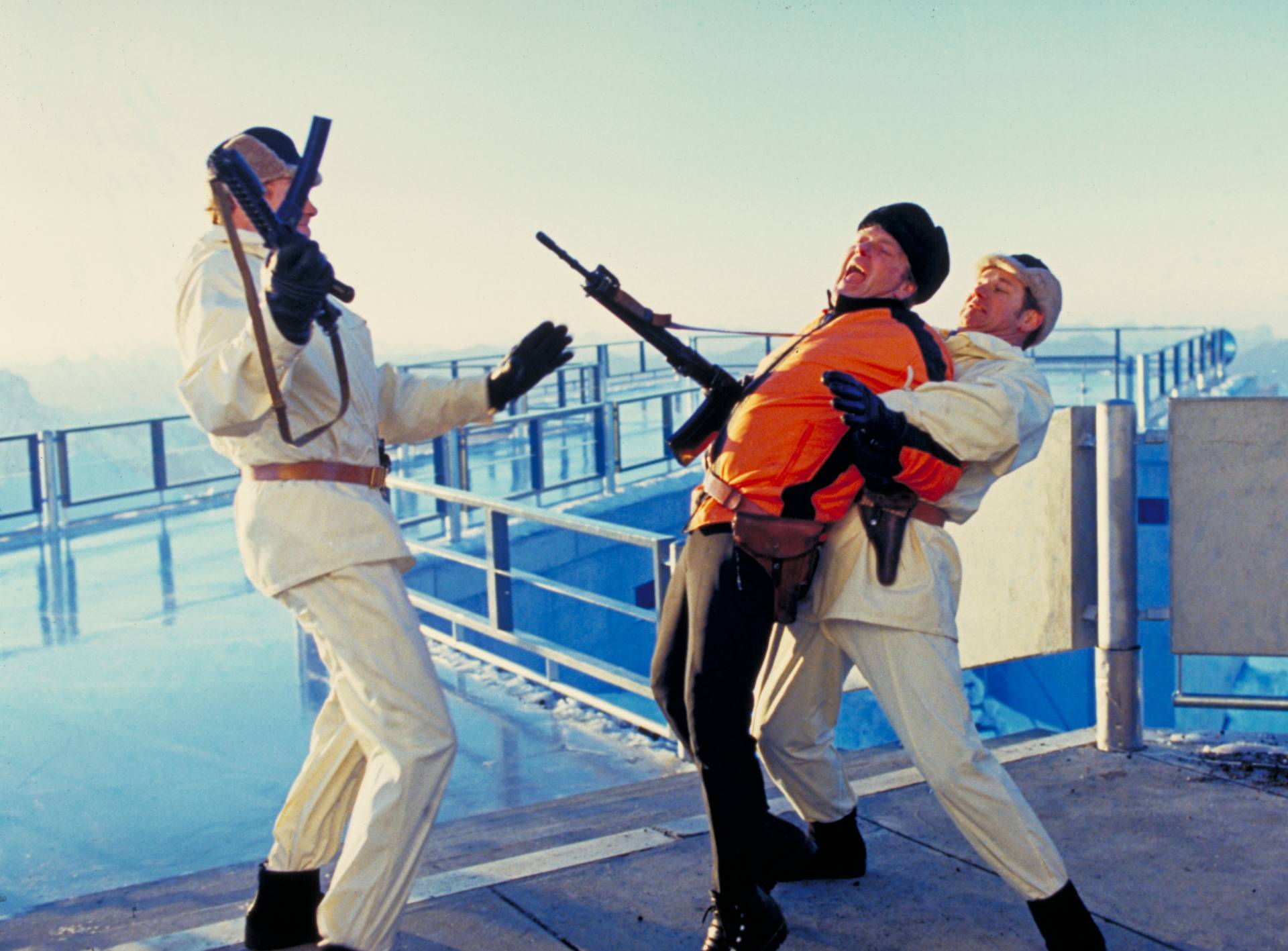
In 1968, Cubby Broccoli and Harry Saltzman began an intensive location search to find Piz Gloria, Blofeld’s mountaintop stronghold in the Alps. After recces around Europe, including France, production manager Hubert Fröhlich discovered a half-completed restaurant only reachable by cable car being constructed on top of the Schilthorn mountain above the village of Mürren in Switzerland. Yet, before the production could move forward, the team had to overcome mountains of bureaucratic red tape. 

“The Swiss government turned it down initially because it would spoil the look,” said production designer Syd Cain. “I said, ‘If I build a helipad there you can use it afterwards for mountain rescue.’ So, we were allowed to go ahead and build it.”

Constructing the set in such a remote location proved a logistical challenge. Only accessible by a limited number of cable cars, the production had to wait until the daytime skiers had finished before transporting crushed rock and timber up the mountainside at night. Concrete was flown in by helicopter and poured with anti-freeze in the mixture to stop it from freezing. To power heavy-duty lights, a 20,000 amp generator was dismantled, taken up in pieces and then reassembled at the mountain top.

Director Peter Hunt and screenwriter Richard Maibaum arrived in Mürren to incorporate possibilities suggested by the location into the story. The screenplay had originally ended with a showdown on a cable car, but the idea was jettisoned after a similar sequence appeared in Where Eagles Dare. Retooling the script, Maibaum added a sequence of Bond escaping from a cable car wheelhouse on an icy cable, Bond and Countess Tracy di Vicenzo (Diana Rigg) getting caught up in a stock car race and Bond chasing Blofeld down a bob run.

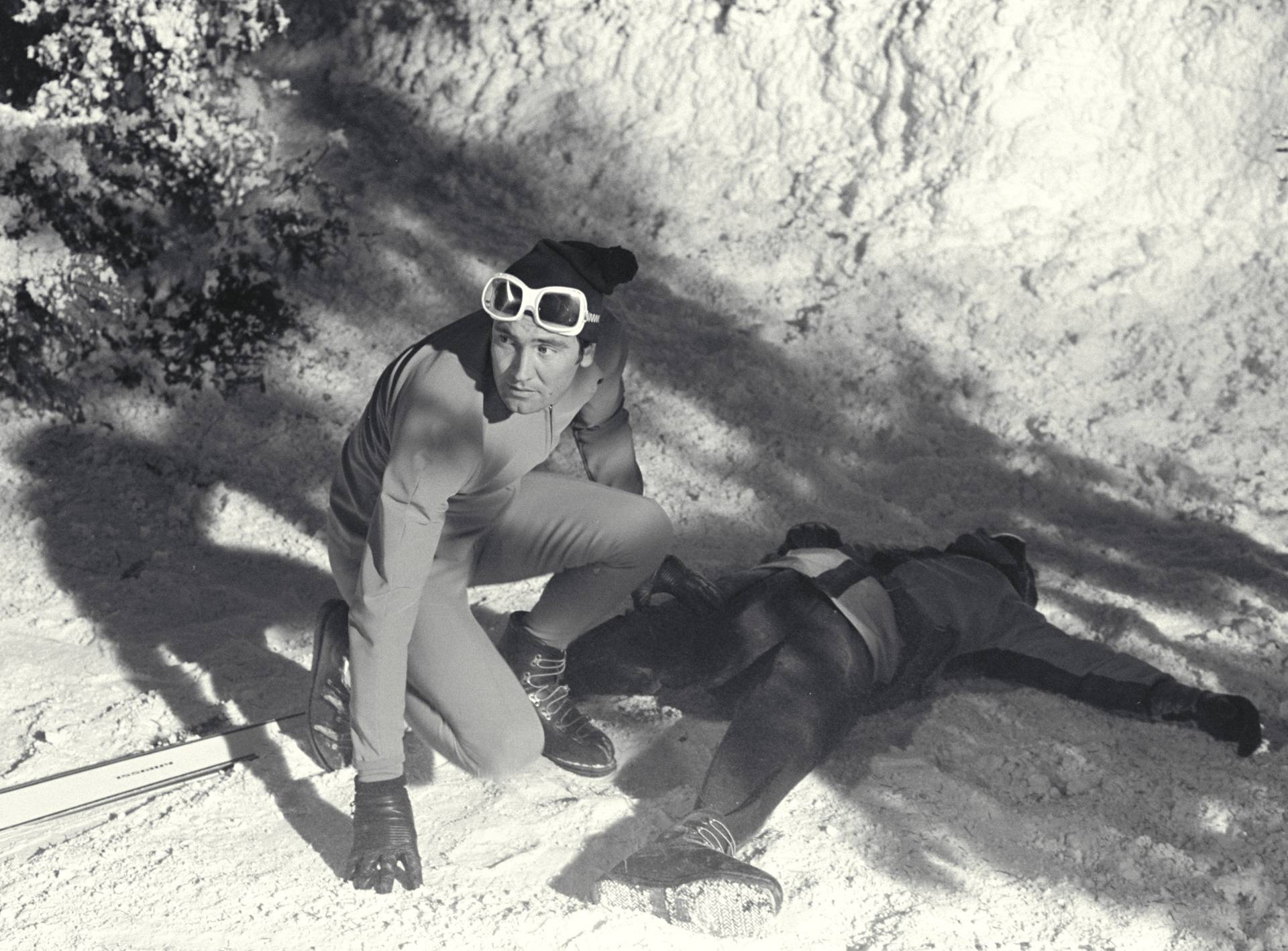
As the first unit started filming at Piz Gloria, a second unit shot the two ski chase sequences as Bond, then Bond and Tracy are pursued down the mountain by Blofeld’s henchman.

“The job was to make a really exciting ski chase,” recalled Bogner. “I had made Skifascination, where we experimented with different techniques like skiing with the camera in your hands at around 60 to 70 miles per hour. I wanted to get the feeling over to the public how it is to be on the racecourse.”

While the reset time between takes meant sometimes only two runs were possible during the day. The shoot was hit by bad conditions — a helicopter broke down — and injurious setbacks: stuntman Joe Powell and Eddie Stacey fell performing a jump, tore ligaments and were taken by sled and helicopter to the hospital. Yet the obstacles didn’t dampen the team’s creativity. Bogner’s skill on skis meant he could handhold the camera, pan, film through his legs and even ski backwards. 

Other portions of the ski chase were captured by aerial cameraman Johnny Jordan, who was hanging from a parachute harness suspended under a helicopter.

“He had a virtually unobstructed 360-degree view,” recalled 2nd unit cinematographer Robin Browne. “He could be really close on skiers, then pull away and just leave them as small specks going off into the distance. It was remarkable; they were shots I don’t think had ever been achieved before.”

“I asked him, ‘What did it feel like to be hanging from there?’” recalled Peter Hunt. “He said, ‘I feel like God.’”

Following the mountainside mayhem, Bond meets Tracy in the village of Lauterbrunnen, where the couple come under attack from Blofeld’s operatives led by Irma Bunt (Ilse Steppat) in a furious car chase. To evade their assailants, Bond and Tracy swerve into a stock car race on ice. 

The sequence was inspired by Hunt and his team witnessing drivers racing on ice during a location recce. Mild weather would thaw out the race track, causing delays while the crew waited for it to re-freeze. Art Director Bob Laing needed 12 stitches after he slipped and fell, while another crew member broke a hip. But things got even more dangerous during the race itself. Stunt driver Eddie Stacey broke some ribs while overturning Irma Bunt’s Mercedes. Steel studs were attached to the car tyres, but later removed to allow the cars to slip and skid. 

“The whole idea sounds pretty terrifying but once you get in that car it doesn’t matter how much you damage the car,” said Peter Hunt. “You’re going to skid and fly all over the place. You enjoy it. Diana Rigg said it felt so good not having to worry that you’re skidding into someone or banging anyone. It’s a bit like the dodgems at a fair.”

Bond escapes Blofeld’s clutches — Tracy is captured — and leads a helicopter assault on Piz Gloria. The mountain HQ is destroyed, but Blofeld escapes in a bobsleigh with Bond on his tail. Scouting in Mürren, the team came across an abandoned bobsleigh run, discontinued for being too dangerous. The sequence was sketchily described in the script and built up by the second unit led by director John Glen. 

“We did have accidents on the bob run,” admitted Glen about putting the sequence together. “One is where Bond comes out of the bob and instead of crashing he just slid down the wall. I spoke to Peter Hunt that evening and rewrote the action script to incorporate accidents like that. I wasn’t looking for accidents, but when they happened, they were so spectacular that they had to be incorporated in the story.”

One unforeseen accident involved former bobsleigh world champion Franz Kapus hurtling toward another bob, carrying cameraman Johnny Jordan, capturing footage for front projection. As the bobs tried to avoid each other, Kapus was caught with a glancing blow, left badly bruised and taken to hospital. Later, Jordan created a flicker book out of his footage of the accident and presented it to the convalescing Kapus. “Franz would sit in the bar showing people his flicker book — which illustrated just how lucky he was,” recalled Robin Browne.

As someone once quipped, this never happened to the other fella. 

The Action Of Tomorrow Never Dies

Released on December 12, 1997, Tomorrow Never Dies, Pierce Brosnan’s second adventure as 007, sees Bond investigate media mogul Elliot Carver (Jonathan Pryce), who is intent on manipulating a war between China and the UK. Jumping from Russia to Germany to Vietnam to the South China Seas, the film delivers exhilarating set-pieces involving jet fighters, remote control cars, a heavy-duty motorcycle and a stealth ship that find fresh new ways to reinvent action staples. Here’s how the creative team put us on the edge of our seats — and ensured we stayed there.


THE PRE-CREDIT SEQUENCE

The Sequence: Bond is sent by MI6 to scout a terrorist arms bazaar on the Russian border. Despite M (Judi Dench)’s protestations that 007 has not completed his reconnaissance, the Royal Navy frigate HMS Chester fires a missile at the bazaar. Bond discovers the terrorists have a Soviet military jet armed with two nuclear torpedoes. To avert an environmental disaster, Bond steals the jet with the torpedoes, escapes the explosion and dogfights with another jet before heading back to base.

BTS: The sequence was shot in January 1997 at Balcons de Peyresourde in the French Pyrenees. Combining the talents of 2nd Unit Director Vic Armstrong, special effects supervisor Chris Corbould, stunt co-ordinator Dickie Beer and the aerial team led by Marc Wolff, the sequence was captured over 3 weeks.

Expert Witness: “It all culminated in the cruise-missile explosion, which was huge. It involved 100 gallons of gasoline and about 30 pounds of dynamite. In reality, there are about 30 small explosions going into one huge explosion… We blew up a missile launcher, a helicopter and a truck. A jeep went up in a big bowl of flame. Vic was very particular about not seeing it there after the explosion — a total demolition job.” (Special effects supervisor Chris Corbould)

CAR-PARK CARNAGE

The Sequence: Bond travels to Hamburg to investigate Carver. He comes under attack by Carver’s men in a multi-storey car park, escaping in his gadget-laden BMW 750iL, which he drives via remote control. 

BTS: With the Brent Cross Shopping Centre doubling for the car park at Carver’s Hamburg printing plant, the sequence utilised 17 BMW 750iLs in Aspen Silver, four of which were adapted to facilitate a hidden driver to create the illusion that the car was being driven by Bond on his phone.

Expert Witness: “The car chase is only two minutes and ten seconds of film but it required five months of work for six guys and we ended up shooting the sequence for three weeks.” (Special effects crew member Nick Finlayson)


A DEATH-DEFYING LEAP

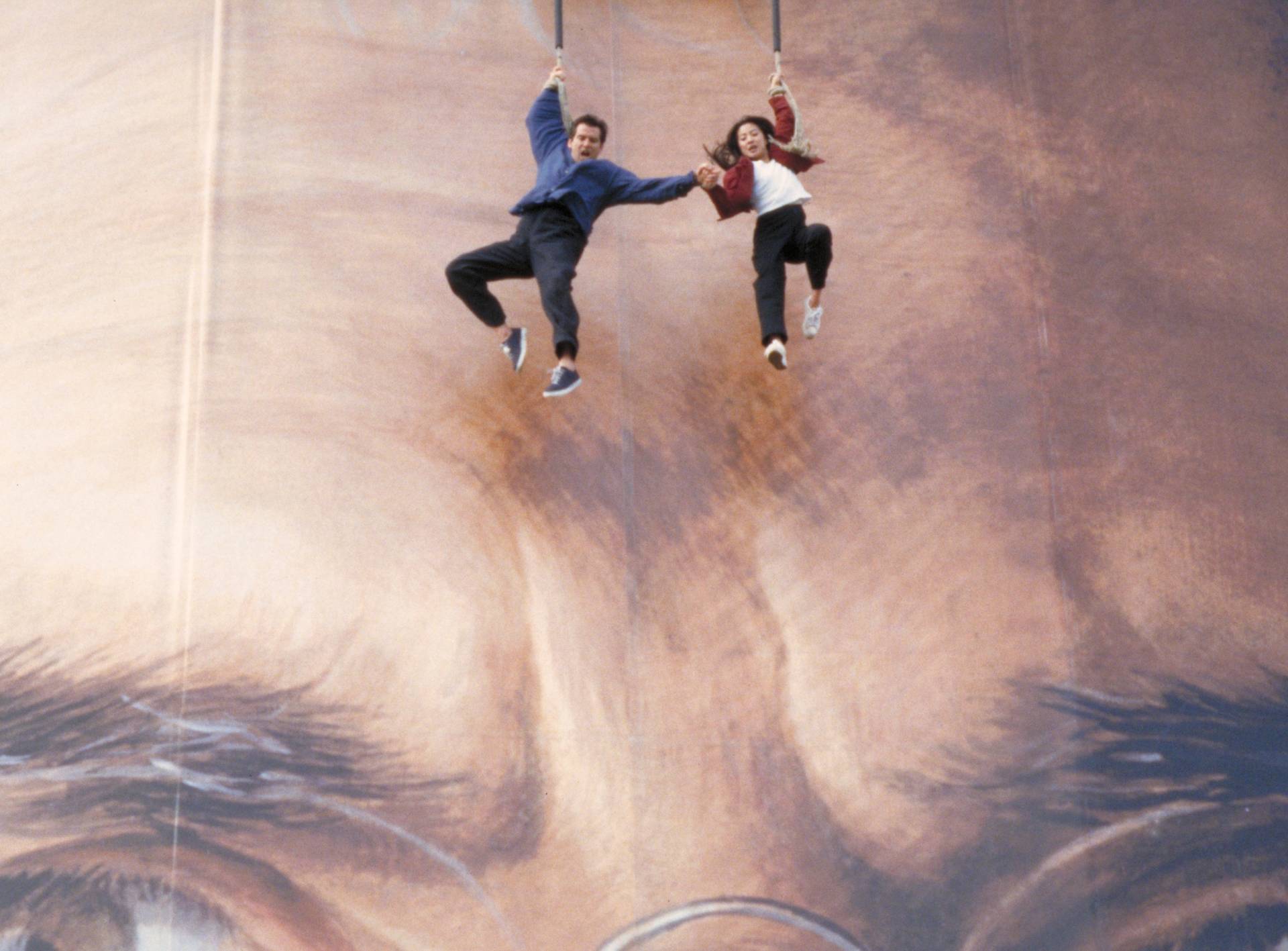
The Sequence: Bond and Chinese secret agent Wai Lin (Michelle Yeoh) are captured by Carver’s henchman Stamper (Götz Otto) and are taken to the media baron’s high-rise HQ in Ho Chi Minh City. After Carver explains his plan to kickstart global conflict, Bond and Wai Lin double-team to cause chaos and make their escape by jumping out of the window and plummeting down on ropes attached to a giant banner of Carver’s face.

BTS: On location in Hong Kong, Armstrong recalled huge banners attached to the sides of skyscrapers that reminded him of Michael Curtiz’s 1935 film Captain Blood, which saw Errol Flynn sliding down a ship’s sail by sticking a knife in it. Mark Southworth and Vic Armstrong’s wife, Wendy Leech, were the stunt doubles for 007 and Wai Lin, who abseiled down 43 stories of the Sinn Sathorn Tower. For close-ups of Pierce Brosnan and Michelle Yeoh, a five-storey mock-up of the building and banner was created at Frogmore Studios.

Expert Witness: “The wind was the unknown factor here. The rainy season would soon be with us and a gust of wind could have slammed us into the side of the building.” (Stunt performer Mark Southworth)

BIKE VS HELICOPTER

The sequence: Escaping from Carver’s clutches, Bond and Wai Lin, both handcuffed together, flee on a motorbike in a furious flight across the city. It becomes a cat and mouse game between the pair on two wheels and Carver’s helicopter, Bond at one point leaping over the rotor blades of the hovering chopper. The duel is brought to the end when Bond slides the bike under the ‘copter and uses a washing line to tie up the rotors, causing the vehicle to crash into a building.

BTS: The sequence was shot partly in Thailand and partly in Frogmore studios, with narrow, bustling streets recreated on the backlot. For the breath-taking moment Bond leaps the BMW R1200C Cruiser over the helicopter, stuntman Jean-Pierre Goy accelerated the bike from 0 to 62 mph in 5.8 seconds and rode off a 45ft ramp, accompanied by a dummy doubling for Wai Lin strapped to his back. The whirring blades of the helicopter were added digitally in post-production.

Expert Witness: “With the bike chase, I didn’t want to resort to the standard use of a motocross bike, which is convenient for jumps and tricks. Instead, we went for the biggest, heaviest and most unwieldy bike — the BMW R1200C Cruiser — and I built the chase around it. That’s what I wanted: to display its power and weight.” (Second unit director Vic Armstrong)


THE BICYCLE-SHOP BATTLE 

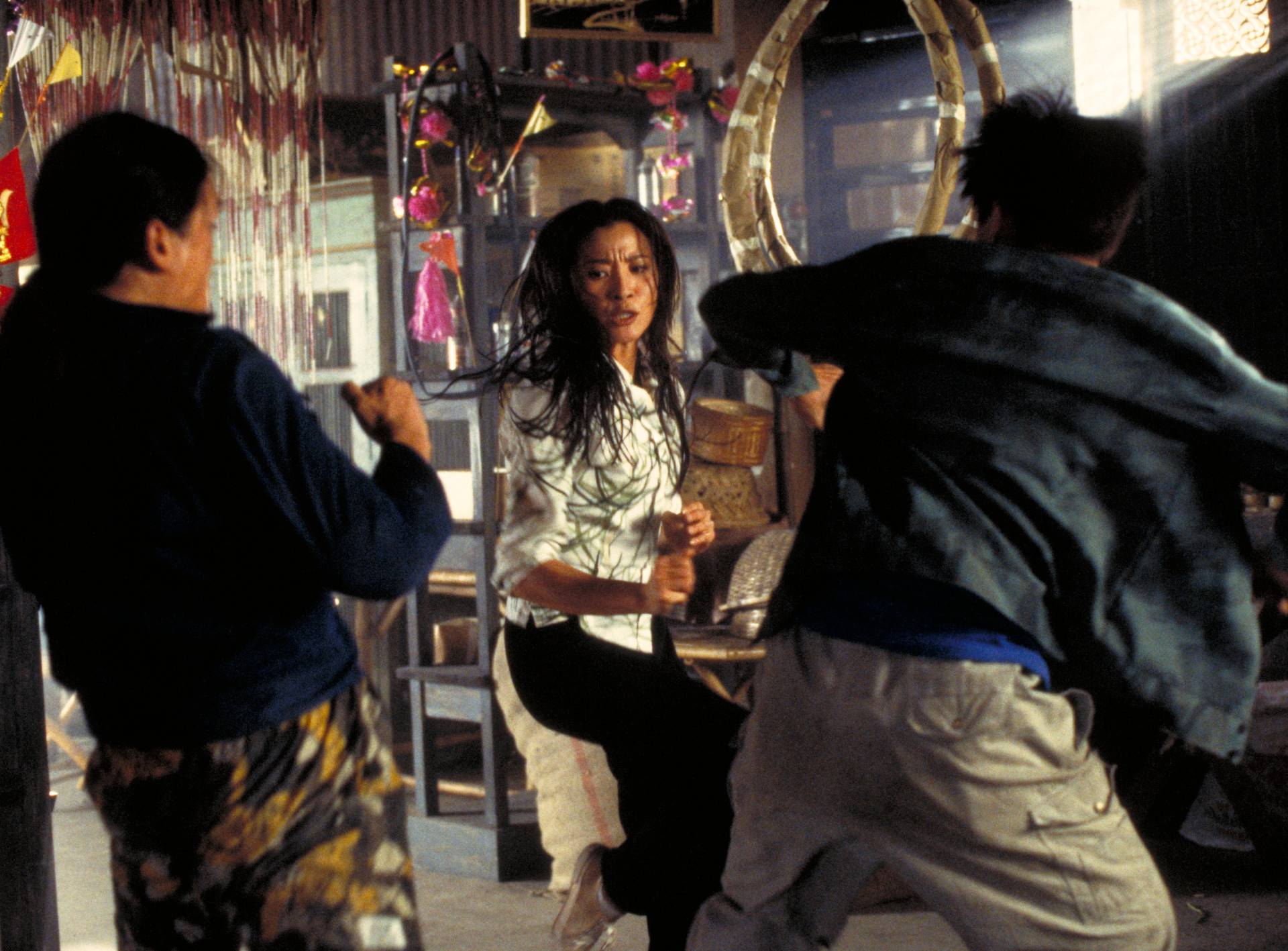
The Sequence: Handcuffing Bond to a pipe, Wai Lin takes refuge in an MSS (Ministry of State Security) safe house. She soon comes under attack from assailants sent by General Chang (Philip Kwok), Carver’s Chinese colleague, but, using her martial arts prowess and with a little help from 007, she emerges victorious.

BTS: The bicycle shop fight was captured on Frogmore Studio A stage on June 14 1997. Designed as a showcase for the martial arts skills of Michelle Yeoh, a huge action star in Asian cinema, the production hired stunt performers the actor had worked with previously to deliver her unique brand of fight sequences. The scene was also crucial to underline the idea that Wai Lin was not subordinate to 007.

Expert Witness: “Wai Lin is not the feminine equivalent of James Bond; she is the flipside of James Bond. She has a very different style and different attitude. They make a good pair.” – Co-producer Michael G. Wilson.

STEALTH SHIP SMACKDOWN

The Sequence: Bond and Wai Lin infiltrate Carver’s stealth ship to prevent him from firing a stolen British missile at Beijing. Bond uses an explosive to expose the concealed ship to radar, killing Carver with his own sea drill and traps Stamper in the missile firing mechanism, escaping with Wai Lin as the vessel explodes. 

BTS: The interior of Carver’s stealth vessel was designed by production designer Allan Cameron. While the US were already using Stealth technology, the size of the ship meant that Cameron had to cleave closer to fantasy than reality. The exterior of the boat was recreated in a 30-foot-long, 3.5-tonne miniature shot at the water tank at Baja Studios in Mexico, created for Titanic. During the fifth take of a fight sequence, the rim of a stunt performer’s metal helmet caught Pierce Brosnan’s face, and the actor was quickly rushed to Vernon Hospital in Middlesex. For the rest of the shoot, the injury was cleverly concealed by make-up.

Expert Witness: “I could see the funny side of it. There was a doctor suddenly confronted with James Bond lying on a bed covered in blood, and movie executives on mobile phones talking about how the injury would affect the movie. I was more worried about that. After all that effort we’d put in, I was thinking ‘Christ, have I blown it?’” (Pierce Brosnan, James Bond).

The Ultimate Barware Collection

Discover a new collection of pro-grade cocktail tools to help you make the perfect martini at home. Measure, shake, garnish, and pick your olive. Explore smart details, including a dipped space to hold your lemon, a list of the perfect quantities, and storage inspired by Bond’s Thunderball diving tank.

Find the complete Barware collection only at 007Store.com.

Decorate the Season, 007 Style

Four new designs join the James Bond tree decoration collection, taking it up to 20 designs. Scaramanga’s iconic Golden Gun meets Bond’s spectacular GoldenEye Jump (complete with elastic bungee cord). The Zorin Airship from 1981’s A View To Kill will float on your tree branches, or try the new Skyfall Lodge in hand-made ceramic

These new designs join icons such as the SPECTRE symbol, the bow tie, Blofeld’s white Persian cat, James Bond in evening wear and 007’s winning hand of cards from Casino Royale. Each hand-made decoration is a mini work of art, with beading, intricate stitching and metal threads.

Explore the complete collection now at 007Store.

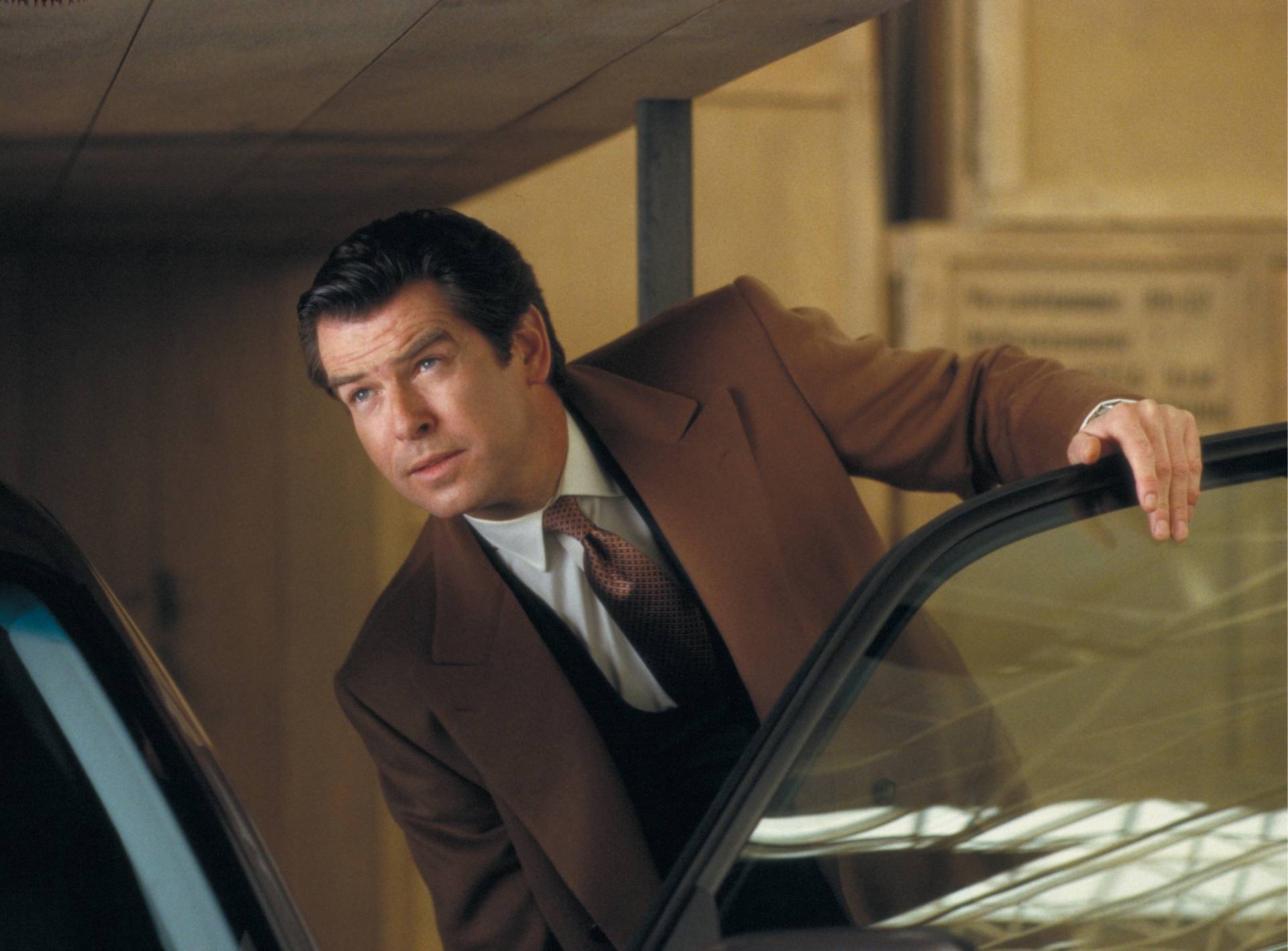
How Pierce Brosnan Became James Bond

On April 12, 1994, The Living Daylights and Licence To Kill actor, Timothy Dalton, announced he was stepping away from the role of James Bond. 

“This has been one of the hardest decisions of my life,” declared Dalton at the time. “But it has been six years since the last Bond film and if I committed to the new one. It would be another two years of my life, what with timing and promotion. I think the time is right to say goodbye to it all.”

The search for a new Bond was on — “We looked at younger people and different kinds of people who were available,” said GoldenEye co-producer Michael G. Wilson. “I think we all came to the conclusion early on that Bond is a veteran” — but there was always one name in the frame. After Roger Moore departed the role following A View To Kill, one of the actors who came in for an audition was Pierce Brosnan. The star of US TV show Remington Steele, Brosnan auditioned on May 12, 1996, playing scenes opposite Annie Lambert before being put through his stunt paces by Clive Curtis. Yet, there was a sticking point.

“We made it a stipulation to his agent: if he could be cleared completely out of his TV series, cutting all ties with the network, we’d consider him,” said producer Cubby Broccoli. “Pierce was wildly keen to play the part. But when talks began with the network, there was a lot of stalling. In the end, his TV contract was renewed and our search had to continue.”

As well as the legal complications, there were other factors at that time that ruled Brosnan out of The Living Daylights.

“In terms of looks and style, he’d have taken us down a Roger Moore route,” continued Broccoli. “At that time, we were looking for a harder-edged actor who could take Bond into a new dimension.”

When the role became free again following Dalton’s departure, Brosnan was going through a period of career disappointment tinged with personal tragedy. In 1987, his wife Cassandra Harris was diagnosed with terminal ovarian cancer, causing the actor to put work on hold until her passing in 1991. So, at the point 007 became available again, Brosnan chose not to pursue it. 

“The moment Timothy jumped ship I thought, ‘No, it wouldn’t happen a second time,” Brosnan observed.

Ultimately, lightning did strike twice. Brosnan was announced as the fifth James Bond at a press conference that was transmitted globally on June 8, 1994. At the same time, the film’s title was announced as GoldenEye, inspired by the name of Ian Fleming’s house in Jamaica where he penned the novels and short stories. 

Two days after the announcement, Brosnan was back on location in a remote village in Papua New Guinea shooting drama Robinson Crusoe. During a break in filming, the actor was approached by a gang of children shouting “James Bond! James Bond!” 

“I was dumbstruck,’ recalled Brosnan. “Here I was, in the middle of nowhere, being recognised as Bond as a result of all that international publicity. At that moment any lingering doubts I had that GoldenEye was just another film left me completely.”