Insider
Shooting Licence To Kill’s Tanker Chase
Planes, tankers, explosions….and curses
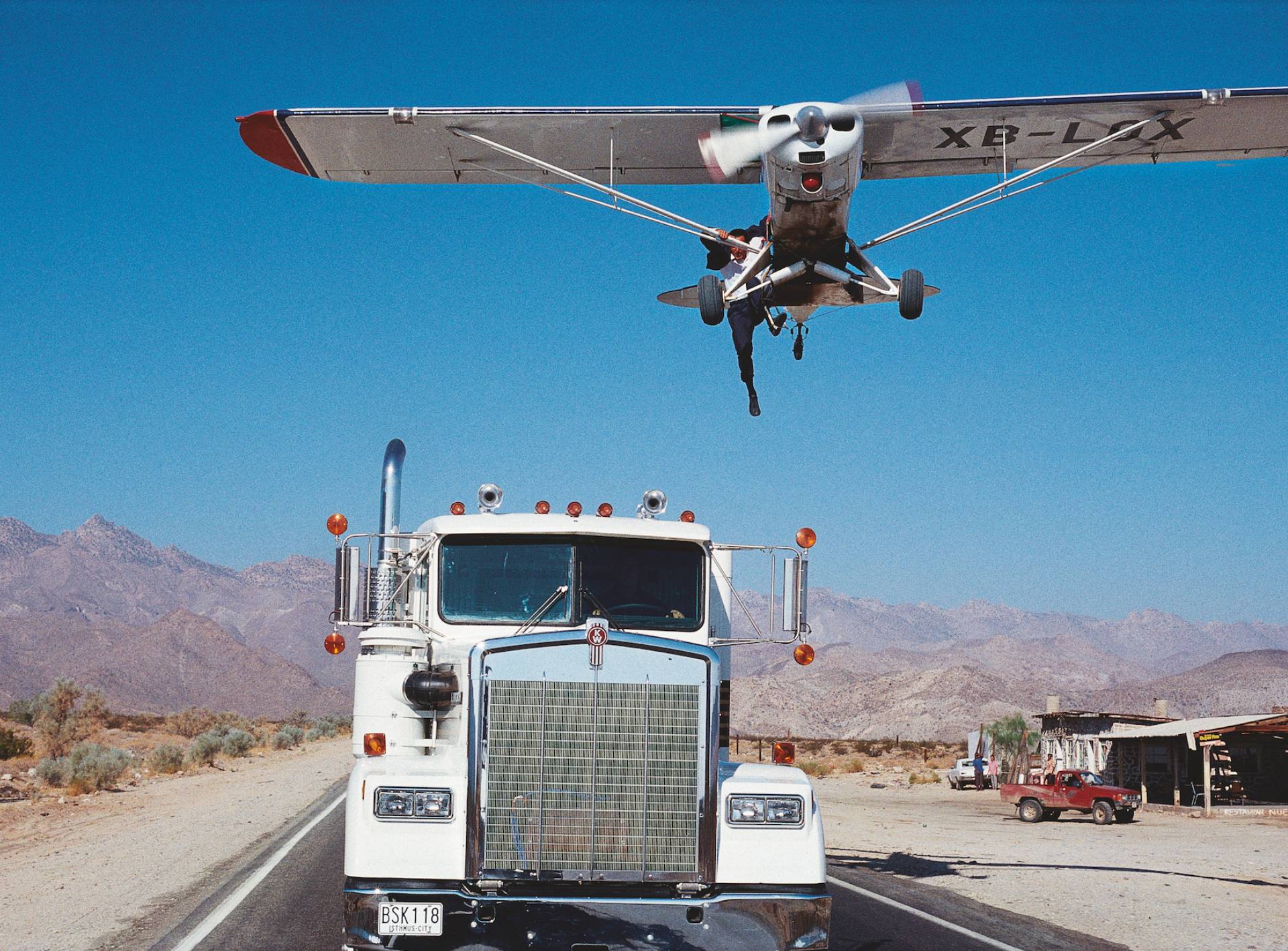
The tanker chase at the end of Licence To Kill remains one of the most exciting and dangerous-to-film set-pieces in the 007 canon. As Bond (Timothy Dalton) destroys drug lord Franz Sanchez’s (Robert Davi) laboratory, the criminal orders four trucks to move the narcotics. Giving chase in a plane flown by CIA agent Pam Bouvier (Carey Lowell), 007 leaps from the plane onto the Kenworth tanker and starts causing chaos. The subsequent action involves a missile, colliding vehicles and huge explosions all staged for real, in the days before CGI.
Making Mayhem
The spectacle was staged over months by the second unit in the border town of Mexicali. Much of the key action was captured on the Old Rumorosa Road, an hour’s drive from the unit base.
“It was a very dangerous, snakelike mountainous road,” recalled director John Glen. “There’d been many tragic accidents over the years, so they closed this section of road and bypassed it. We had a lot of fun there, because we had full control over it, although any mistakes and it was a 300-foot drop.”
The scene was executed by special-effects supervisors John Richardson and Chris Corbould who, along with driving stunts arranger Rémy Julienne, understood the complexity and scale of the ambitious sequence.
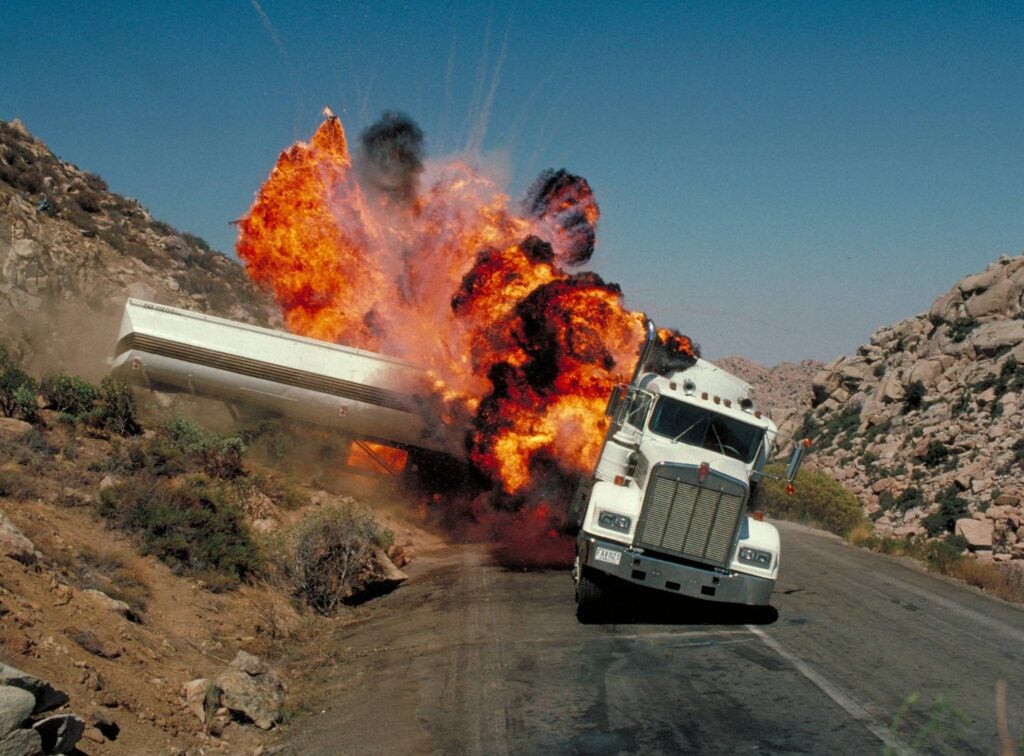
“We were dealing with tankers that weighed in excess of five tons, and doing weird things with them,” says Corbould. “Sending them over the edges of cliffs, front wheelies, and some huge explosions. Probably some of the biggest explosions l’d ever done. To create a 4,000-gallon tanker blowing up, you have to create something pretty immense.”
Plane Crazy
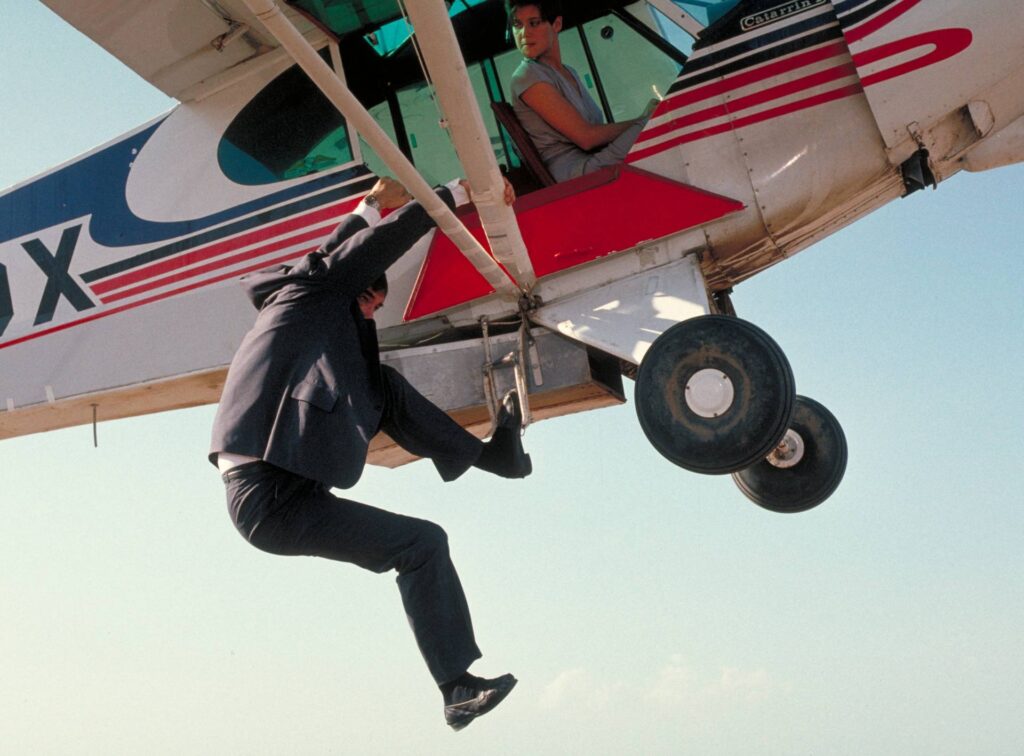
The breath-taking stunt where Bond leaps from a plane onto a tanker was shot on August 30th, with stunt co-ordinator Simon Crane doubling for Bond, and Corkey Fornof flying the Piper Super Cub monoplane and playing Pam.
“It was a very difficult sequence to do,” recalled Crane. “The weather was extremely hot, up to 120 degrees. which had a great effect on the handling of the plane. We had to fly very low to the ground, so it was going up, going down, and I’m hanging on the edge of it, with no cables. I had to jump onto a tanker that’s hurtling along at 70 miles an hour.”
To increase the complexity, the tanker was being followed by a huge convoy of vehicles, including a fire brigade lorry, an ambulance and trucks carrying camera technicians, all hurtling along at 70mph. The crew attempted to shoot the stunt on four different occasions and every time the conditions were unsuitable.
“It was quite a big stunt, so I didn’t eat anything beforehand, just in case, God forbid, something went wrong, and I was taken to hospital to be operated on—you can’t have eaten anything,” recalled Crane. “I didn’t eat for four days, and by the end of it, I was hanging in rags.”
Corkey Fornof flew the plane as Pam, wearing a dress and wig, but according to co-producer Michael G. Wilson, “he didn’t have anything else on because it was so hot!” The first attempt at the stunt saw Fornof put one wheel on the truck and Bond stepped onto the tanker. Once the shot was reviewed, the stunt was deemed too easy, and Crane was asked to jump onto the tanker.
“Eventually, we got it,” recalled Crane. “It looked a lot more terrifying to me, being on the plane, than it ever did in the film.”
Stranger Things
While the plane-to-tanker transfer was completed safely, other areas of the shoot took on an aura of being cursed.
“Strange things just kept happening while we were shooting,” recalled Richardson. “Trucks mysteriously burst into flames in the middle of the night, car crashes, a whole mishmash of odd things. There were a number of strange tales told about the road we were shooting on—the road was supposed to be haunted.”
While investigations amongst the crew uncovered that five nuns and a dog had been killed in an accident at the location, it did not put an end to the eerie happenings.
“Somebody took a still of one of the exploding tankers,” says Richardson. “When he got the film back, there was this flaming hand, like a claw, coming out of the explosion. I think it was just a freak bit of wind, myself, but it did look like a flaming hand coming out of the explosion. Who knows?”
Happier Accidents
Not all the unexpected incidents were spooky. On September 1, the crew were shooting two lorries trying to pass each other coming around the corner.
“One of the lorries got pushed into the rock,” says Arthur Wooster. “We were shooting all this, and it was more exciting than the stunt because it was the real thing, I phoned John Glen up, and said, ‘Look, we’ve had an accident. It could be useful to us. We could make this work, and build it into the story.’ John looked at the rushes, and we used it, building on it. That’s the sort of thing where you have to change your mind very quickly, on the spur of the moment.”
Glen later joined the second unit with principal actors at the Mexicali location for the week of October 3 to 7. Key to the action was capturing the demise of Sanchez, which was filmed over three days from October 5.
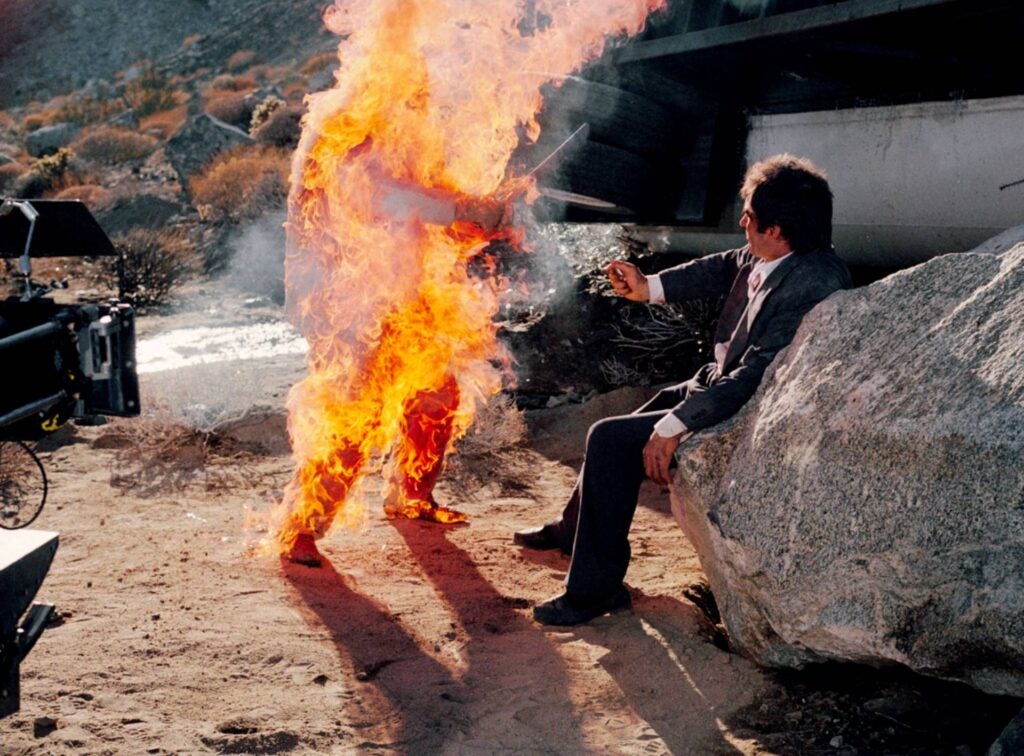
“For the last explosion, where the two tankers blow up and Sanchez was set alight, we had about 200 gallons of gasoline representing each tanker,” recalled Richardson. “We ran all the wires back to a nail board, from which you can choreograph not only the sequence of the explosions but also the direction the flame goes in. Timothy was in the foreground throughout it, running away. You can see as each successive bang went off, Timothy moves a little bit faster.”
The second unit finished at the location on October 19, after shooting for 46 days. The finished sequence represented all the spectacular action audiences expected from 007 but with a tougher feel that marked out Timothy Dalton’s interpretation. It wasn’t just Bond who was living on the edge.