Insider
Model Behaviour
Inside The Miniature World Of 007
The adventures of James Bond are often larger than life but this often means starting small. Over its 25-film history, the series has used cutting-edge model work to create iconic vehicles, action and locales that would have been impossible to stage in the real world. Led by visual effects masters such as Derek Meddings, John Richardson and Chris Corbould, the 007 model units have applied attention to detail, artistry and imagination to make the fantastical seem simultaneously breathtaking and convincing. Here we pay tribute to some of the greatest miniatures in Bond’s history.
The Avro Vulcan Bomber
As seen in: Thunderball (1965)
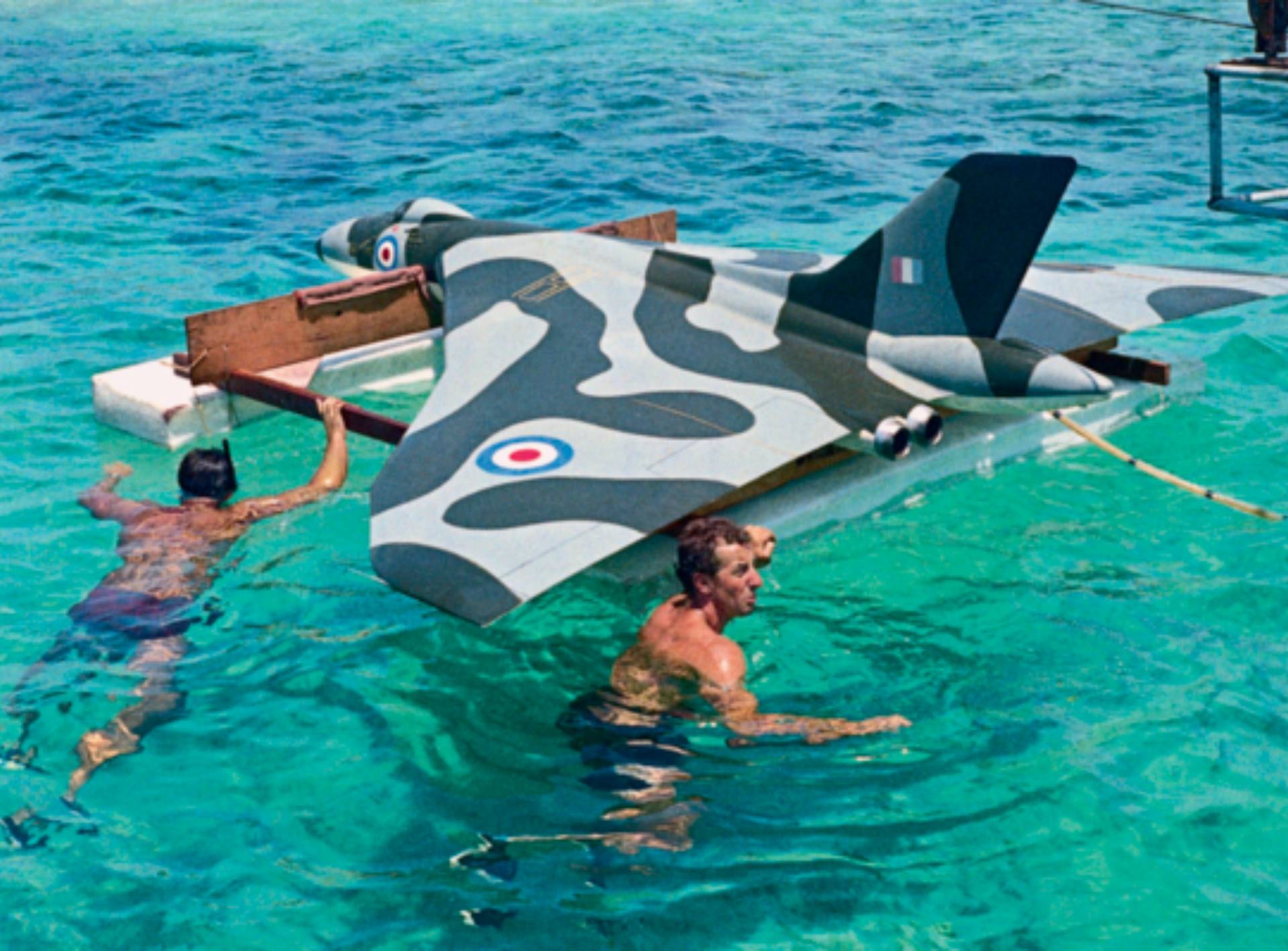
The miniature: A RAF-V-Force bomber carrying two atomic bombs is stolen by SPECTRE henchman Angelo Palazzi (Paul Stassino). The aircraft subsequently lands in the middle of the ocean near the Bahamas and is left on the seabed.
The magic: A 13 ft model was built for the Vulcan landing on the water. The miniature was suspended under a skate which was rolled down wires between two towers. A second model was created for the Vulcan drifting down to the seabed — the shot was made hazardous by ever-present sharks circling the waters. The dicing with danger was worthwhile. Thunderball won an Academy Award for special effects, the first 007 film to win an Oscar.
Bird 1
As seen in: You Only Live Twice (1967)
The miniature: Launched from Ernst Stavro Blofeld (Donald Pleasence)’s base hidden in a volcano, Bird 1 is a multi-stage rocket and space vehicle used to ensnare enemy spacecraft, capturing American and Soviet astronauts to manipulate a war between the two superpowers.
The magic: The model work shoot on You Only Live Twice was started on January 12, 1967 at Pinewood and took eight weeks to complete. The models of the SPECTRE, American and Russian spacecraft were shot separately against black velvet and optically composited into the various shots.
The Lotus Esprit
As seen in: The Spy Who Loved Me (1977)
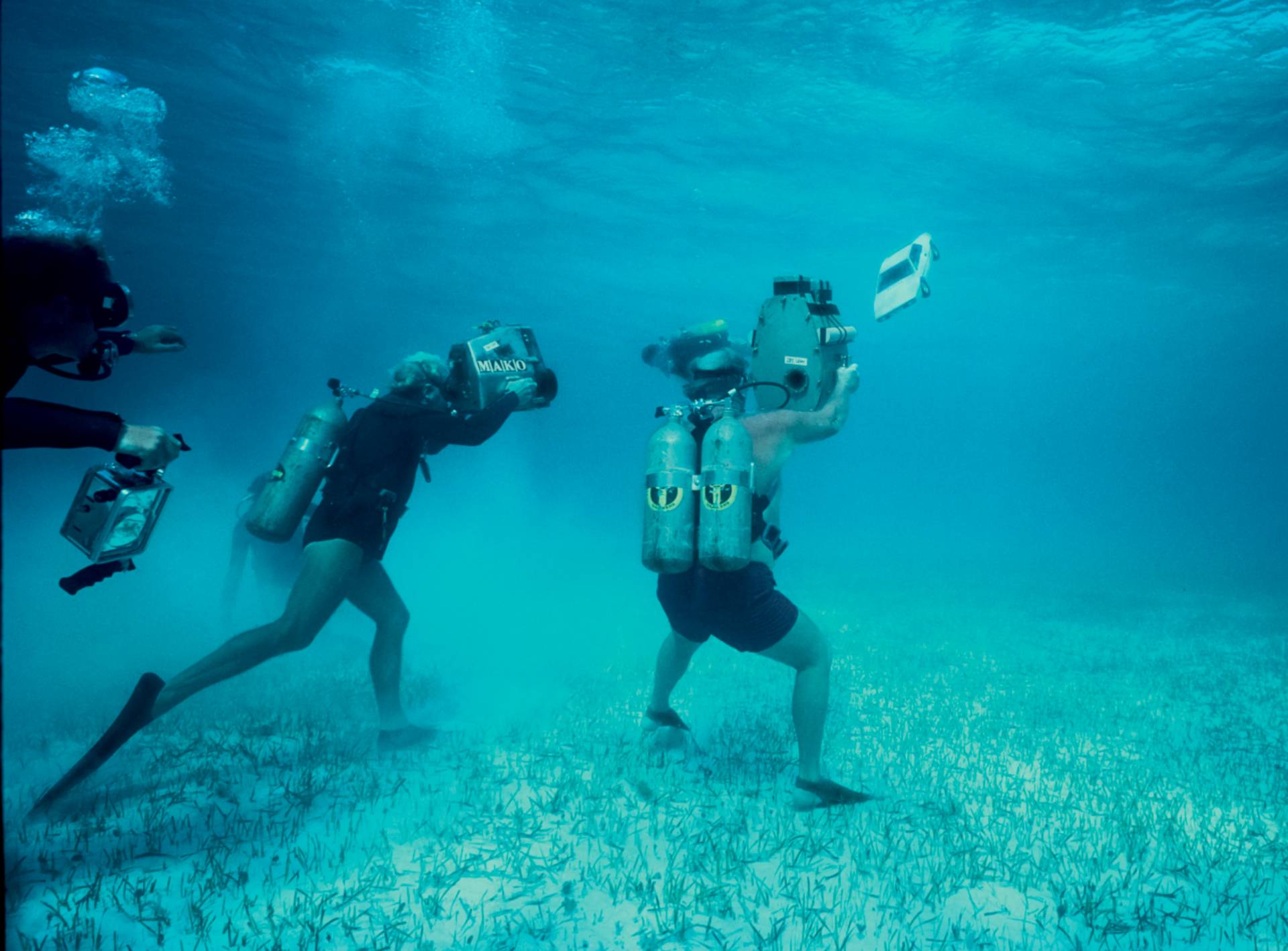
The miniature: A white sports car that transformed into a submarine, fitted with Q Dept trickery such as depth charges, surface-to-air missiles and black dye (think Octopus ink) to blind underwater assailants.
The magic: The special effects unit, led by Derek Meddings, started work in Nassau in August 1976. Shot by Lamar Boren, the miniature Lotus was moved around by ultra-thin wires. For the moment the Lotus goes underwater, the model was simply let go by a diver and captured as it floated down — the shot was repeated until the model descended at the correct angle. As well as the Lotus, the unit also created Karl Stromberg’s super tanker, the Liparus and his submersible base Atlantis.
Moonraker Space Shuttle
As seen in: Moonraker (1979)
The miniature: Launched from a secret Amazonian compound owned by billionaire industrialist Hugo Drax (Michael Lonsdale), the reusable spacecraft was used to ferry Drax’s master race to his space station.
The magic: The team were given access to Edwards Air Force base where the real shuttle was being fitted out with ceramic tiles. Based on actual shuttle designs, the largest shuttle model was 5 ft in length. Rather than front projection or the bluescreen techniques of Star Wars, Meddings decided to shoot elements on the same piece of film by shooting, rewinding the film, then filming different elements (a space shuttle, a starfield, the Earth). Filming of shuttles docking with Drax’s Space Station employed 48 passes on one piece of negative.
The take-off of the shuttles proved dangerous as magnesium flares were used to double the flame of the rocket thrusters. “We had to keep the shuttle on the move because the minute we stopped, there was a chance the magnesium flares would make the shuttles catch fire,” said Meddings.
The Latin American Hangar
As seen in: Octopussy (1983)
The miniature; As the film begins, Bond (Roger Moore)’s mission is to blow up a Latin American aeronautical supply base run by Colonel Toro (Ken Norris). 007 manoeuvres a lightweight single-seat jet into the bustling hangar, using the ground-to-air missiles on his tail to blow the building to smithereens.
The magic: While the jet flying through the hangar was achieved through old school know-how — a plane mounted on a pole and driven by a car inside the hangar — the explosion could only be pulled off in miniature, the hangar recreated in a 1/8th scale model.
“All of the sheets of corrugated tin that were on the hangar were made of plastic, fixed on individually, so that when the hangar blew, they’d all come off one-by-one,” said visual effects supervisor John Richardson. “Then we built a little model airfield around it, put the camera in a crane from Bond’s point of view, and shot it at about 120 frames per second. We put a series of explosions inside, so that it got bigger as it blew up. Quite an interesting bang, I thought.”
Janus Satellite Control Centre
As seen in: GoldenEye (1995)
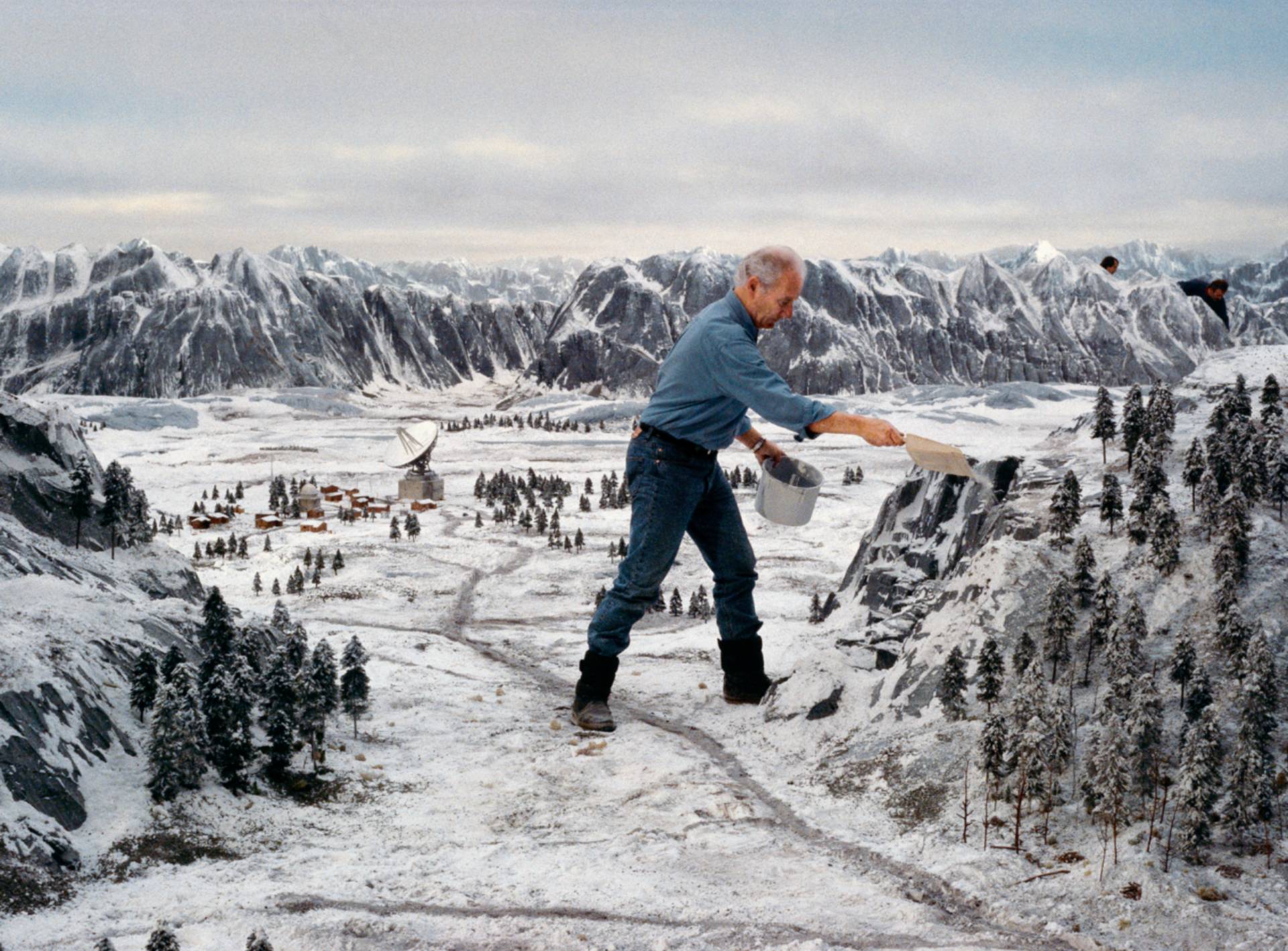
The miniature: A secret satellite control and tracking centre located in Cuba. The huge communications disc is built into the ground and flooded while not in use, making it impossible to spot from the air or satellites.
The magic: Inspired by the world’s largest spherical radar-radio telescope in Arecibo, Puerto Rico, a miniature model was created on the back lot of Leavesden. “The giant antenna and its rig had to rise out of a lake,” said special effects cameraman Paul Wilson. “The lake then had to empty to reveal the huge reflector dish. In reality it measures some 1000 ft across which itself was no mean task — the water having disappeared down a gigantic ‘plughole’ at the bottom of the antenna.” The gigantic size of the dish meant the 1/10 scale model measured 50ft across, the landscape surrounding the miniature running to 100ft across. GoldenEye proved to be the last film of special effects maestro Derek Meddings.
Stealth Ship
As seen in: Tomorrow Never Dies (1997)
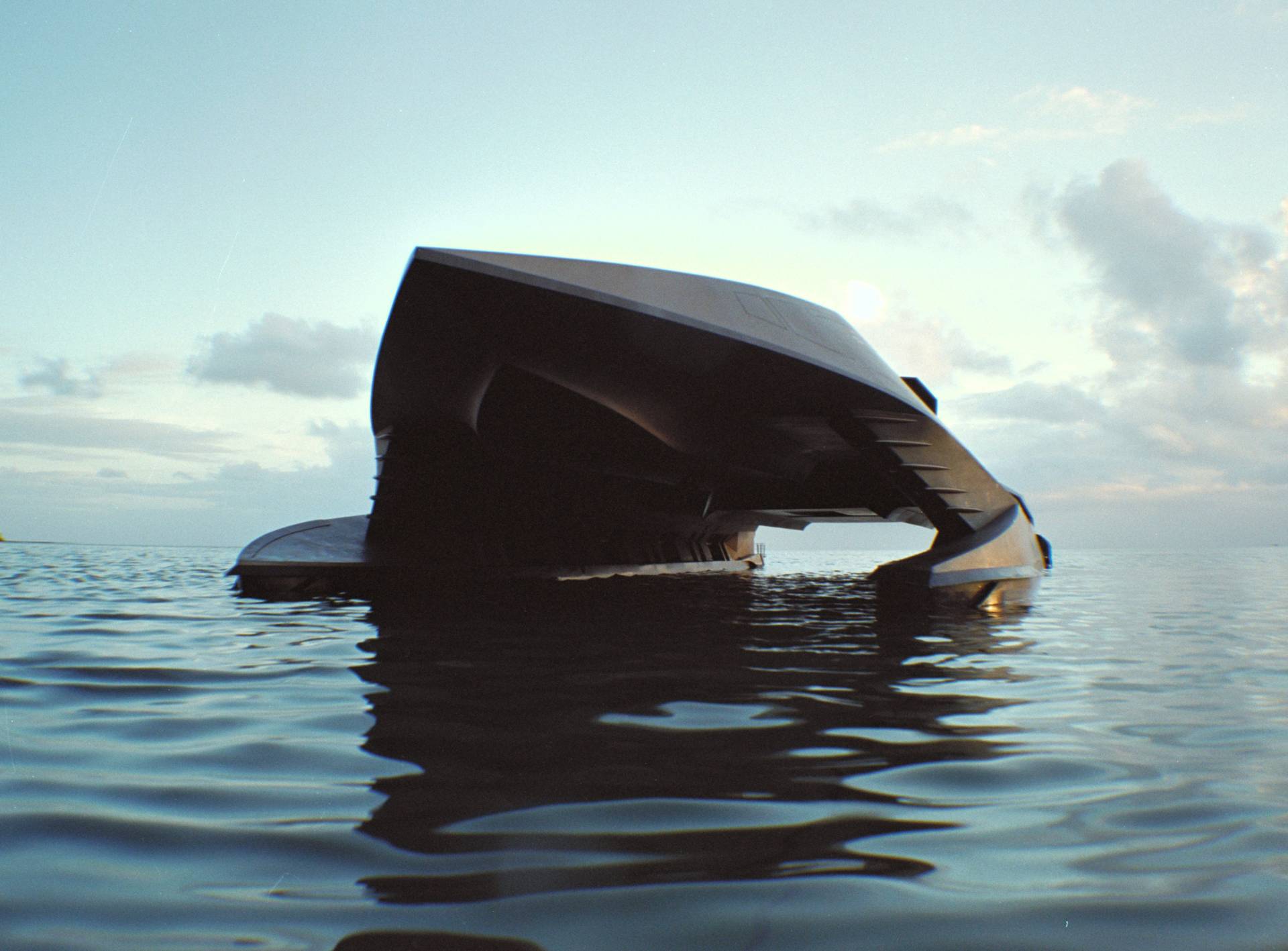
The miniature: A covert radar and sonar-resistant catamaran-style ship constructed by media baron Eliot Carver (Jonathan Pryce) in league with the People’s Republic of China. The vessel was instrumental in Carver’s plan to orchestrate a war between Britain and China.
The magic: The model work on Tomorrow Never Dies was shot over 39 days in Baja, Mexico using the same water tank as James Cameron’s Titanic. The stealth boat model was 30 ft long, weighed approximately three and a half tonnes and was photographed against miniature recreations of Phuket islands. The unit also created a model frigate measuring 55ft long that stood in for three different ships. “There was a sinking rig under the surface that controlled the ship and its angle,” recalled visual effects supervisor John Richardson. “Buoyancy tanks in the back of the ship controlled the rate the ship sank and how much water was let in. The bow of the ship tipped up, as it would do in real life, and we used the rig to let it slip beneath the waves.”
The Venetian Villa
As seen in: Casino Royale (2006)
The miniature: Bond (Daniel Craig) chases Vesper Lynd (Eva Green) through the streets of Venice, Lynd ducking into a villa under renovation. As a gunfight ensues, 007 shoots and punctures the flotation bags that hold the building above water level, causing the house to sink, with Vesper locked inside an old elevator.
The magic: A model of the villa was created at Pinewood in the studio’s 800,000-gallon outdoor Paddock Tank. The villa miniature was mounted on a gimbal powered by hydraulics, which tilted 15 degrees in four directions. “The miniature was about 26 feet tall,” said visual effects supervisor Chris Corbould. “It was a pretty big miniature, all controlled by computerised hydraulics. We could program it and repeat it ad infinitum.” The model was shot against bluescreen to allow CG elements to be added in, including spray, smoke and flying birds.